The definitive ecommerce glossary for 2026


Every term, acronym and bit of jargon we'll use with you, defined once and properly. 161 entries, plain British English.
Written for you, not for the person writing the software. Where a term means one thing on a website and another in the inbox, the entry gives you both readings.
Under tenTen or moreNothing behind them: X
161 definitions, jump by letter or filter the lot
From the foundations up to the retention terms that decide whether a brand grows or plateaus.
A/B
11 entries- 001A/B Testing
- Comparing two versions of a webpage or email to determine which one performs better based on specific metrics like conversion rates or click-through rates.
- 002Alt Text
- Text descriptions of images in emails that display when images can't be loaded, important for accessibility and deliverability.
- 003Analytics
- The systematic computational analysis of data or statistics, used to understand and optimise business performance.
- 004Automation Flow
- A series of automated emails triggered by specific subscriber actions or events, designed to nurture leads or encourage conversions.
- 005Average Order Value (AOV)
- The average amount spent each time a customer places an order. In email marketing, understanding AOV helps tailor campaigns to encourage higher-value purchases through targeted promotions and product recommendations.
- 006B2C (Business-to-Consumer)
- Transactions between businesses and individual consumers. Email marketing in B2C involves sending targeted campaigns directly to consumers to drive engagement and sales.
- 007Behavioural Email
- Emails triggered by a subscriber's behaviour, such as browsing history or past purchases.
- 008Bounced Email
- An email that cannot be delivered and is returned to the sender, often categorised as a hard or soft bounce.
- 009Bounce Rate
- The percentage of visitors who navigate away from a site after viewing only one page. In email marketing, the percentage of emails that could not be delivered to recipients' inboxes. Monitoring bounce rates is crucial for maintaining list health and deliverability.
- 010Brand Awareness
- The extent to which consumers recognise and remember a brand. Email marketing enhances brand awareness by consistently delivering branded content to subscribers, keeping the brand top-of-mind.
- 011Browser Abandonment Flow
- An automated sequence targeting customers who browse products on your website but leave without taking further action. Typically consisting of 2-4 emails, this flow highlights the items they viewed and may include personalised product recommendations or user-generated content like reviews to build trust.
C/D
22 entries- 012Campaigns
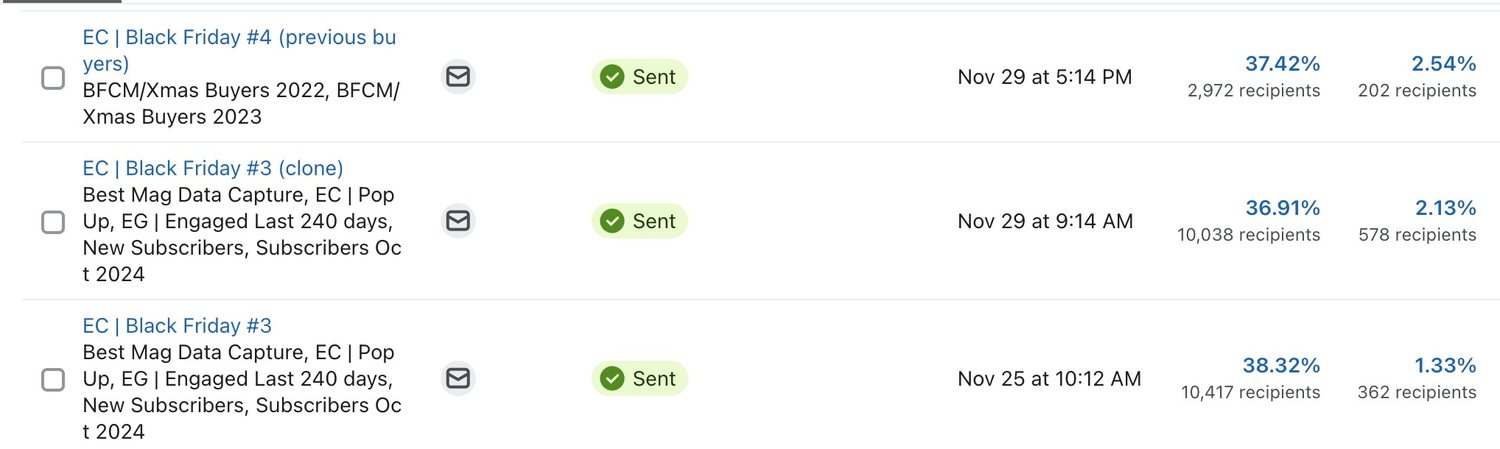
- One-time email sends that target a specific audience or segment at a scheduled time. Campaigns are often used for announcements, promotions, product launches, or seasonal sales. Unlike flows, campaigns require manual scheduling and are not triggered by customer behaviour.
- 013CAN-SPAM Act
- A U.S. law that sets rules for commercial email, establishing requirements for commercial messages and giving recipients the right to have you stop emailing them.
- 014Cart Abandonment
- When customers add items to their shopping cart but leave the site without completing the purchase.
- 015Checkout Optimisation
- Enhancing the checkout process to reduce cart abandonment and increase conversion rates.
- 016Churn
- The rate at which subscribers leave your email list, including unsubscribes and bounces.
- 017Click-Through Rate (CTR)
- The percentage of email recipients who clicked on one or more links contained in an email.
- 018CLV (Customer Lifetime Value)
- The total revenue a business can expect from a single customer account throughout their relationship. Email campaigns can nurture customer relationships, upsell, and cross-sell to increase CLV by encouraging repeat purchases and boosting engagement.
- 019CMS (Content Management System)
- Software that allows users to create, manage, and modify website content. Integrating a CMS with email marketing platforms enables seamless content sharing and campaign management.
- 020Content Personalisation
- Tailoring email content to individual subscribers based on their preferences, behaviours, or demographics.
- 021Conversion Rate
- The average amount of money spent each time a customer places an order on your e-commerce store. For email, the percentage of recipients who complete a desired action after clicking on a link in an email, such as making a purchase or filling out a form. Optimising conversion rates is a key goal of email marketing campaigns.
- 022CRO (Conversion Rate Optimisation)
- The process of increasing the percentage of website visitors who take a desired action through various strategies and testing. In email , the process of increasing the percentage of email recipients who take a desired action, such as clicking a link or making a purchase, through strategies like A/B testing and content optimisation.
- 023Cross-Sell and Upsell Emails
- Emails designed to maximise the value of a purchase by recommending complementary products (cross-sell) or higher-value alternatives (upsell). These emails can be triggered post-purchase, during the checkout process, or as part of ongoing campaigns. For example, a customer who buys running shoes might be offered socks or a premium shoe care kit. Highlighting how these additional products enhance the customer’s initial purchase creates a compelling reason to buy more.
- 024CTA (Call to Action)
- A prompt in an email that encourages the reader to take a specific action, such as "Shop Now" or "Learn More."
- 025Deliverability
- The ability of an email to reach the recipient's inbox without being blocked or filtered as spam.
- 026DKIM (DomainKeys Identified Mail)
- An email authentication method that allows the receiver to verify that an email was sent and authorised by the owner of the domain. DKIM helps ensure email security and improves deliverability by verifying the legitimacy of your emails.
- 027DMARC (Domain-based Message Authentication, Reporting and Conformance)
- An email authentication protocol that helps protect domains from email spoofing and phishing attacks. DMARC ensures that your emails are properly authenticated, helping to maintain a trustworthy sender reputation and protect your domain.
- 028Double Opt-In
- A subscription method where users confirm their email address before being added to a list, ensuring valid and engaged subscribers. Double opt-in reduces spam complaints and improves deliverability by ensuring that only legitimate subscribers are added to your email list.
- 029Dropshipping
- A retail fulfilment method where a store doesn't keep the products it sells in stock. Instead, it purchases the item from a third party and has it shipped directly to the customer.
- 030DTC (Direct-to-Consumer)
- Brands that sell their products directly to consumers without intermediaries like wholesalers or retailers.
- 031Dwell Time
- The amount of time a visitor spends on a webpage before returning to the search results, indicating the content's relevance and engagement.
- 032Dynamic Content
- Content that changes automatically based on user data or behaviour. Dynamic content in emails allows for personalised elements, such as displaying different product recommendations based on the recipient's browsing or purchase history.
- 033Dynamic Pricing
- Adjusting prices based on real-time supply and demand, competitor pricing, and other external factors.
E/F
15 entries- 034Ecommerce Platform
- Software that allows businesses to create and manage online stores, handling aspects like product listings, payments, and inventory management.
- 035Email Automation
- The use of software to send emails automatically based on predefined triggers or schedules.
- 036Email Deliverability
- The ability of an email to reach the recipient's inbox without being marked as spam.
- 037Email Preview Text
- Also known as preheader text; the snippet of text that follows the subject line in the inbox, offering a preview of the email content.
- 038Email Segmentation
- Dividing an email list into smaller groups based on specific criteria to send more targeted and relevant emails.
- 039Engagement Rate
- A metric combining various interactions like opens, clicks, and replies to gauge overall email engagement.
- 040ESP (Email Service Provider)
- A company that offers email marketing or bulk email services, like Klaviyo, Mailchimp, or Sendlane.
- 041Evergreen Content
- Content that remains relevant and valuable over a long period, continuously attracting traffic and engagement.
- 042First-Party Data
- Information collected directly from your audience or customers, used for email personalisation and segmentation.
- 043Flash Sale
- A discount or promotion offered for a very short period to create urgency and drive quick sales.
- 044Flows
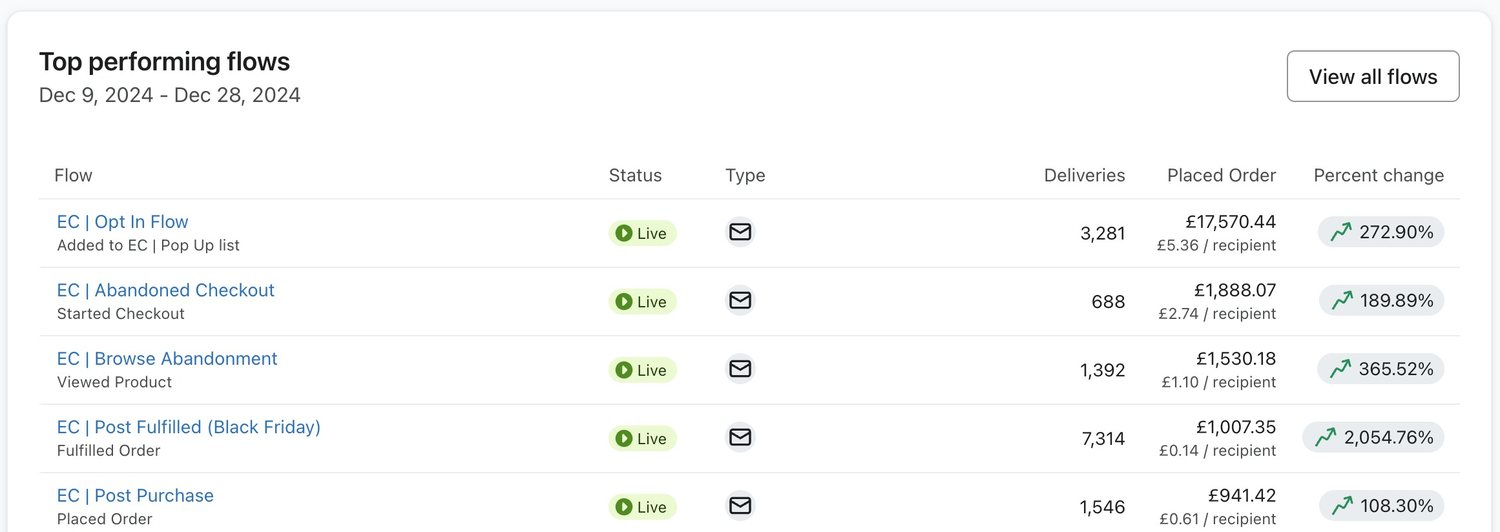
- Automated email sequences triggered by specific customer actions, events, or behaviours. Flows are designed to nurture customer relationships and guide them through the purchase journey. Examples include welcome series, abandoned cart flows, and post-purchase follow-ups. Once set up, flows run continuously, delivering personalised messages at the right time.
- 046Fulfilment
- The complete process of preparing and delivering a customer's order, from inventory management to packaging and shipping.
- 047Fulfilment Rate
- The percentage of orders that are successfully processed and delivered to customers without issues.
- 048Funnel
- The journey customers take from first discovering your brand to making a purchase, often visualised as a funnel with stages like awareness, consideration, and decision.
G/H
10 entries- 049GDPR (General Data Protection Regulation)
- A comprehensive data protection law in the EU that governs how businesses collect, store, and process personal data of EU citizens.
- 050GIF (Graphics Interchange Format)
- Animated images used in emails to grab attention and increase engagement.
- 051GMV (Gross Merchandise Volume)
- The total value of merchandise sold over a specific period of time through a customer-to-customer exchange site.
- 052Gross Profit Margin
- A financial metric indicating the percentage of revenue that exceeds the cost of goods sold, showing how efficiently a company produces its goods.
- 053Guest Checkout
- A checkout process that allows customers to make purchases without creating an account, simplifying the buying experience.
- 054Header
- The top section of an email, often containing the logo, navigation links, and sometimes the preheader text.
- 055Heatmap
- A visual representation of data where values are depicted by colour, often used to show where users are clicking or how far they are scrolling on a webpage.
- 056High-Ticket Items
- Products that are sold at a high price point, often requiring more deliberate marketing and sales strategies.
- 057Hybrid Commerce
- Combining online and offline sales channels to provide a seamless shopping experience across multiple touchpoints.
- 058Hyperlocal Marketing
- Marketing strategies that focus on targeting customers within a very specific geographic area, often using location-based data.

I/J
9 entries- 059Impression
- A metric that counts how many times an ad or content is displayed to users, regardless of whether it was clicked.
- 060Inactive Subscriber
- A subscriber who hasn't opened or engaged with your emails over a specified period.
- 061Inbound Marketing
- Marketing strategies that focus on attracting customers through relevant and helpful content, including email.
- 062Influencer Marketing
- A strategy that involves collaborating with influential people to promote products or services to their followers, leveraging their trust and reach.
- 063Integrations
- The process of linking together different computing systems and software applications physically or functionally, to act as a coordinated whole.
- 064Inventory Management
- The supervision of non-capitalised assets (inventory) and stock items, ensuring that the right amount of stock is available to meet customer demand without overstocking.
- 065IP Warming
- Gradually increasing email send volumes to establish a good sender reputation with ISPs when using a new IP address.
- 066Journey Mapping
- The process of creating a visual representation of the customer’s experience with a brand, from initial contact to post-purchase interactions.
- 067Junk Mail
- Another term for spam emails, often filtered out by email clients.
K/L
12 entries- 068Keyword
- Words or phrases that users enter into search engines, essential for SEO and PPC campaigns to drive relevant traffic.
- 069Klaviyo
- The leading email marketing platform designed for ecommerce businesses, offering advanced segmentation and automation.
- 070Knowledge Base
- A centralised repository of information, guides, and resources that help customers and employees find answers to common questions.
- 071KPI (Key Performance Indicator)
- A measurable value that demonstrates how effectively a company is achieving key business objectives.
- 072KYC (Know Your Customer)
- The process businesses undertake to verify the identity of their clients, crucial for preventing fraud and ensuring compliance with regulations.
- 073Landing Page
- A web page designed for a specific marketing campaign, often linked from an email to encourage a specific action.
- 074Lead Generation
- The process of attracting and converting strangers and prospects into someone who has indicated interest in your company's product or service.
- 075List Hygiene
- Regularly cleaning your email list by removing invalid or unengaged subscribers to improve deliverability.
- 076List Segmentation
- Dividing your email list into smaller segments based on criteria like behaviour, demographics, or purchase history.
- 077Logistics
- The detailed coordination of complex operations involving people, facilities, or supplies, crucial for efficient order fulfilment.
- 078Loyalty Programme
- A rewards programme offered by a company to customers who frequently make purchases, encouraging repeat business and customer retention.
- 079LTV (Lifetime Value)
- The total revenue a business can reasonably expect from a single customer account throughout their relationship.
M/N
13 entries- 080Marketplace
- An online platform where multiple third-party sellers can sell their products or services to consumers, such as Amazon or eBay.
- 081Merchant Account
- A type of bank account that allows businesses to accept payments in multiple ways, typically debit or credit cards.
- 082Merge Tag
- A placeholder in email templates that is replaced with subscriber-specific information, like their name or location.
- 083Minimum Viable Product (MVP)
- A product with just enough features to satisfy early customers and provide feedback for future development.
- 084Mobile Optimisation
- Designing emails to render properly on mobile devices, crucial due to the high percentage of emails opened on smartphones.
- 085Multichannel Marketing
- The practice of using multiple channels (e.g., email, social media, PPC) to reach customers and promote products.
- 086Mystery Gift Pop-Up
- A type of pop-up form that offers visitors a surprise incentive, such as a discount, free shipping, or a gift, in exchange for their email address. The mystery element entices users to engage, creating a sense of excitement and increasing the likelihood of conversion. These are particularly effective during promotions or seasonal sales.
- 087Native Advertising
- A type of advertising that matches the form and function of the platform upon which it appears, blending seamlessly with content.
- 089Net Promoter Score (NPS)
- A metric that measures customer loyalty and satisfaction by asking customers how likely they are to recommend a business to others.
- 090Newsletter
- A regularly distributed publication, generally about one main topic of interest to its subscribers, used in ecommerce for updates and promotions.
- 091Niche Market
- A specialised segment of the market for a particular kind of product or service, targeting a specific group of consumers.
- 092Nurture Campaign
- A series of emails designed to build a relationship with leads over time.
O/P
15 entries- 093Omnichannel
- A multichannel approach to sales that seeks to provide customers with a seamless shopping experience across all platforms, whether online or offline.
- 094Open Rate
- The percentage of recipients who opened your email, indicating the effectiveness of your subject line and sender name.
- 095Optimisation
- The process of making something as effective or functional as possible, commonly used in email, SEO and website performance.
- 096Opt-In
- When a user gives consent to receive emails from you, complying with regulations like GDPR and CAN-SPAM.
- 097Opt-Out
- When a subscriber chooses to unsubscribe from your email list.
- 098Order Management
- The administration of business processes related to orders for goods or services, including order placement, processing, tracking, and fulfilment.
- 099Organic Traffic
- Visitors that land on your website as a result of unpaid search results, as opposed to paid advertising.
- 100Outsourcing
- Delegating certain business processes or tasks to external agencies or freelancers, often to save costs or access specialised expertise.
- 101Overhead Costs
- Ongoing business expenses not directly attributed to creating a product or service, such as rent, utilities, and salaries.
- 102Performance Marketing
- A type of digital marketing where advertisers pay only when specific actions (like clicks or sales) are completed.
- 103Personalisation
- Tailoring marketing messages and product recommendations to individual customers based on their behaviour, preferences, and data.
- 104PLA (Product Listing Ads)
- Ads that feature detailed information about specific products, including images, prices, and merchant names, typically displayed on search engine results pages.
- 105Pop-Up Form
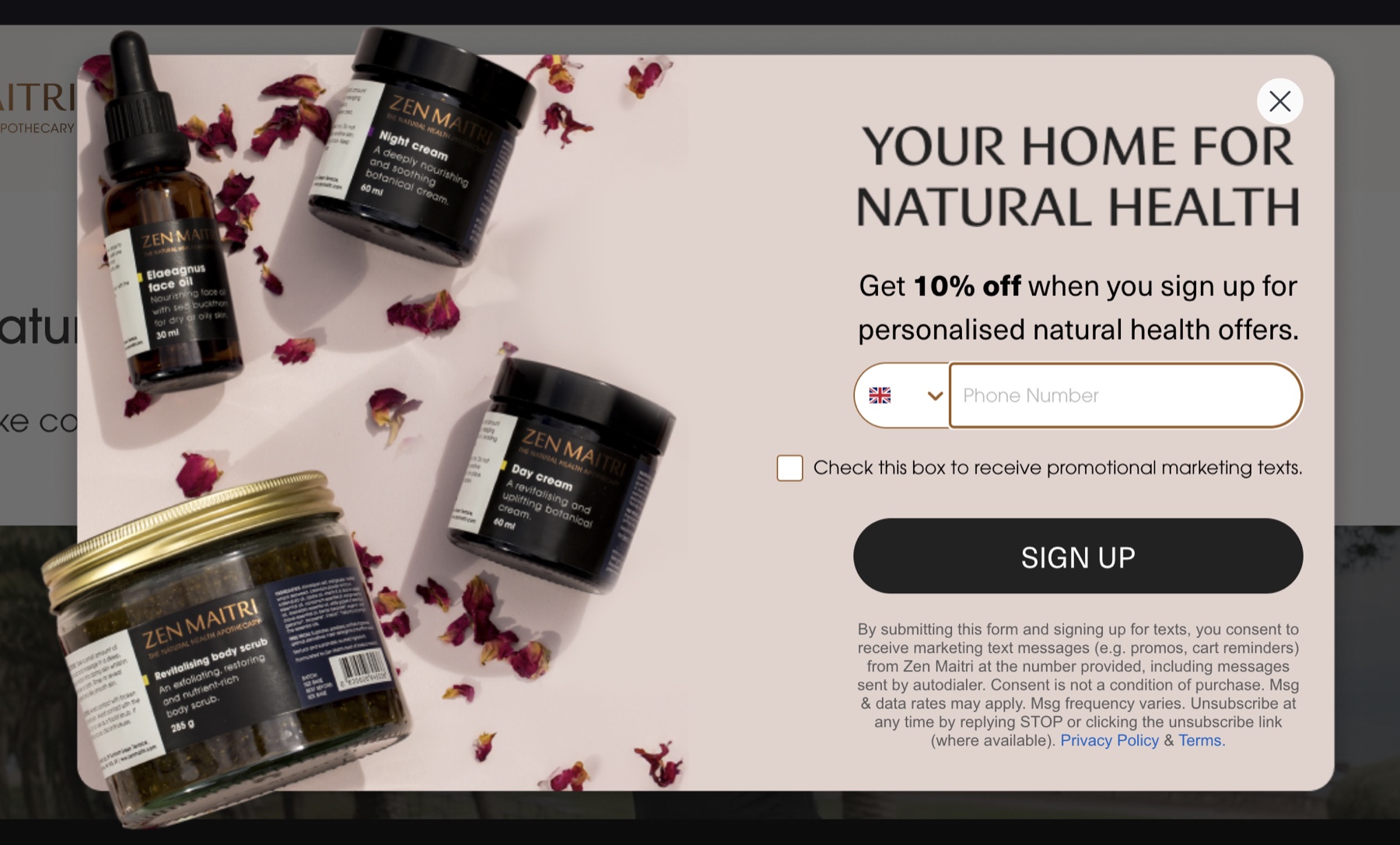
- A small, on-screen form that appears to visitors on a website, often used to collect email addresses or promote special offers. Pop-up forms can be triggered by various actions, such as scrolling, exiting the page, or spending a certain amount of time on the site. They’re a powerful tool for building email lists and capturing leads.
- 106PPC (Pay-Per-Click)
- An online advertising model where advertisers pay a fee each time one of their ads is clicked, commonly used in search engine advertising.
- 107Product Catalogue
- A comprehensive list of products offered by a business, including descriptions, prices, and images, often used in online stores.
Q/R
11 entries- 108Quality Score
- A metric used by Google Ads to measure the quality and relevance of your keywords and PPC ads, influencing ad rankings and costs.
- 109Re-engagement Campaign
- Emails sent to inactive subscribers to encourage them to engage again or update their preferences.
- 110Replenishment Flow
- A highly targeted flow designed for products that customers regularly reorder, such as consumables or beauty items. This flow is triggered based on the average time it takes customers to use up the product. Typically consisting of 2-3 emails, the first email acts as a reminder to restock, while subsequent emails might include an exclusive discount or a subscription offer for ongoing convenience. This flow helps maintain customer loyalty and ensures repeat business.
- 111Responsive Design
- Web design that ensures a website looks and functions well on all devices, including desktops, tablets, and smartphones.
- 112Retargeting
- A form of online advertising that targets users who have previously visited your website or interacted with your brand, encouraging them to return and complete a desired action.
- 113Retention Rate
- The percentage of subscribers who remain on your email list over a given period.
- 114Revenue Streams
- The various sources from which a business earns money from the sale of goods or services.
- 115Review Request Flow
- An automated series sent after a product is delivered, encouraging customers to leave a review or share feedback. This flow usually starts with a request email a few days after delivery, followed by a gentle reminder if no action is taken. Including social proof or examples of other customer reviews can inspire recipients to contribute.
- 116Reviews
- Feedback provided by customers about their experience with a product or service, crucial for building trust and credibility.
- 117Rich Media
- Interactive content like videos, animations, and audio that engages users more effectively than static content.
- 118ROI (Return on Investment)
- The revenue generated from your email campaigns compared to the cost invested.
S/T
21 entries- 119Segmentation
- Dividing a larger audience into smaller, more targeted groups based on specific criteria. Segmentation allows you to send highly relevant emails to specific groups of subscribers based on behaviour, purchase history, or demographics, improving engagement and conversion rates.
- 120SEO (Search Engine Optimisation)
- The practice of increasing the quantity and quality of traffic to your website through organic search engine results by optimising website content, structure, and technical elements.
- 121Shipping Confirmation Flow
- A sequence of 1-3 emails updating customers on their order’s shipping progress. The first email typically confirms that the order has been shipped, including a tracking link and estimated delivery date. Follow-up emails might alert customers when the order is out for delivery or has been successfully delivered.
- 122SKU (Stock Keeping Unit)
- A unique identifier for each distinct product and service that can be purchased, used to track inventory and sales.
- 123Social Proof
- The concept that people are influenced by the actions and opinions of others, often used in marketing through testimonials and reviews.
- 124Spam
- Unsolicited or irrelevant emails sent in bulk, which can harm sender reputation.
- 125Spam Score
- A score that predicts the likelihood of an email being marked as spam, influenced by content and sender reputation.
- 126SSL (Secure Sockets Layer)
- A standard security technology for establishing an encrypted link between a server and a client, ensuring data transmitted remains private and secure.
- 127Subject Line
- The title of your email, crucial for grabbing attention and encouraging opens.
- 128Subscription Model
- A business model where customers pay a recurring price at regular intervals, monthly, quarterly, or annually, to gain access to a product or service.
- 129Supply Chain
- The process of making something as effective or functional as possible, commonly used in email, SEO and website performance.
- 131Text-to-Image Ratio
- The proportion of text to images in an email, affecting deliverability and load times.
- 132Throttling
- Controlling the rate at which emails are sent to avoid overwhelming servers or being flagged as spam.
- 133TOS (Terms of Service)
- A legal agreement between a service provider and a person who wants to use that service, outlining the rules and guidelines users must agree to follow.
- 134Traffic
- The visitors that come to your website. Understanding traffic sources and behaviour is crucial for optimising marketing strategies.
- 135Traffic Sources
- The origins of your website visitors, including search engines, social media, direct visits, referrals, and paid advertising.
- 136Transactional Emails
- Emails triggered by specific user actions, such as order confirmations, shipping notifications, and password resets, essential for customer communication.
- 137Transactional Rate
- The percentage of transactional emails compared to marketing emails, important for maintaining deliverability.
- 138Trending Products
- Items that are currently popular and in high demand, often influenced by social media, seasonality, or market trends.
- 139Trigger
- An event or action that initiates an automated email, such as a subscriber joining a list or abandoning a cart.
U/V
10 entries- 140Unique Selling Proposition (USP)
- The factor or consideration presented by a seller as the reason that their product or service is different from and better than that of the competition.
- 141Unsubscribe Link
- A mandatory element in commercial emails allowing subscribers to opt out of future communications.
- 142Unsubscribe Rate
- The percentage of subscribers who opt out after receiving an email, indicating content relevance and list health.
- 143Upselling
- A sales technique where a seller encourages the customer to purchase more expensive items, upgrades, or additional products to increase the overall purchase value.
- 144User-Generated Content (UGC)
- Content created by customers, such as reviews or testimonials, which can be included in emails to build trust.
- 145UX (User Experience)
- The overall experience a user has when interacting with an email, website or application, focusing on ease of use, accessibility, and satisfaction.
- 146Value Proposition
- The unique value that your email content offers to subscribers, encouraging them to engage and convert.
- 147Verification Email
- An email sent to confirm a subscriber's email address, often used in double opt-in processes.
- 148Virtual Try-On
- A technology that allows customers to see how products like clothing, accessories, or makeup look on them virtually before making a purchase.
- 149Visual Hierarchy
- The arrangement of elements in an email to guide the reader's attention, enhancing readability and engagement.
W/X
5 entries- 150Warehouse Management
- The process of overseeing the storage and movement of inventory within a warehouse, ensuring efficient operations and accurate order fulfilment.
- 151Welcome Series Flow
- A structured series of emails designed to welcome new subscribers and set the tone for their relationship with your brand. This flow typically includes 3-5 steps: an initial welcome email, an introduction to your brand’s story or mission, and a showcase of your best-selling or signature products.
- 152Wholesale
- The sale of goods in large quantities, typically to be retailed by others. In ecommerce, it involves selling products to other businesses rather than directly to consumers.
- 153Winback Flow
- A flow aimed at re-engaging customers who haven’t purchased or interacted with your brand for a while. Typically consisting of 3-4 emails, the first email reminds the customer of your brand with a friendly nudge, often featuring a curated selection of popular products. Follow-up emails might include an exclusive discount or a personalised recommendation based on their past purchases.
- 154Wishlist
- A feature that allows customers to save items they are interested in for future reference or purchase, enhancing user engagement and sales potential.
Y/Z
7 entries- 155Year-over-Year (YoY) Comparison
- Analysing email performance compared to the same period in the previous year to assess growth.
- 156Yield
- The return or profit from your email campaigns, often assessed through metrics like ROI.
- 157Yield Management
- Adjusting email send strategies to maximise revenue, such as timing promotions based on customer behaviour.
- 158Yield Optimisation
- The process of improving the efficiency of a business's operations to maximise returns, often through data analysis and strategic adjustments.
- 159Zero Inventory
- A business model where the store does not keep goods in stock. Instead, it transfers customer orders and shipment details to either the manufacturer, another retailer, or a wholesaler, who then ships the goods directly to the customer.
- 160Zero-Party Data
- Information that a customer intentionally and proactively shares with you, used for deep personalisation.
- 161Zombie Cart
- An abandoned shopping cart that remains inactive without any further engagement or recovery attempts, often requiring targeted re-engagement strategies.

Nothing matches that. Try a shorter word, or clear the box to get all 161 entries back.
Where these words turn into work
Deliverability and sender reputation
Deliverability025 DKIM026 DMARC027 IP Warming065 Spam Score125 List Hygiene075 Throttling132
See Email marketingThe automated flows themselves
Automation Flow004 Flows044 Welcome Series Flow151 Cart Abandonment014 Browser Abandonment Flow011 Winback Flow153 Replenishment Flow110
See Email automation, explainedJourneys, stages and the leaks between them
Journey Mapping066 Funnel048 Nurture Campaign092 Re-engagement Campaign109 Retention Rate113 LTV079
See Lifecycle strategyStore, checkout and platform
Ecommerce Platform034 CMS019 Checkout Optimisation015 Guest Checkout053 Mobile Optimisation084 Responsive Design111 SSL126
See Shopify websitesTesting your way to a better conversion rate
A/B Testing001 CRO022 Conversion Rate021 Heatmap055 Dwell Time031 Social Proof123
See Conversion rate optimisationBeing found without paying for the click
SEO120 Keyword068 Organic Traffic099 Evergreen Content041 Landing Page073
See Ecommerce SEOBuying attention properly
PPC106 PLA104 Quality Score108 Impression059 Retargeting112 Performance Marketing102
See Conversion rate optimisationMaking the second order the easy one
Subscription Model128 Loyalty Programme078 Churn016 Replenishment Flow110 Net Promoter Score089
See Subscriptions and loyaltyThe channels that aren't the inbox
Omnichannel093 Multichannel Marketing085 Opt-In096 Opt-Out097 Transactional Emails136
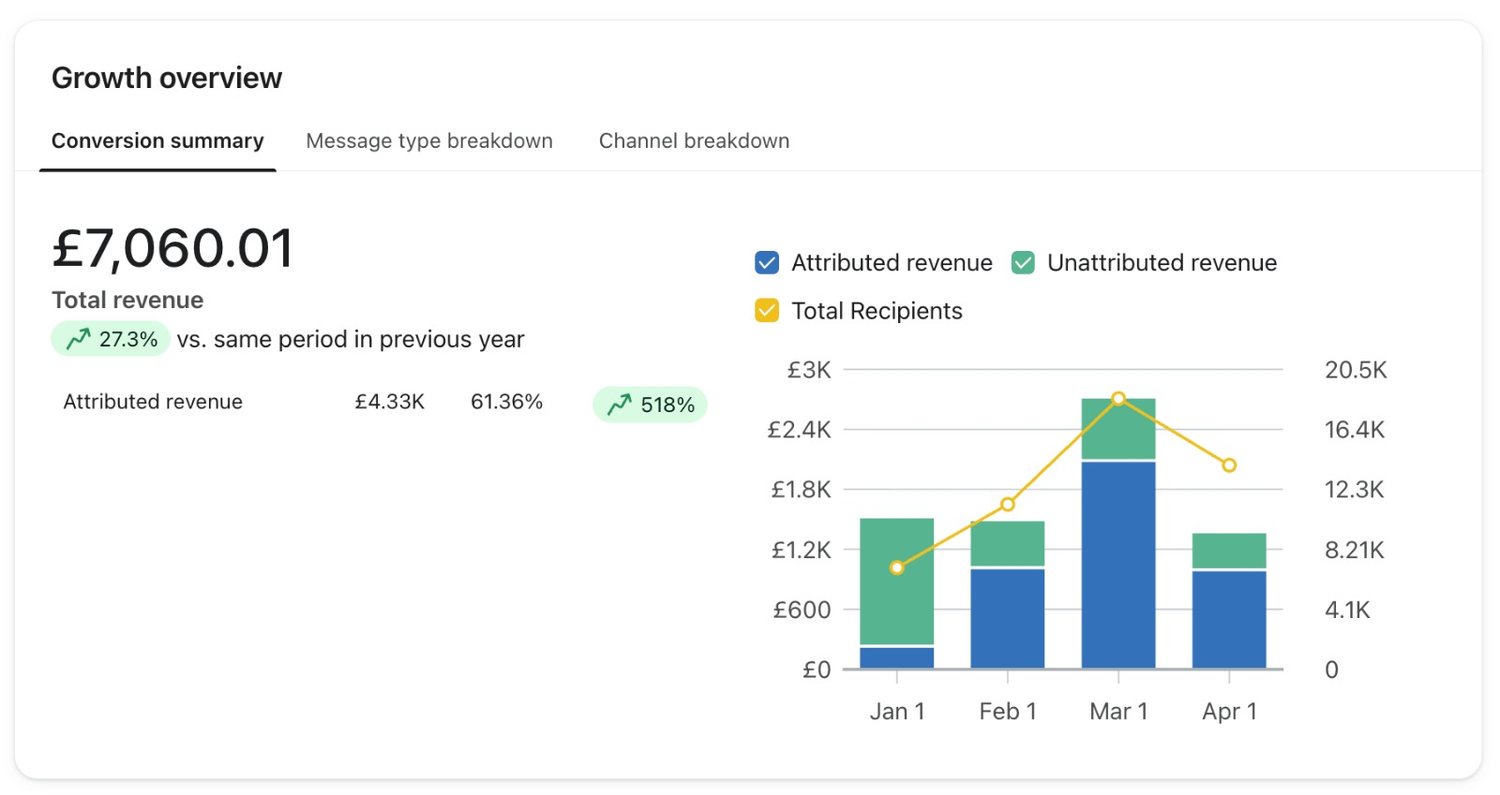
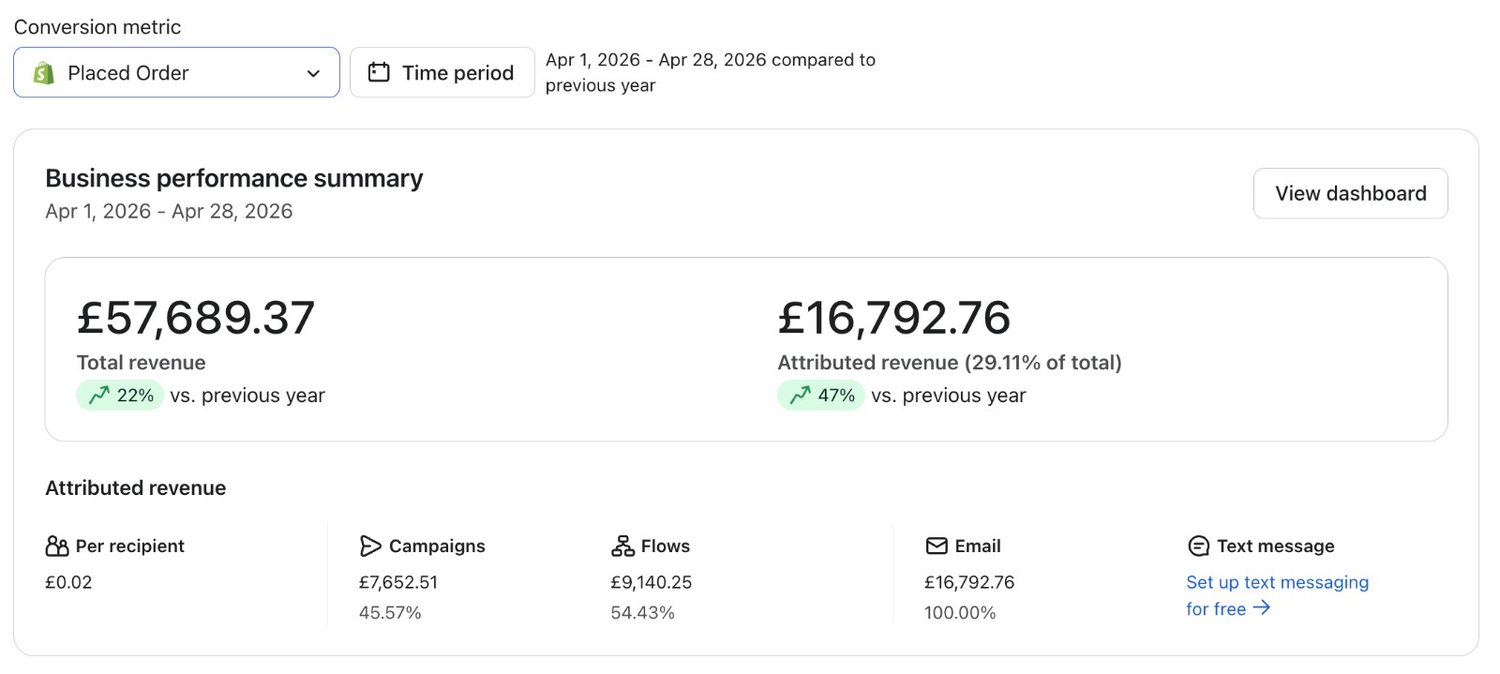
See WhatsApp and SMSSix of these terms, measured in real client accounts
FAQs

How many terms does the glossary cover?
161 entries across 13 letter groups, A to Z. Each one's a plain British English definition, written for you, not for a developer. Use the letter rail to jump, or the find box to filter every entry as you type.
Why is there nothing under X?
Because we haven't met an ecommerce term beginning with X that anybody actually uses. Padding a reference work with entries nobody searches for is how glossaries stop being useful. The key stays on the plate, empty, until there's something honest to put behind it.
Can I use these definitions in my own documents?
Quote what's useful and credit the page. Want the whole thing for your team? Link to it instead of pasting it: entries get corrected and added to, and a stale copy helps nobody.
Which ten terms actually matter if I am starting out?
Deliverability, Segmentation, Flows, Cart Abandonment, Welcome Series Flow, Open Rate, Click-Through Rate, Conversion Rate, Average Order Value and LTV. Get those ten and you can hold your own in any retention conversation. They're all linked from the cross-reference index further down this page.
Do we need to know all of this before we talk to you?
No. Cutting out the jargon is one of our house rules, and this page is here so you never have to nod along to a term you haven't met. In a growth consultation we'll explain anything on this list against your own account.
Who compiled it?
The Engage Commerce team. We're official Klaviyo and Shopify Partners, and we've been building ecommerce growth systems since 2020. Where a term is contested, or means different things on a website and in an inbox, the entry says so instead of picking the flattering reading.
Still translating your own reports?
If half of this page was new to you, that's an agency problem, not a knowledge problem. Bring your account and we'll walk through it in plain English.


Half an hour with Theo, our founder.
We're all about relationships built on trust, mutual respect and a shared vision for success. If that sounds like your vibe, let's make some waves together 🌊