Gross merchandise volume (GMV): what the big number is good for, and what it hides
Everything that went through the till, before returns, refunds and fees come off. Marketplaces lead with it because it's the biggest number. Your shop needs the lines underneath it.
- 051GMV (Gross Merchandise Volume)
- The total value of merchandise sold over a specific period of time through a customer-to-customer exchange site.
- Measured as
- The value of orders placed in a period, before returns, refunds and fees
- Quoted by
- Marketplaces, and anyone pitching a business on its size
- Closest Shopify line
- Gross sales: price times quantity, before discounts and returns
- Steer by instead
- Net sales, gross profit and repeat orders, month by month
Why marketplaces lead with GMV, and what it leaves out
GMV counts an order the moment it's placed. Everything that happens to it afterwards comes off later, in a report fewer people read. So it's always the biggest number available, and that's why it ends up on the slide.
For a site like eBay or Vinted, that's fair enough. They don't own what's sold on them and their income is the fees, so the total flowing through is a decent measure of their size. For a brand selling its own stock, GMV is where the sum starts. Here's what hasn't come off yet.
- Returns and refunds, which land weeks after the sale they cancel
- Discounts, depending on who's counting and whether they say
- Cancelled orders and chargebacks
- Payment fees, postage and any marketplace commission
- The cost of the goods, so it can't tell you a thing about profit
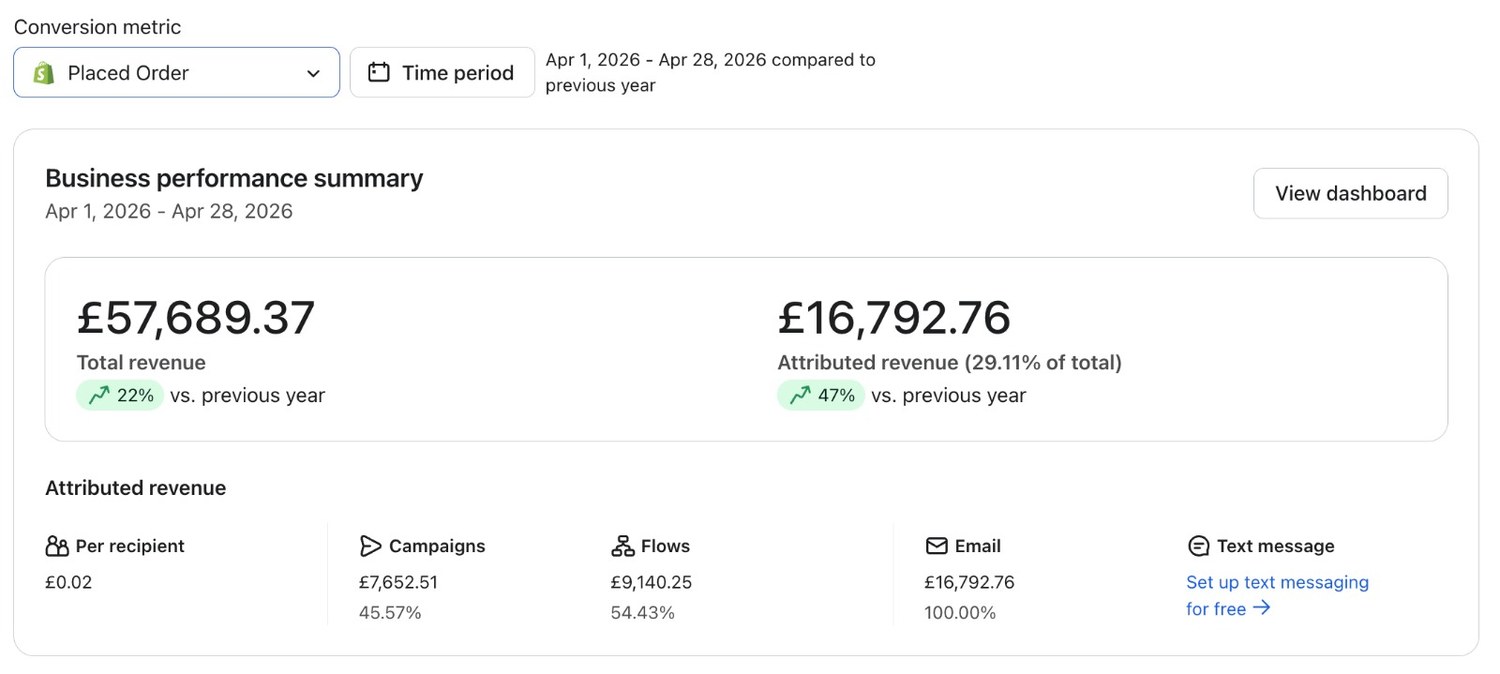
Marketplace GMV grows the total, not the list you can email
Look, an order on your own site and an order on a marketplace land in the same GMV total. They aren't the same customer. One comes with an email address, a purchase history and a reason to write. The other mostly belongs to the marketplace.
So a year where the growth came through Amazon or TikTok Shop can show a lovely GMV line and a flat email list. There are honest ways back to those buyers, and both start with what goes in the parcel: we've written up TikTok Shop customer emails and Amazon buyers separately.
Turning a GMV figure into one you can run the shop on
| Line | What comes off | What it tells you |
|---|---|---|
| GMV, or gross sales in Shopify | Nothing yet | How much went through the till |
| Net sales | Discounts, returns and refunds | What customers kept and paid for |
| Gross profit | The cost of the goods | What's left to pay for everything else |
| Returning customer sales | Everybody's first order | Whether the customers you paid for came back |
That last line is the one email moves. A first order costs you something to win: ads, a discount, often both. The second is where the post purchase flow and everything after it earn their keep, and GMV can't tell the two apart.
Related terms
FAQs

Is GMV the same as revenue?
No. For a marketplace, revenue is the fees it keeps, which is a slice of the GMV. For a shop selling its own stock, revenue sits closer to GMV but still lower, once discounts, returns and refunds come off. If somebody quotes GMV as revenue, ask what happened to the returns.
Why is our GMV so much higher than what lands in the bank?
Because GMV is counted before anything comes back off it. Returns, refunds, discounts, payment fees, chargebacks and marketplace commission all sit between the order and the payout, and some of them arrive weeks later. Line up net sales against your payouts for the same month and the gap usually explains itself.
Can a sale grow GMV and still lose money?
Easily. A sitewide code pulls orders forward and the GMV line looks great. But a discounted order carries the same cost of goods as a full price one, so the whole discount comes out of your profit. Judge a sale on gross profit, and on whether those customers ever come back at full price.
Rather we explained it on your own account?
Bring your Klaviyo account to a growth consultation. We'll walk through what this means for your numbers, in plain English, and what we'd fix first.

Half an hour with Theo, our founder.
We're all about relationships built on trust, mutual respect and a shared vision for success. If that sounds like your vibe, let's make some waves together 🌊