Year over year comparisons, and how to make two Novembers fair
This period against the same period last year. It's the comparison that holds your season still, as long as you line up the right weeks.
- 155Year-over-Year (YoY) Comparison
- Analysing email performance compared to the same period in the previous year to assess growth.
- Compares
- A period against the same period a year earlier, on the same settings
- Beats
- Month on month, for any shop with a season, which is nearly every shop
- Breaks when
- Dates move, the list changes size, or the measurement itself changed
Why last November beats last month as a yardstick
Month on month tells you November beat October. You knew that already. Year over year holds the season still, so what's left to differ is what you did and what changed around you. That's the comparison worth putting beside every KPI you report.
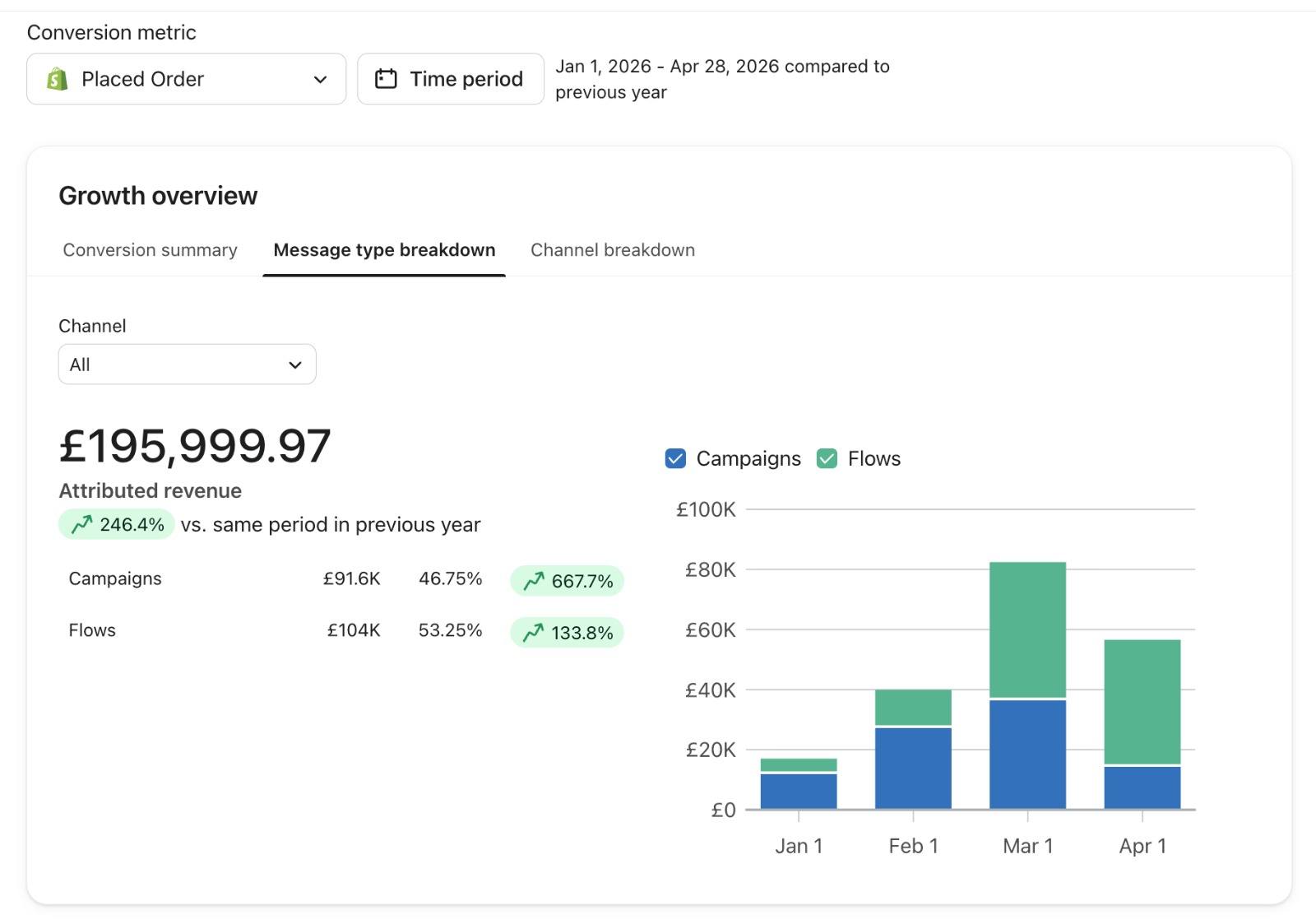
Klaviyo and Shopify will both set a period against the same one a year earlier. Klaviyo's growth overview splits campaigns from flows while it does it, which is where most of the useful questions start.
Line up the weeks, not the dates
The first of November isn't the same day of the week two years running. Compare matching weeks, or a Saturday ends up lined up against a Monday. Some of your biggest days move too. Black Friday follows American Thanksgiving, Easter wanders between March and April, and Mothering Sunday moves with it.
- Put peak weeks side by side, not calendar months that cut through them
- Note the date of every sale, launch and price change, both years
- Hold the attribution window and conversion metric still, or the history moves
- Mark every measurement change, from Apple opening mail in 2021 to Shopify counting sessions differently in late September 2026
That last one is easy to miss. Shopify's note on its session measurement update says to treat it as a measurement change, so conversion rates either side of it weren't counted the same way. Write that on the report before somebody celebrates or panics.
Growth from a bigger list, and growth from better email
If your list is much bigger than last year, attributed revenue will be up whether or not the emails improved. Read the growth per recipient and as a share of the shop's total, and the honest part shows.
| Up on last year | Ask before you celebrate |
|---|---|
| Attributed revenue | Did the list or the number of sends grow faster than the revenue? |
| Flow revenue | Did more traffic reach the site to trigger the flows? |
| Campaign revenue | Was there a sale this year that last year didn't have? |
| Conversion rate | Was it counted the same way both years? |
None of that makes the growth fake. It tells you which part was work and which part was weather. Our post on reading a Klaviyo revenue report covers the settings that move these numbers.
Related terms
FAQs

Is year over year better than month on month?
For a shop with a season, yes, because month on month mostly measures the calendar. Use month on month to catch something breaking quickly, and year over year to judge whether the business is actually better than it was. You'll need a full trading year of clean records before the second one means much.
How do I compare Black Friday when the date moves every year?
Line up the event, not the date. Compare this Black Friday week with last year's, and the days around it by position, so the Monday before sits against the Monday before. Easter and Mothering Sunday need the same treatment, because they move every year too.
What if we changed platforms during the year?
Then the comparison crosses a measurement change and needs a footnote. Platforms count opens, sessions and attributed revenue differently, so lean on the numbers that don't depend on the tool, like orders and revenue from the shop itself, until you've got a year of history on the new one.
Rather we explained it on your own account?
Bring your Klaviyo account to a growth consultation. We'll walk through what this means for your numbers, in plain English, and what we'd fix first.


Half an hour with Theo, our founder.
We're all about relationships built on trust, mutual respect and a shared vision for success. If that sounds like your vibe, let's make some waves together 🌊