The back in stock flow that sends the moment your stock lands
The one email a shopper has already asked you to send. The whole job is beating the shelf.







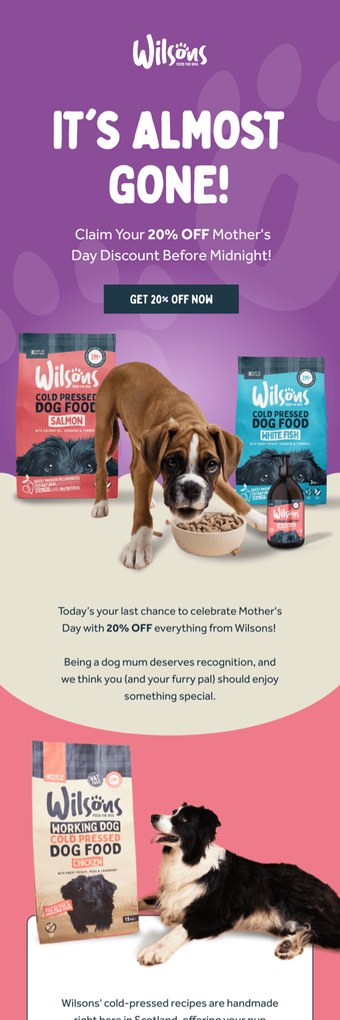
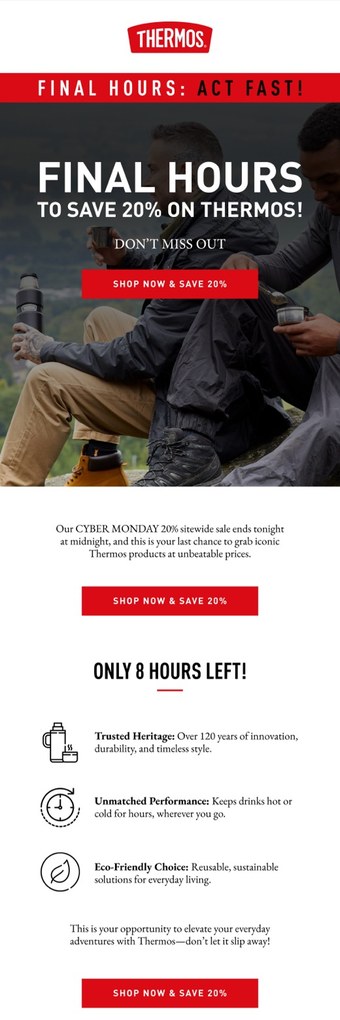
One control, one stock event, three sends and a fair way out
It runs off your inventory, not off a shopper's behaviour, so we build it account by account.
The subscribe control on a sold out page
Everybody arrives through one control: the notify me button that replaces add to basket when a variant sells out. It has to sit where the buy button sat: placement decides the whole flow's volume.
The units cross the threshold you set
The flow fires on the inventory event from your store. Not on a date, and not on somebody remembering. We set the threshold with whoever runs your stock.
Has this profile bought the variant already?
Somebody who gave up and found it elsewhere should never hear about it again.
How the units actually get handed out
We count the units that landed against the people waiting on them. That ratio picks the release.
It's back, and the link goes straight to it
Subject line · Back in stock: the one you asked about
No delay, no preamble. One product, one button, and the link opens the page with the right variant already chosen. Make a shopper pick the size again and they lose it to the person behind them.
Is the variant still in stock?
The check most builds skip. Without it the reminder points people at an empty page.
Did they buy something else while they waited?
Somebody who solved it with another size doesn't need rescuing. They get one shorter send instead.
The reminder, for the people still waiting
Subject line · Still here, and going
The same product a day on, saying plainly how the stock's being released. The reason to act is the shelf.
The branch for the ones who moved on
Subject line · It came back, in case you still want it
It leads with what they bought, not what they missed. One send, no chasing.
The subscription is spent
A back in stock request is a one time thing. One and done. Once it's answered the profile leaves and the subscription clears, and if the line's been discontinued they get one honest email about the nearest alternative.
The one day delay is a starting point. It moves with how fast your lines clear. The subject lines are drafts, and we rewrite them in your voice.
What a sold out page quietly throws away
Three of them, and not one shows up in a campaign report.



The clearest intent on the store, unanswered
Let's face it: a sold out page is the one place a shopper names the exact thing they want. No control on it? That walks out of the door with them.
A restock nobody was told about
The units land and trickle out to whoever happens to visit. By the time anybody reads the stock report, the people who asked have bought elsewhere.
The alert that lands after the last unit
A send with no stock check points hundreds of people at an empty page. That one spends goodwill instead of earning it.
What gets tested, and what gets left alone
Three tests: where the control sits, which release suits your restock sizes, and whether email two earns its place. All three settled on placed orders.
Where the flow revenue is published
Three programmes that report revenue flow by flow.



No borrowed benchmark
We won't quote you somebody else's number. It tells you nothing about your lines, your waiting lists or the size of your restocks. The only reading that counts comes out of your own account.
What we hold this one to
Four readings in your own account, against its own history. Not somebody else's benchmark.
- Placed order rate on the people it reaches
- Revenue per recipient, email one against email two
- Subscribers captured per sold out variant
- Clicks that land on a page with nothing left
FAQs
What is a back in stock flow?
A back in stock flow is an automated email to the people who asked to be told when a sold out product came back, fired by the restock and not by a date. It's the highest intent message in ecommerce: the shopper has already named the variant they want.
Where should the notify me control go on a product page?
In the position add to basket was in, at the same size and in the same colour. Every step in front of it costs you subscribers: a second click to open a form, or a link buried under the delivery tab.
What actually triggers a back in stock email?
The inventory event from your store, when stock on that variant crosses a threshold we agree with you. Not a date. Not a manual send, and not the moment the purchase order is raised.
What do you do when the restock is smaller than the waiting list?
We count the units that landed against the people waiting, and that ratio picks the release. Where the units cover most of the list, one send to everybody is honest. Where they cover a fraction, it goes out in batches in subscribe date order, oldest request first, and the email says the restock is limited.
Should a back in stock email include a discount?
No, and this is the one send where that's easy to argue. The shopper wants the product enough to have asked to be told. A discount buys you nothing but margin off an order you already had.
Can you email somebody who only signed up for a back in stock alert?
You can send the alert, because that's the thing they asked for. It isn't consent to add them to your newsletter, and under UK GDPR and PECR we don't treat it as one. The control carries a separate marketing opt in.
The evergreen stack, drawn diagram by diagram
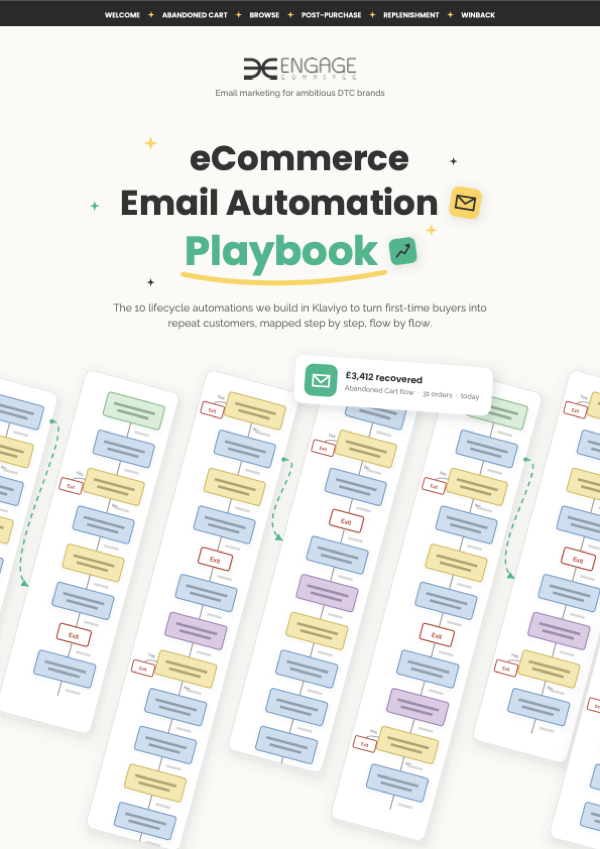
The eCommerce Email Automation Playbook
Twelve pages of decision trees: the evergreen automations, each with its trigger, delays, splits and exits drawn out. A restock alert isn't one of them: it fires off your inventory, not off behaviour.
Fourteen more flows, drawn the same way
One automation each, with its real trigger, its delays and its exits.
- WelcomeThe first sequence after signup
- Site searchSearched, then went no further
- Category browseBrowsed a category, opened nothing
- Browse abandonmentViewed a product, then left
- Price dropOnly the people already watching
- Abandoned cartBasic and advanced, on one page
- Checkout abandonmentStopped at the payment step
- BirthdayOne date, given on purpose
- Post purchaseThe first order welcome
- ReplenishmentTimed to the reorder window
- Cross sellThe second product, not the same one
- VIPYour best customers, kept close
- WinbackThe dormant shopper, before sunset
- SunsetThe profiles that stopped reading
- The flow libraryAll fourteen, in one place
The channel is email marketing, the platform is Klaviyo, and the map behind them is lifecycle strategy.
The work either side of a restock alert
Where is your revenue leaking?
Up to four questions. One answer: what we'd fix first, and where to start on it.
How big is the brand?
Shall we look at what your sold out pages do today?
Bring your Klaviyo login and the lines that sell out most often. We'll count how many people are asking to be told, and what happens when the stock lands. Take the list away and fix it yourself if you like.


Half an hour with Theo, our founder.
We're all about relationships built on trust, mutual respect and a shared vision for success. If that sounds like your vibe, let's make some waves together 🌊