The restock email, and why it is not the back in stock alert


One is an automation for the people who asked. The other is a campaign for everybody who wanted it and never said so.
Two different sends get called the same thing. The alert goes automatically to people who registered interest, and it's close to the highest converting email any brand sends. The restock campaign goes to a much larger group who never signed up, and it's the one usually missing.

The alert and the campaign do different jobs
The alert is triggered, personal and small. Somebody asked to be told, so it lands the moment the stock does and it needs almost no copy. The campaign is a broadcast to a segment who never asked for anything, and it has to justify itself.
| The alert | The campaign | |
|---|---|---|
| Audience | People who registered | A chosen segment |
| Trigger | Stock arriving | A decision to promote it |
| Copy | One line and a button | A reason to care that it's back |
| Timing | Immediately | Once the alert list has had first refusal |
That last row matters more than it looks. Send the campaign before the people who registered have had their go, and you've taught your customers that asking to be notified is pointless.
Four segments, in order of how well they convert
The campaign version isn't a whole-list send. Its audience is everybody whose behaviour said they wanted this and who never clicked the notify button. Which is most people.
- Anybody who viewed the product while it was out of stock
- Anybody who bought it before, if it's repeatable
- Anybody who bought a product it pairs with
- Anybody who viewed the category during the outage
Those four in sequence, across a week, will beat one send to everybody by a wide margin. And they keep the product out of the inboxes of people who never wanted it.
Say how much, and never invent a number
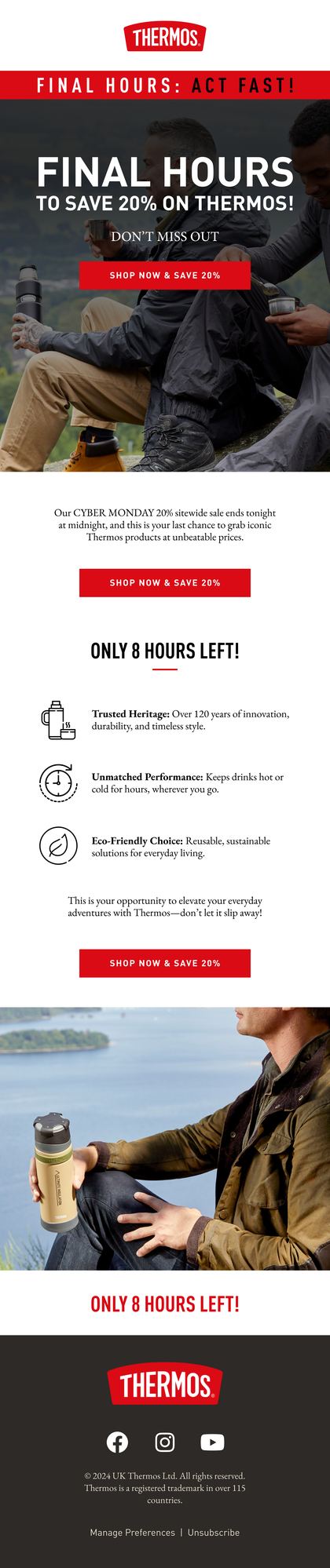
Scarcity works. Fabricated scarcity destroys the format. If the restock is small, say so and say when the next one's expected. If it's a full restock with no urgency in it, don't manufacture any, because customers who rushed and then watched it sit in stock for a month remember.
Where you use a countdown or a low stock indicator, it has to be reading real inventory. A timer that resets on refresh is the fastest way there is to lose a list's trust, and anybody can spot it.
What you send while it's gone decides how the restock performs
Most brands go quiet on a product while it's unavailable, then announce its return to an audience that's forgotten about it. Better pattern: one honest email during the outage explaining why. That's the thing that builds the audience for the restock.
It's also the best signup opportunity you'll ever get for the alert itself, which turns a supply problem into a list of people with declared intent.

A restock is a demand signal worth acting on
Count how many people registered, how fast the stock went, and how many of the four segments converted. That's a cleaner read on demand than any forecast, and it belongs in front of whoever does your buying.
Where the same product sells out over and over, the campaign isn't the fix. Either the buying needs to change, or the product needs a waiting list run as a proper automated sequence instead of one notification.
Look at what happened last time it came back
Find the last restock and check three things. Whether the people who registered got emailed first. How long the gap was between stock arriving and the send going out. And whether anybody who viewed the product during the outage was contacted at all.
In most accounts the third answer is nobody. That's the campaign sitting unbuilt, and it's one of the first gaps we close on any account with real stock movement.
Tell the people who asked, then tell the people who nearly did
The restock alert and the restock campaign are two different sends, and most brands only run the first. Give the registered list first refusal. Then work the four behavioural segments in order, be exact about how much stock there is, and use the outage itself as the moment to explain what happened. Done that way, a restock is a genuine event and not an inventory notification.
FAQs

Should the restock campaign go to the whole list?
Rarely. The four behavioural segments cover almost everybody who cares, and sending to the rest puts a product they never looked at in front of them. A whole-list send only makes sense for a flagship product with wide appeal.
How soon after stock arrives should we send?
The alert goes immediately. The campaign follows once the registered list has had a few hours, which protects the value of registering. If stock is very limited, the campaign may not be worth sending at all.
Is scarcity language risky?
Only when it's invented. A real quantity, a real expected sell out or a real next delivery date is accurate and it works. Timers that reset and stock counters that don't read inventory are the versions that cause the trouble.
What should we send while a product is out of stock?
One email explaining why, with an honest expected date and a clear way to register interest. It beats silence, it builds the audience for the restock, and supply stories are usually a good deal more interesting than brands assume.
Launches, moments and games
New stock, the dates your customers care about, and the sends people play with.

The seasonal tie in email that is not just a themed banner
If the campaign still makes sense with the occasion removed, it was never a tie-in. It was a normal email wearing a costume.
See the campaign
The bundle email that raises order value without cutting price
A sitewide code cuts margin on everything, including what would have sold anyway. A bundle only changes one combination.
See the campaign
The loyalty perks email: remind people what they already have
Most loyalty programmes are built once and never mentioned again. The benefits sit unclaimed, which is a campaign waiting to be sent.
See the campaignRather we planned the campaigns for you?
Bring your Klaviyo account and next quarter's calendar. We'll tell you which of these sends your list is missing, and which one we'd run first.


Half an hour with Theo, our founder.
We're all about relationships built on trust, mutual respect and a shared vision for success. If that sounds like your vibe, let's make some waves together 🌊