Multichannel marketing without paying twice for the same customer
Reaching customers through more than one channel: email, SMS, social, ads, post. Each adds reach. Each also adds a report, a budget and another way to annoy the same person.
- 085Multichannel Marketing
- The practice of using multiple channels (e.g., email, social media, PPC) to reach customers and promote products.
- Not the same as
- Omnichannel, where channels share one customer record and react to each other
- Common trap
- Every channel claiming the same order in its own report
- Consent
- Given channel by channel: an email opt-in isn't permission to text
- Order to add
- Email first, then SMS on a few moments, then the rest
What email, SMS, post and paid social are each good at
| Channel | Good at | What it costs you |
|---|---|---|
| A story, a range and an offer, to people who asked | Next to nothing per send, until the list goes stale | |
| SMS | Speed: the cart, back in stock, the last day of a sale | Every message, so filler sends get expensive |
| Conversations a person actually answers | Template approval, and somebody to staff it | |
| Direct mail | Getting noticed on the doormat | Print and postage on every piece |
| Paid social and search | Reaching people who've never heard of you | Every impression or click, and the customer stays rented |
None of them replaces another. The point of running several is that each does a job the others are bad at.
What running several channels costs, beyond the budget
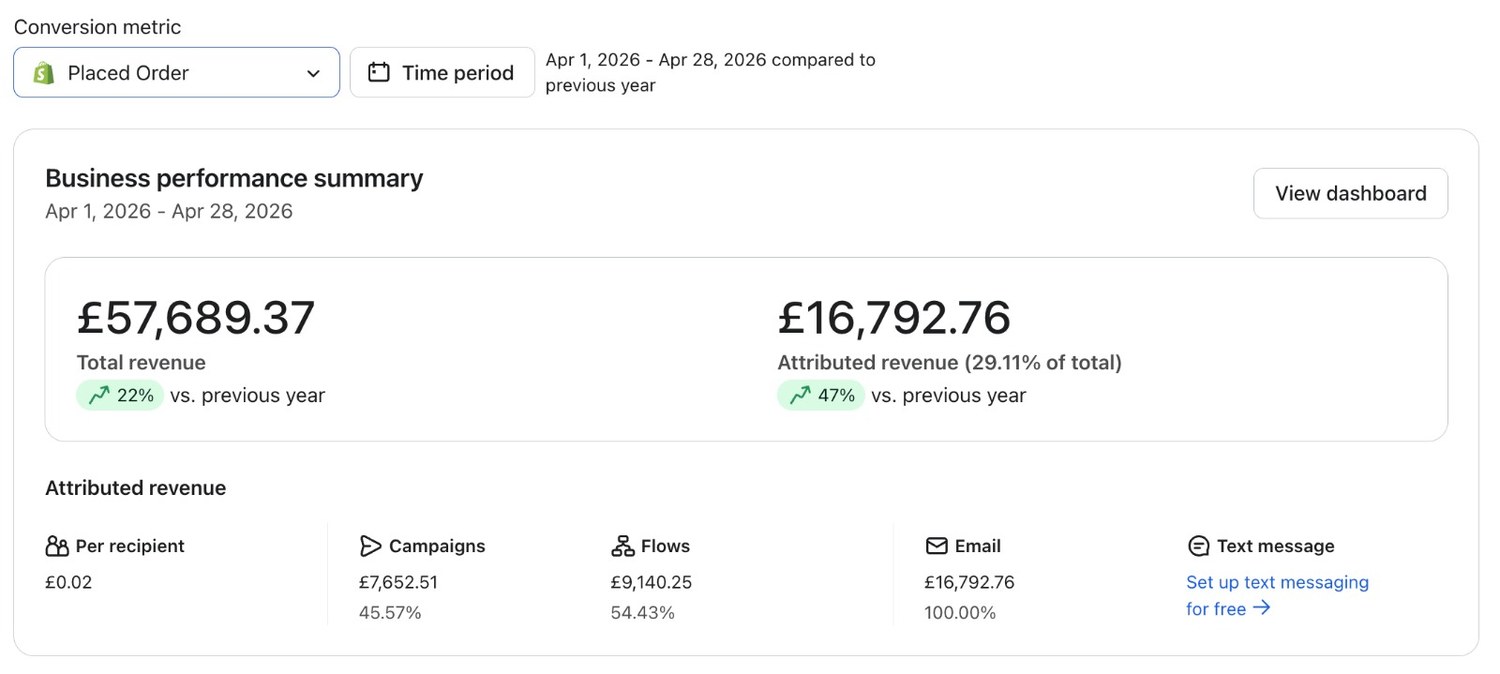
- Double counting, where the ad platforms and Klaviyo each claim the same order, so the channel totals can add up to more than the shop took
- Pile-ups, where an email, a text and a WhatsApp message about the same basket land inside an hour
- Consent gaps, where a phone number taken for delivery gets treated as permission to market by text
Each one's fixable. Read every channel against the shop's own total, not its own dashboard. Run email and SMS from one profile, so a text only goes to people who didn't open the email. Collect each permission on its own tick box, with a record of when.
Which channel to add after email
Most shops asking about a third or fourth channel haven't finished the first. If core flows are missing and the list hasn't been segmented since launch, a new channel just repeats those mistakes somewhere more expensive.
Finish email. Then add SMS on two moments, the cart and back in stock, and read the two together. We've set out the order we'd add channels in, and why WhatsApp waits until somebody can answer it.
Related terms
FAQs
What's the difference between multichannel and omnichannel marketing?
Multichannel means using several channels. Omnichannel means those channels share one customer record and react to each other, so the text knows about the email and the shop knows about both. Plenty of brands run multichannel and call it omnichannel. You find out which you've got when a customer gets three reminders about a basket they already bought.
How many marketing channels should an online shop run?
As many as you can run properly, which is usually fewer than you'd think. Email first, because you own the list and it's cheap per send. SMS next, on the moments where speed pays. Add WhatsApp when someone can answer it, and post when the sums work for a segment.
Do I need separate consent for each marketing channel?
For email and text, treat them as separate. An email sign-up isn't permission to send marketing texts, and a phone number given for delivery isn't either. Collect each opt-in on its own tick box, and keep a record of when and where it was given. This is a summary, not legal advice.
Rather we explained it on your own account?
Bring your Klaviyo account to a growth consultation. We'll walk through what this means for your numbers, in plain English, and what we'd fix first.

Half an hour with Theo, our founder.
We're all about relationships built on trust, mutual respect and a shared vision for success. If that sounds like your vibe, let's make some waves together 🌊