Customer journey mapping: buy from your own shop and write everything down
Writing down everything a customer sees, hears and waits for, from first visit to second order. The useful version takes an afternoon and a test order, not a workshop.
- 066Journey Mapping
- The process of creating a visual representation of the customer’s experience with a brand, from initial contact to post-purchase interactions.
- Covers
- Every touch: site, emails, texts, delivery, packaging, returns and service
- Different from
- A flow diagram, which shows what you send, not what they go through
- Finds
- Messages that overlap, gaps where nothing arrives, and promises that contradict each other
Map the journey by buying from yourself
Workshops produce posters. A test order produces evidence. Use a fresh email address and do what a new customer does. Screenshot every page, email and text, and note when each one arrived.
- Sign up through the pop-up and wait for the welcome flow
- Look at a product and leave, then fill a basket and leave again
- Buy, then follow the order through dispatch and delivery
- Return something, or ask customer service a question
- Keep the inbox open in the weeks after, until the emails go quiet
Then lay it all out on one timeline. It's rarely pretty.
Three problems a journey map shows up straight away
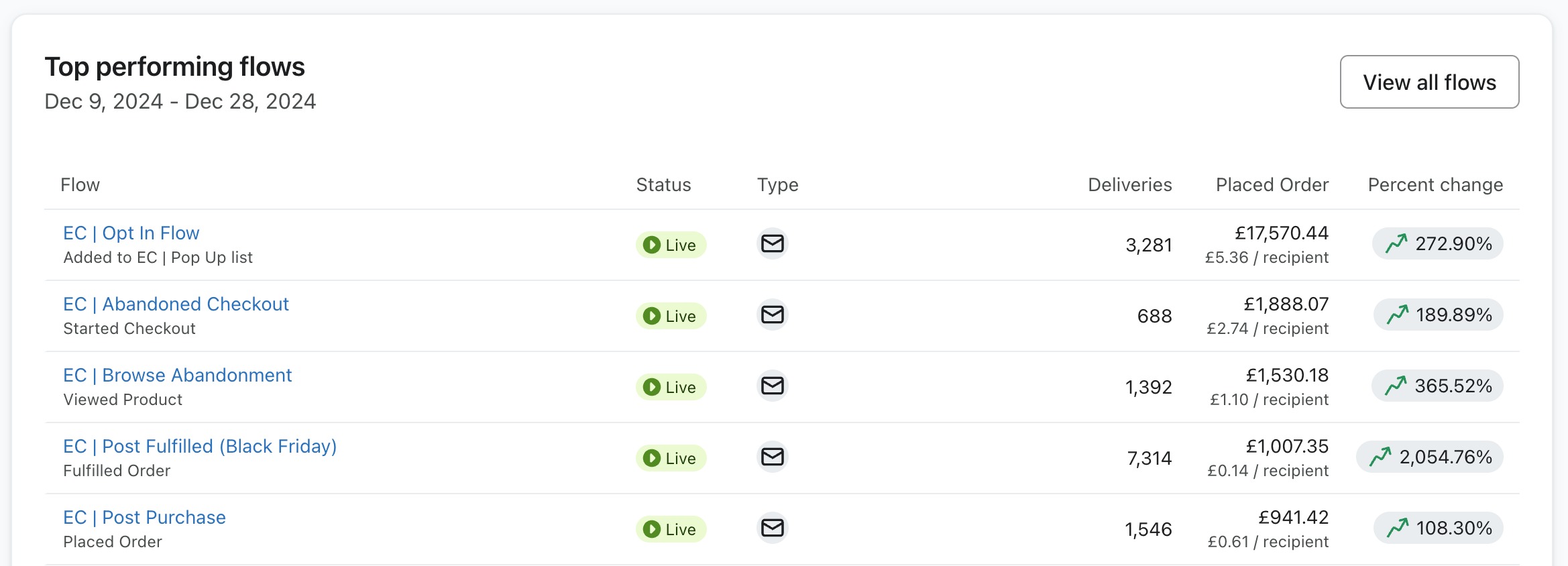
Overlaps come first. Two flows firing on the same day, a basket reminder after the order confirmation, a welcome discount after they've paid full price. Flows get built one at a time, each on its own trigger, so the collisions only show when you look at the whole thing. Here's how to stop Klaviyo flows overlapping.
Then the silences: nothing between delivery and the point they'd need to reorder, which is where plenty of second orders quietly go missing. Then the contradictions: the email says free returns and the returns page says otherwise.
Turning the journey map into flows and fixes
Every problem on the map gets an owner. Overlaps become flow filters. Silences become a post-purchase flow or a replenishment reminder. Contradictions go to whoever owns the page.
Remember it isn't only marketing. The dispatch email, the courier's texts and the returns label are part of the journey, and customers judge you on all of them. A funnel tells you where people leave. The map tells you why. Redo it after any big change to your flows, and at least once a year.
Related terms
FAQs

What should a customer journey map include?
Every message and moment a customer meets, in order: pages, pop-ups, emails, texts, the order confirmation, delivery updates, the parcel itself, returns and any contact with your service team. For each one, note when it arrived and what the customer is probably thinking. The gaps between messages matter as much as the messages.
How is a journey map different from a flow diagram?
A flow diagram shows one automation from your side: the trigger, the delays, the emails, the splits. A journey map shows everything from the customer's side, across every flow, channel and team at once. Each flow can look perfect on its own and still collide with another in the inbox. Only the map shows the collision.
Who should own the customer journey map?
One named person, usually whoever owns retention or lifecycle marketing. They don't have to fix everything on it. They keep it current, take each problem to whoever can fix it, and run the test order again after changes. A map with no owner goes stale within a season.
Rather we explained it on your own account?
Bring your Klaviyo account to a growth consultation. We'll walk through what this means for your numbers, in plain English, and what we'd fix first.


Half an hour with Theo, our founder.
We're all about relationships built on trust, mutual respect and a shared vision for success. If that sounds like your vibe, let's make some waves together 🌊