The ecommerce funnel stops at the first order. Yours shouldn't
The path from first hearing about you to buying. The usual drawing stops at the first order, which is about where the profit starts.
- 048Funnel
- The journey customers take from first discovering your brand to making a purchase, often visualised as a funnel with stages like awareness, consideration, and decision.
- Classic stages
- Awareness, consideration and decision, then the ones people forget: repeat and referral
- Measured by
- How many people get from one stage to the next
- In Shopify
- The conversion rate breakdown report, from cart additions to completed checkout
- Email's place
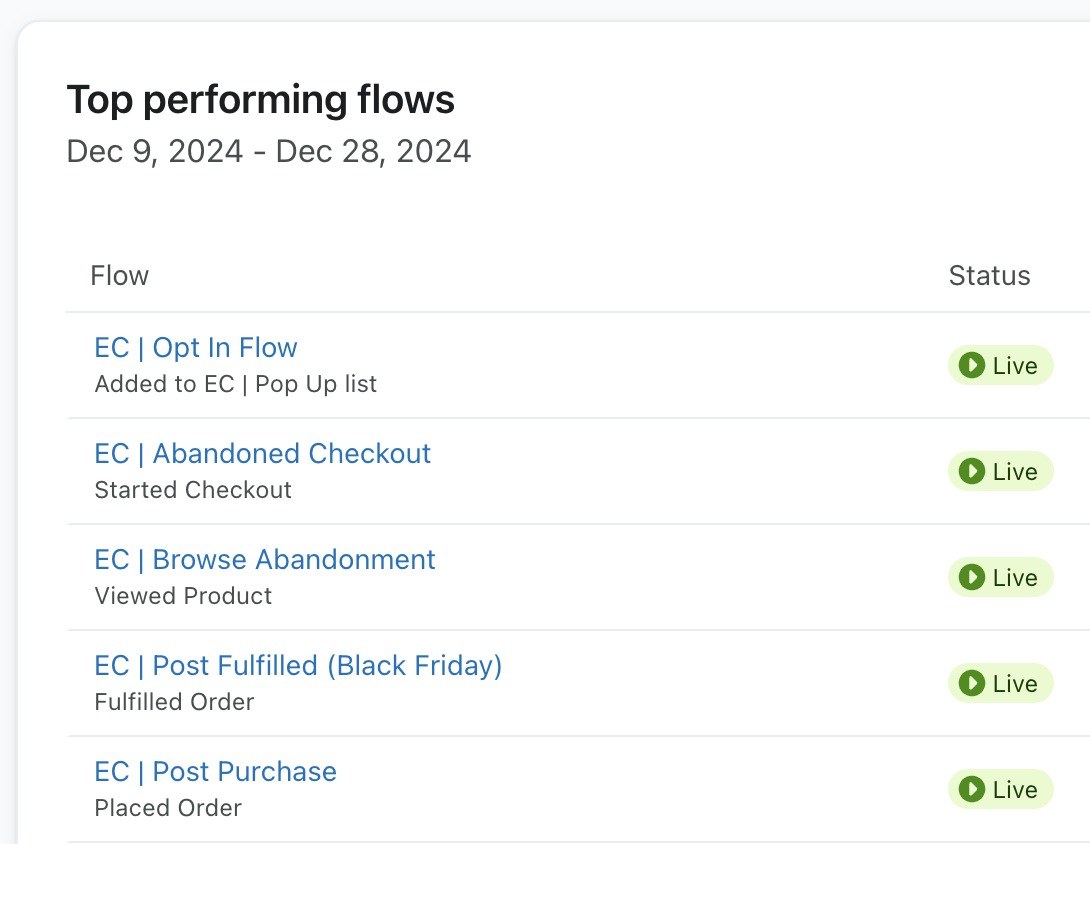
- A flow at every stage where people stall
Why the funnel drawing is wrong, and still useful
Nobody moves through a funnel in a straight line. They see a post, forget you, search for you a month later, fill a basket, leave, and come back from an email. The drawing tidies all that up. It's still useful, because it makes you count how many people get from one step to the next.
The bigger problem is where it stops. The classic funnel ends at the purchase. For a shop that needs repeat orders, that's halfway. Draw the second half too: first order, second order, regular.
The email flow that catches each funnel stage
| Stage | Where people stall | What catches them |
|---|---|---|
| First visit | They leave without a trace | A sign-up form with a real reason to join |
| Browsing | They look at products and go | A browse abandonment flow |
| Basket and checkout | They get as far as paying and stop | Cart and checkout abandonment flows |
| First order | They buy once and drift | A post-purchase flow that earns the second order |
| Repeat | They run out, or lapse | Replenishment and winback flows |
The middle rows are the ones everybody builds first. The last two pay for the rest, and they're the ones we most often find missing. If the second order is your weak spot, start with the post-purchase flow.
Finding the leakiest step in your own funnel
Don't guess. Shopify's conversion rate breakdown report already splits your sessions into those that added to cart, reached checkout and completed checkout. Look at the drop between each step and compare it with the same month last year. The biggest fall, or the one getting worse, is the step to fix first.
Then check what catches people at that step. A big drop between basket and checkout with no checkout abandonment flow behind it is the cheapest fix you'll find. A big drop at the product page is a site problem first. When the numbers can't tell you why people leave, map the journey instead.
Related terms
FAQs
What are the stages of an ecommerce funnel?
The textbook version has three: awareness, consideration and decision. For an online shop, add two after the sale: the repeat purchase, and the point where a regular recommends you. Each stage needs its own measure and its own way of catching people who stall, usually a sign-up form or an email flow.
Where do shoppers usually drop out of an online store's funnel?
It varies by shop, so look at your own numbers before believing anyone's average. Pull the conversion report, compare each step with the one before, and find the biggest fall. Product page to basket and basket to checkout are the usual suspects, and both have an email flow built for them.
Is a funnel the same as a customer journey?
No. A funnel counts how many people get from one stage to the next. A customer journey describes what each person actually goes through on the way, detours included: the late delivery, the email that arrived after they'd bought. Use the funnel to find where people leave, and the journey to find out why.
Rather we explained it on your own account?
Bring your Klaviyo account to a growth consultation. We'll walk through what this means for your numbers, in plain English, and what we'd fix first.


Half an hour with Theo, our founder.
We're all about relationships built on trust, mutual respect and a shared vision for success. If that sounds like your vibe, let's make some waves together 🌊