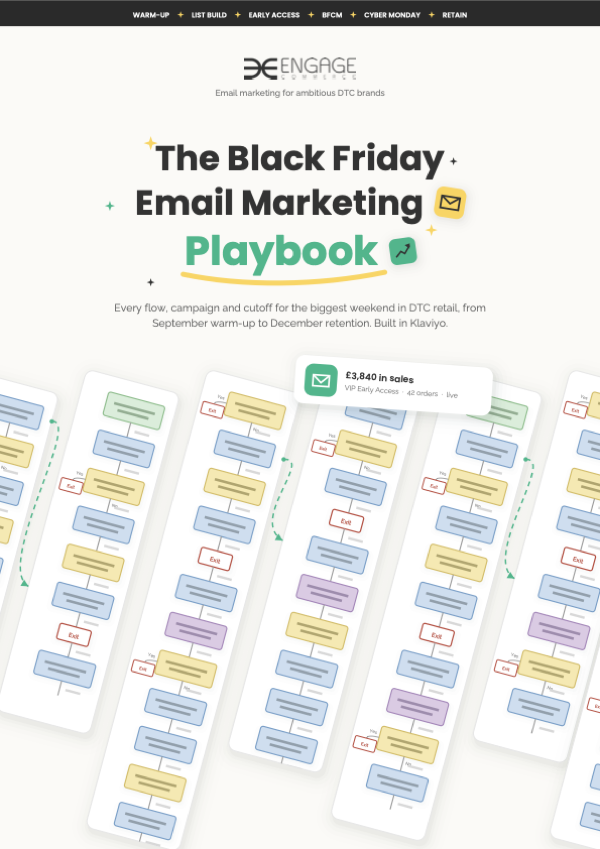
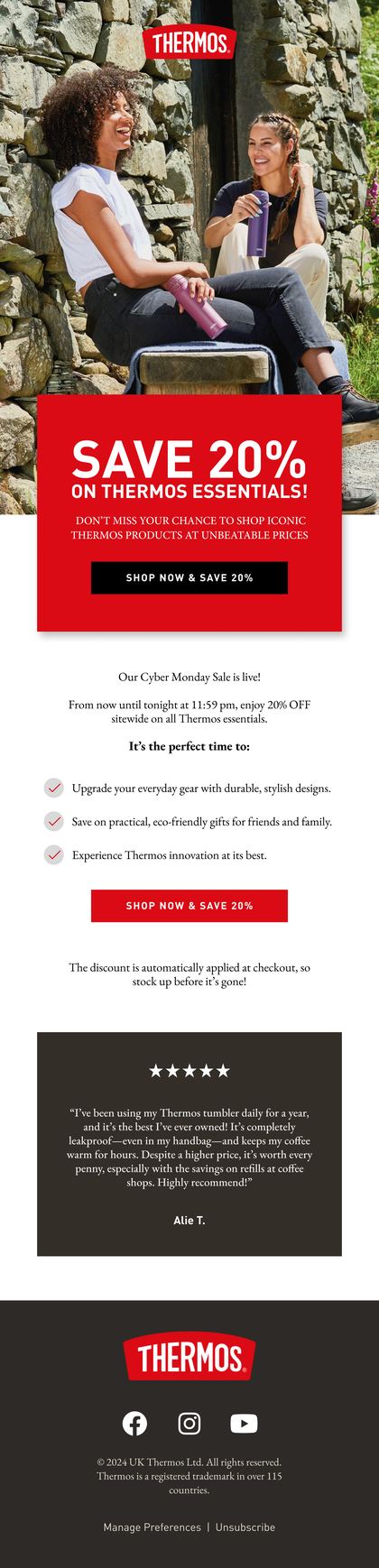
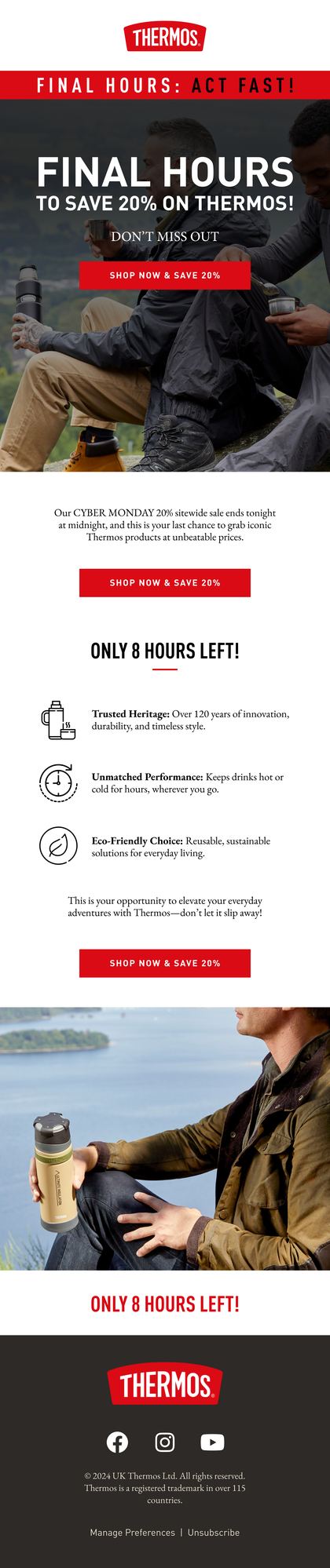
Email flows: what they're made of, and which ones to build first
A sequence that starts itself when somebody does something, and stops itself when they've done what you wanted. The emails are the easy part. The rules around them aren't.
- 044Flows
- Automated email sequences triggered by specific customer actions, events, or behaviours. Flows are designed to nurture customer relationships and guide them through the purchase journey. Examples include welcome series, abandoned cart flows, and post-purchase follow-ups. Once set up, flows run continuously, delivering personalised messages at the right time.
- 004Automation Flow
- A series of automated emails triggered by specific subscriber actions or events, designed to nurture leads or encourage conversions.
- Also called
- Automation flows, automations or automated sequences
- Started by
- A trigger: a signup, a basket, a first order, a date
- Where they live
- The Flows tab in your Klaviyo account
- Judged on
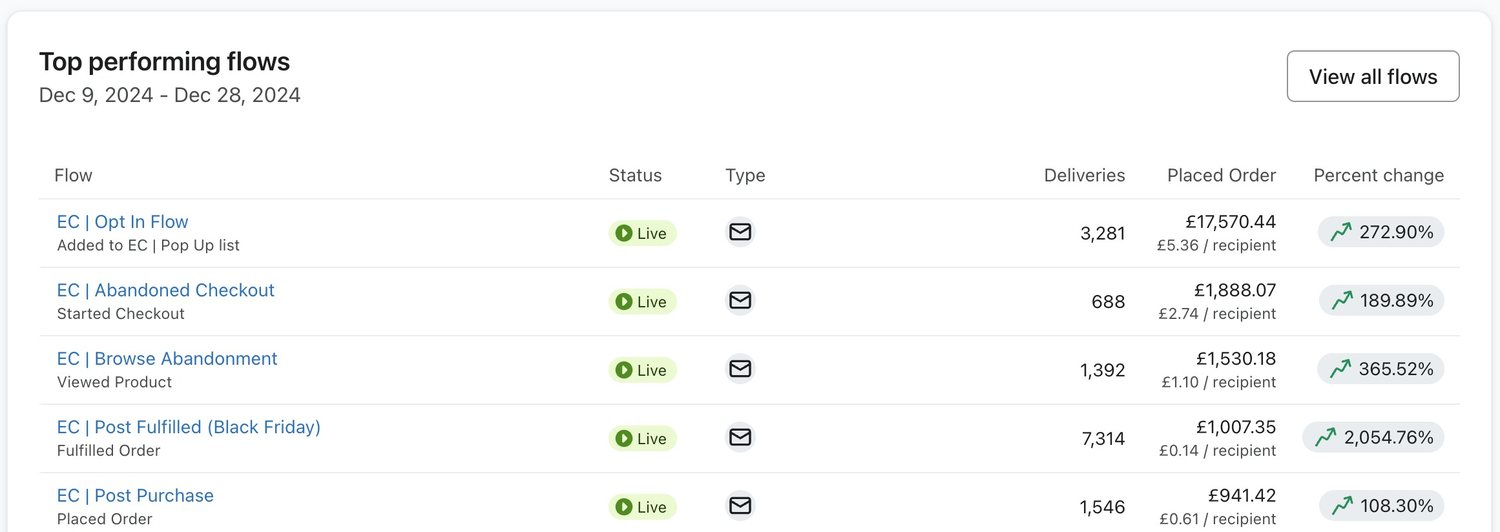
- Placed orders and revenue per recipient, against the flow's own history
What a flow is made of, from the trigger to the exit
Open any flow in Klaviyo and you'll find the same five parts. The emails get all the attention. The other four decide who gets them, when, and when it stops.
- The trigger: the event that lets somebody in, like a signup or a started checkout
- Filters: who's allowed in, and who gets shown out before each send
- Delays: how long the flow waits between one step and the next
- Splits: a question that sends people down different branches
- The exit: where the flow lets go, usually because they bought
When a flow misbehaves, read the filters before you touch the copy. Somebody bought halfway through and still got the reminder? The emails were fine. Nobody told the flow to stop.
How a flow differs from the campaign you sent on Tuesday
A campaign goes to a whole segment on a date you picked. A flow goes to one person at a time, on the day they did something. That's the whole difference, and it's why flows keep earning in the weeks nobody in the office touches email.
| The question | A flow | A campaign |
|---|---|---|
| What starts it? | Something the customer did | A date somebody picked |
| Who gets it? | One person, the moment they qualify | A whole segment at once |
| How long does it run? | Until somebody switches it off | Once, then it's finished |
| How does it go wrong? | Nobody reads it for a year | It goes to everybody, every time |
The order a shop should build its flows in
Start where the intent is loudest. A new signup, a basket left at the payment step, a first order. Those moments happen every day on a shop with traffic, and each one goes unanswered until a flow exists for it.
- Welcome, for the subscriber who hasn't bought yet
- Checkout and cart abandonment, for the basket nobody paid for
- Post purchase, so a first order has a reason to become a second
- Browse abandonment, once those three are earning
- Winback and sunset, once you've got enough customers to lose some
Every one of them is drawn in full in the flow library: the trigger, the delays, the checks and the way out.
Why a live flow still needs reading every quarter
Here's the awkward bit. A flow sends exactly what you wrote on the day you built it, for as long as it's switched on. Prices change, products sell out, offers end, and the second welcome email is still promising last spring's code.
- Is every message still live, or did somebody leave one in manual?
- Do the products and offers it mentions still exist?
- Is anybody who's bought still getting the next email?
- Has revenue per recipient moved against the same months last year?
Related terms
FAQs

Is an automation flow different from an email flow?
No. Flow is Klaviyo's word for an automated sequence, and other platforms call the same thing an automation, a journey or a workflow. Automation flow just says it twice. The parts don't change: a trigger, filters, delays, splits and an exit.
How many emails should a flow have?
As many as the moment needs, which is usually fewer than people build. A basket reminder rarely needs more than three sends. A welcome series for a considered product can run longer, because there's more to explain. Watch what each send earns: when the last one barely sells, it's costing you subscribers, not winning you orders.
Do email flows run themselves once they're live?
They send themselves. They don't look after themselves. A flow keeps doing what it was told on the day it was built, so somebody needs to read it every quarter: the offers, the products, the filters and the numbers. Live means it's sending. It doesn't mean it's right.
Rather we explained it on your own account?
Bring your Klaviyo account to a growth consultation. We'll walk through what this means for your numbers, in plain English, and what we'd fix first.


Half an hour with Theo, our founder.
We're all about relationships built on trust, mutual respect and a shared vision for success. If that sounds like your vibe, let's make some waves together 🌊