Email marketing ROI: the honest sum, and the costs people leave out
What email earns against what it costs. Easy to calculate, easy to flatter, and the flattering version is the one on plenty of agency slides.
- 118ROI (Return on Investment)
- The revenue generated from your email campaigns compared to the cost invested.
- Measured as
- Return minus cost, divided by cost, then multiplied by a hundred
- Return should be
- What you kept on email's orders, not the revenue figure
- Often left out
- Discounts given away, design time and the platform bill
The ROI sum, and the version that survives your accountant
Take what email earned, take away what it cost, divide by the cost and multiply by a hundred. The trouble's in the first line. The usual report puts attributed revenue there, and revenue isn't what you keep.
Use what you kept on those orders instead: revenue less the cost of the goods, any delivery you paid for and the payment fees. The answer's smaller. It's also one you can defend when somebody from finance asks.
The costs that go missing from email ROI
- The platform bill, which grows with the list whether those people buy or not
- Design, copy and build time, in-house or agency
- Every discount code redeemed, which is margin handed back
- Text messages, which are paid for send by send
- Apps for reviews, loyalty and pop-ups that exist mostly to feed email
Discounts are the big one. A code used by somebody who was buying anyway is margin you gave away, and it never shows up as a cost in the email report.
Email's ROI looks big partly because its costs are small, and that part's genuinely true. It's still no licence to email everyone every day.
Attributed revenue isn't the same as caused revenue
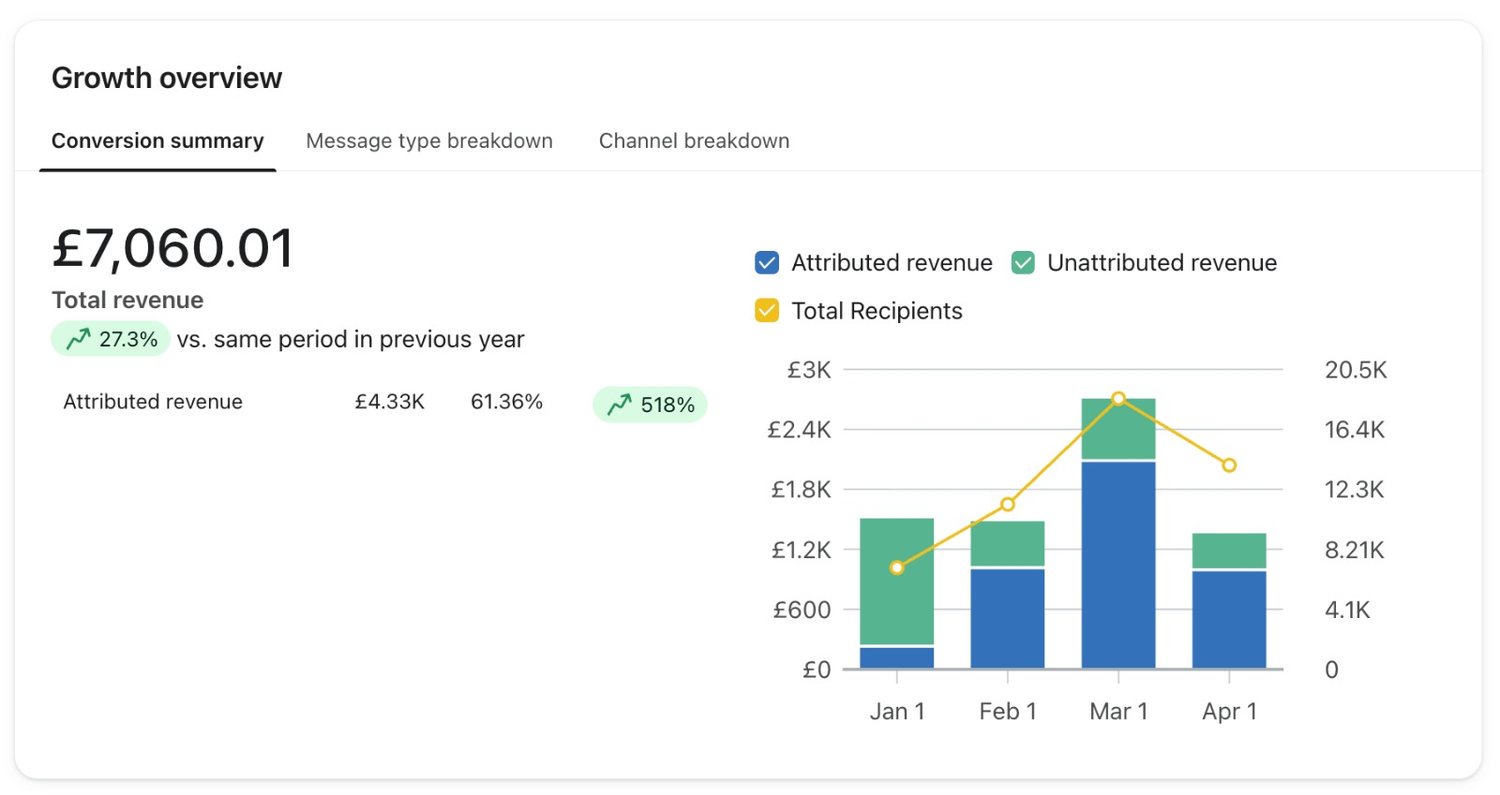
Klaviyo credits an order to an email if somebody opened or clicked inside the attribution window. That's a rule about credit. A loyal customer who was reordering on Friday anyway still lands in email's column.
The honest test is a holdout. Keep a random slice of a segment back from a send and compare what both groups spend. We've written up how to run one, and it'll make your ROI smaller and far easier to believe.
Don't mix ROI up with ROAS either. ROAS divides revenue by ad spend. It ignores margin, and it's often read off the first order alone, which is why we stopped reporting it on its own.
Related terms
FAQs

What is a good ROI for email marketing?
One worked out on what you kept, after every cost, and better than last year's worked out the same way. Published ROI figures rarely say what went into the cost line or how the revenue was credited, so they can't be compared with an honest version of your own.
Should agency fees count in email ROI?
Yes, and so should your own team's time. Leave them out and email looks free to run, which is how shops end up adding sends instead of fixing the ones they've got. Count the whole cost of the programme, then judge whether it earns its keep.
How is ROI different from ROAS?
ROAS divides revenue by ad spend and stops there. ROI takes the costs away first and, done properly, works on what you kept, not on revenue. A campaign can post a handsome ROAS and still lose money once the discount, the cost of goods and the fees come out.
Rather we explained it on your own account?
Bring your Klaviyo account to a growth consultation. We'll walk through what this means for your numbers, in plain English, and what we'd fix first.


Half an hour with Theo, our founder.
We're all about relationships built on trust, mutual respect and a shared vision for success. If that sounds like your vibe, let's make some waves together 🌊