Is email revenue incremental, or would those people have bought anyway
Attributed revenue is a credit system, not proof of cause. The difference is measurable, and most brands have never measured it.


Every email platform reports the revenue it was standing next to. That isn't the same as revenue it caused, and the gap between the two is where most arguments about email marketing actually live. Answering it honestly takes a holdout group and a bit of patience.
What an attributed number is actually claiming
Attribution says an order happened after somebody opened or clicked, inside a window the platform allows. That's a statement about sequence, not about cause. Cause is a different claim, and no email platform makes it, however the dashboard is worded.
Fine, until somebody spends money on the strength of it. A loyal customer who was going to reorder on Friday opens Thursday's email, orders on Friday, and lands in the email column. Nothing about that sale was created by the email.
None of that is the platform being dishonest. Opens, clicks and orders are what it can see, and sequence is the only relationship it can prove between them. The dishonesty, where there's any, happens in the retelling: when a column heading turns into a claim about what would have happened otherwise.
The window decides most of the number
The attribution window is a setting. Widen it and the email column grows without a single extra sale in the business. That's how two agencies reporting the same month hand you two different numbers and both tell the truth.
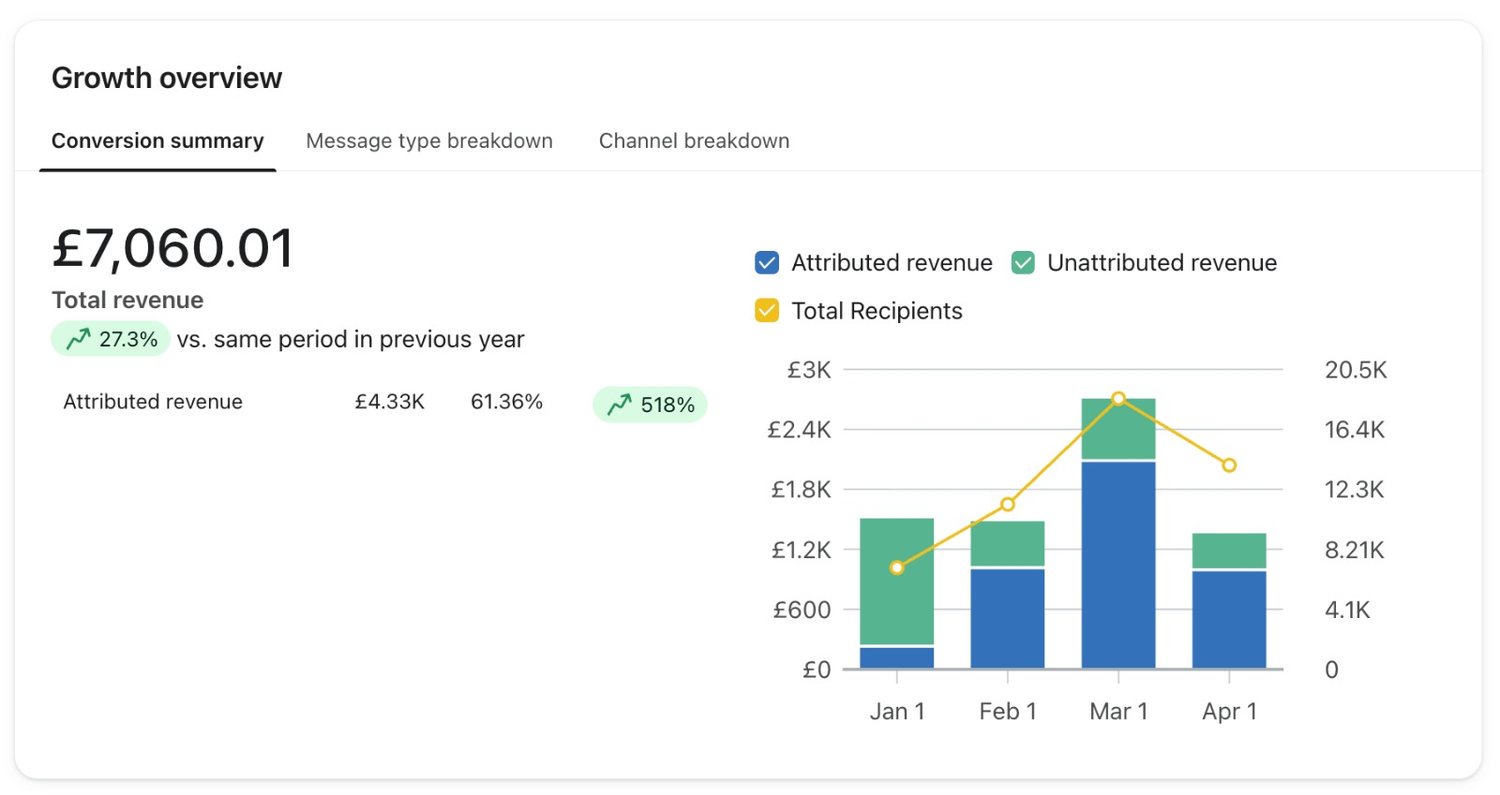
So read the unattributed part of that chart as well. Total business revenue is the number your bank agrees with, and a programme that's genuinely adding sales moves that one too.
The only clean answer is a holdout
Hold a random slice of the audience out of a send, then compare what both groups spent over the same window. The difference is the closest thing to an honest answer you'll get without hiring a statistician.
- Pick one repeating send: a campaign to a stable segment, or a single flow
- Split the audience at random, not by engagement, or you've compared two different kinds of people
- Hold one group out and leave everything else about the period alone
- Compare revenue per recipient across both groups over the same number of days
- Repeat it, because one round on a small list tells you about luck, not about email
- Write down what you expected before you look, so the result can't be reinterpreted afterwards
Two warnings, both learned the expensive way. Holding people out of an automation that works costs you real orders while you learn, so start with the sends you already suspect. And never run one across a peak trading week. Everything else in the business is moving then too.
Then read the answer properly. A small gap tells you the send is worth keeping and not worth expanding. Almost no gap tells you more than any subject line test you'll run this year.
The emails most likely to be adding sales
- Winback and lapsed customer sends, where the alternative outcome is genuinely nothing
- Replenishment timed to the point somebody runs out, which moves a purchase that might otherwise go elsewhere
- Checkout and browse recovery, where the session died and nobody was coming back to it
- Back in stock, because the customer told you they wanted something they couldn't have
- First order welcome sends to people who have never bought, where there's no habit to ride on
See the pattern? Incremental email reaches somebody who wasn't already on their way to the till. That's why lifecycle strategy is a better lens for this than a campaign calendar. It's built around the moments where the answer would otherwise have been no.
Discounting people who were already at the till
The least incremental email in ecommerce is a discount sent to people who were about to buy at full price. It reports beautifully. It also hands your margin away, and the report has no way of showing you that.

Same goes for a reminder sent to somebody with an item in the basket and a card in their hand. Some of those sales get recovered. Some were never at risk, and only a holdout tells you which is which.
There's a version of this that never shows up in the revenue line at all. A code used by somebody who was buying anyway is a discount on a sale you already had. Enough of those and a programme reports growth while the business earns less on every order.
What we report, and how to argue with it
Our case studies publish attributed revenue, because that's what the platform measures and inventing a better number would be worse. We publish the period it covers and the account it came from too, so you can push back on it.
Ask any agency two questions before you believe a figure on their site. What window was it measured over, and what did total business revenue do in the same period. No answers, no number: it's decoration. The buyer's guide has the rest of that conversation.
Theo Tziapouras
Founder and strategy at Engage Commerce, the ecommerce agency for 7 and 8 figure DTC brands.
FAQs

What is a holdout group?
A randomly chosen slice of the audience that deliberately doesn't get the message, kept so you can compare what they spent against everybody who did. Random matters. Hold out the least engaged people and you've measured engagement, not the email.
Does Klaviyo report incrementality?
Not directly. It reports conversions attributed to a message inside a window you can change, which is a useful operational number and a poor causal one. Getting to incrementality means running your own holdout and comparing the two groups yourself.
How long should a holdout run?
Long enough for the difference to be bigger than the noise, which on most Shopify lists means weeks and several repeats, not one send. If the two groups are within touching distance after a single campaign, that's a result about sample size, not about email.
Is attributed revenue useless then?
No, and treating it that way is its own mistake. It's a consistent way to compare this month with last month, one flow with another, one segment with another. It stops being safe the moment somebody reads it as the amount the business would lose if the emails stopped.
Can I just compare a month with email against a month without it?
Only if nothing else changed that month, and nothing else ever does. Seasonality, paid spend, stock levels and press all move at the same time as your calendar, and a before and after picks every one of them up. A holdout works because both groups live through exactly the same month.
Should I turn a flow off to test it?
Turning a live flow off is a blunt way to find out, and it costs real orders while you wait. Hold out a random share of the people who enter it instead. You get the same comparison, you keep most of the revenue, and you can switch it back the moment you have your answer.
A smaller number you can defend beats a big one you can't
Incrementality is uncomfortable. It makes a good programme look smaller on paper, and nobody selling email wants to hand you the tool that shrinks their own headline. We'd still rather you ran the holdout. Once you know which sends genuinely add sales, the arguments about the calendar stop, and your attention goes to the moments where the answer would otherwise have been no.
Measurement and attribution
Which numbers are worth watching, and which ones flatter everybody who reports them.

Flow revenue vs campaign revenue: which one to fix first
One half is a machine that runs while nobody watches it. The other is a decision somebody makes every week. They fail differently.
Read it
Why is my open rate so high? Because Apple opened it for you
Apple's been opening your email for you since 2021. Here's what the biggest number on your report measures now, and what to trust instead.
Read it
A high product page exit rate usually marks a missing capture point, not a broken page
The exits worth studying are the warm ones. Deep scroll, long dwell, the same thing opened again and again before they leave.
Read itWould you rather this was just handled?
Bring your Klaviyo account and the thing annoying you most. We will tell you what we would fix first, before you spend anything.

Half an hour with Theo, our founder.
We're all about relationships built on trust, mutual respect and a shared vision for success. If that sounds like your vibe, let's make some waves together 🌊