Why is my open rate so high? Because Apple opened it for you
Apple's been opening your email for you since 2021. Here's what the biggest number on your report measures now, and what to trust instead.

Your open rate climbed and your revenue didn't. Both numbers are telling the truth. Apple Mail has been loading tracking pixels on its own servers since 2021, so a recorded open stopped meaning a reader. Check your coverage before the next report goes out, then grade every test on the numbers a server can't fake.
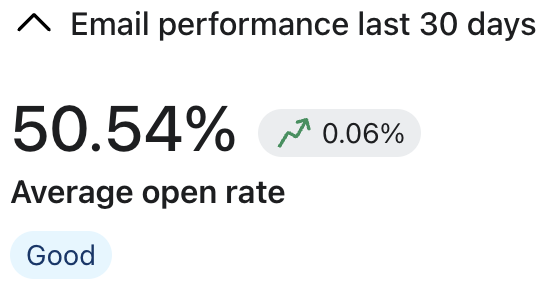
The number is high because Apple opened it for you
Let's face it: the open rate is the number everyone looks at first. Yours looks better than it has in years. Your click rate hasn't moved in months, and that gap is the exact moment an account starts making bad decisions on good data. Both numbers are honest. The honest reading is the uncomfortable one.
Since 2021, Apple's Mail Privacy Protection has loaded tracking pixels on Apple's own servers the second an email lands. Klaviyo logs the open. The subscriber hasn't picked up their phone yet, and a big slice of those opens never involved a person.
Most agencies never sat anyone down and explained what changed. Open rate is the number you recognise, and it's the one that usually goes up. Easier monthly conversation than the one about clicks.
What Mail Privacy Protection actually does to the pixel
Every marketing email carries an invisible single-pixel image. The image loads, the platform logs an open. That's been the whole mechanism since email tracking existed, and Mail Privacy Protection breaks the assumption sitting underneath it.
If someone reads through Apple Mail on an iPhone, iPad or Mac, Apple's servers pre-fetch the whole email the moment it lands, images and all. The pixel fires. The open is logged before they've seen a thing, and they can delete it unread and it still counts.
So anyone on Apple Mail now appears to open every campaign you send. Doesn't matter what the subject line said. Doesn't matter whether they looked at their phone that day, and even the send time your platform optimises for you was partly picked by servers.
Find out how much of your list has gone open rate blind
Not every list gets hit the same way. That's what makes this dangerous instead of merely annoying. A young, Android-heavy audience bought through Instagram ads might have a small slice reading on Apple Mail. A premium brand whose customers skew iPhone can have most of the list on it.
That panel is where most monthly decks begin and end. Biggest number on the page, reassuring label underneath. Add Apple privacy opens as a metric to a custom performance report in Klaviyo, or ask whoever runs your Klaviyo account to pull it. Then put that coverage beside your open rate. Every time you report it.
The bigger the coverage, the less your open rate means for that list. The smaller it is, the more signal survives. On most ecommerce lists the coverage is far larger than anyone in the room expects.
Clicks are still a human doing something on purpose
Clicks aren't free. Someone has to see the email, care enough to act, then tap a link, and Apple's servers do none of that on their behalf. Click rate stayed honest. It's still a person doing something on purpose.

Read those rows the way most teams do and you stop at the open column. It comes first and it flatters. The click column next to it is the story, and on a list too small to settle a subject line on orders, it's the one to grade the test on.
Same goes for the two point dip that sets off a panic. On a list with heavy Apple coverage, a small move in open rate is mostly noise: part of that number was never a person. A click rate that's sat flat through a dozen subject line rewrites is the finding that deserves the meeting, and the fault is usually in the offer, the segment or the creative inside the email programme itself.
Rebuild the report so the honest numbers lead
- Pull Apple Mail coverage as its own line in the monthly report, not buried in a settings tab nobody opens
- Say it in the same breath as every open rate you present, so nobody reads a ceiling as interest
- Make click rate the success metric in every subject line and send time test, and write it into the plan before you send
- Watch click-to-open rate as your engagement trend, since it divides real actions by inflated opens
- Keep open rate for spotting broken sends: a collapse across every kind of reader at once means domain trouble
None of this makes open rate useless. A spam-filtered campaign or a broken render still shows up as an open rate off a cliff for every kind of reader at once, and that deserves an alarm. What it can't tell you any more is whether a subject line worked.
These are the habits behind the results we publish, and they cost you nothing. The hard bit is saying the honest number out loud before the flattering one.
Where this correction matters less

A list that's genuinely light on Apple Mail keeps most of its old signal, so the correction there is marginal. Coverage belongs to your list, not to email as a channel. Check yours before you decide how hard to react.
If a flow runs on SMS or WhatsApp, there's no pixel to spoof: no image to pre-fetch in the first place. Those channels carry their own borrowed number, because a near-perfect open rate there is really a delivery stat. Every channel has a metric that flatters it, and the job is knowing which one yours is.
Theo Tziapouras
Founder and strategy at Engage Commerce, the ecommerce agency for 7 and 8 figure DTC brands.
FAQs
Is a high open rate still a good sign?
It's a diluted one. Apple Mail loads tracking pixels on its own, so a share of your recorded opens happened with nobody reading, and that share is different on every list. Treat the number as a ceiling on real interest. Read it next to your Apple Mail coverage, never on its own.
How do I find my Apple Mail coverage in Klaviyo?
Add Apple privacy opens as a metric to a custom campaign performance report, which separates the opens Apple pre-fetched from the rest. You can also segment your list by email client to see how much of it reads through Apple Mail. Check a few campaigns, not one.
Does Mail Privacy Protection affect click tracking?
No. A click needs a person to see the email and tap a link, and Apple's servers don't do that on anyone's behalf. That's why click rate stayed honest while opens inherited all the noise. It's the number we grade a test on when the list can't carry an order test, and the one we'd ask you to report beside opens.
What should decide a subject line test now?
Placed orders where the volume carries it, click rate where it can't, declared as the success metric before you hit send. On a list with heavy Apple coverage a winning open rate can be manufactured by servers, so a test graded on opens can crown a loser. Write the metric into the test plan and stick to it.
The flattering number is the one to poke at
Open rate didn't die in 2021. It just stopped meaning what the deck says it means. The teams still winning report the coverage next to the headline, grade their tests on orders and clicks, and let the honest numbers pick the next move. And if the biggest number on your report only ever goes up, that isn't performance. That's a measurement drifting away from the truth.
Measurement and attribution
Which numbers are worth watching, and which ones flatter everybody who reports them.

A high product page exit rate usually marks a missing capture point, not a broken page
The exits worth studying are the warm ones. Deep scroll, long dwell, the same thing opened again and again before they leave.
Read it
We stopped reporting first order ROAS to clients, and it changed the budget conversation
The number that gets the budget approved isn't the one that says whether the customer comes back. Report both, side by side.
Read it
What a failed A/B test told us about who actually buys
A losing average can bury a winning segment. Cut every test by list membership and flow engagement before you call it.
Read itWould you rather this was just handled?
Bring your Klaviyo account and the thing annoying you most. We will tell you what we would fix first, before you spend anything.

Half an hour with Theo, our founder.
We're all about relationships built on trust, mutual respect and a shared vision for success. If that sounds like your vibe, let's make some waves together 🌊