Checkout optimisation: fix the surprises first, the buttons second
Making the last steps before payment short and free of surprises. Most checkouts don't lose people to bad design. They lose them to a delivery charge nobody mentioned earlier.
- 015Checkout Optimisation
- Enhancing the checkout process to reduce cart abandonment and increase conversion rates.
- Measured as
- Completed checkouts divided by checkouts started
- Where to look
- Shopify's conversion rate breakdown report, from cart to completed checkout
- Usual culprits
- Late delivery costs, forced accounts, missing payment options, slow apps in the cart
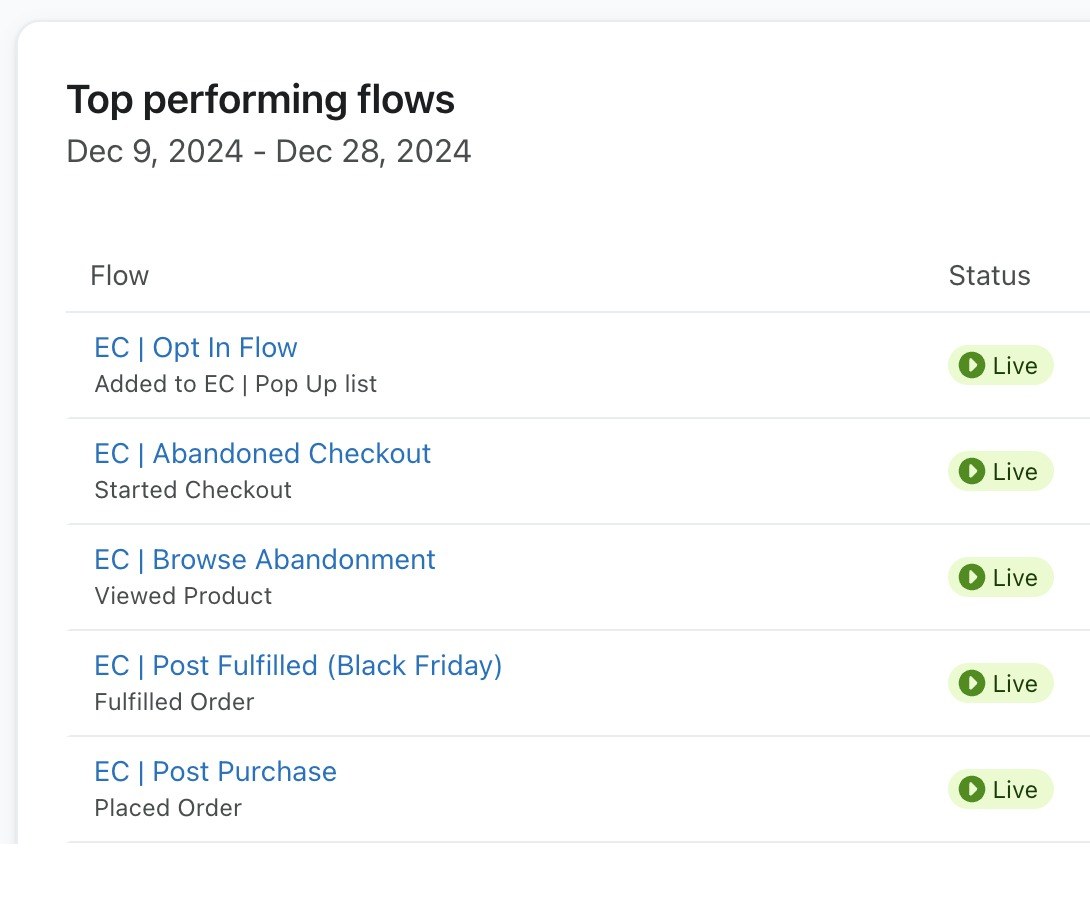
- The safety net
- An abandoned checkout flow in Klaviyo
Ecommerce checkout optimisation, spelt optimization in American guides, covers every step from the cart to the order confirmation. Most of the gains come from answering questions earlier, before anyone redesigns a button.
The checkout process, step by step
Checkout process optimisation means looking at each step a buyer goes through and asking what could stop them there. On most ecommerce sites there are four steps before the order is placed, and each one loses people for its own reasons.
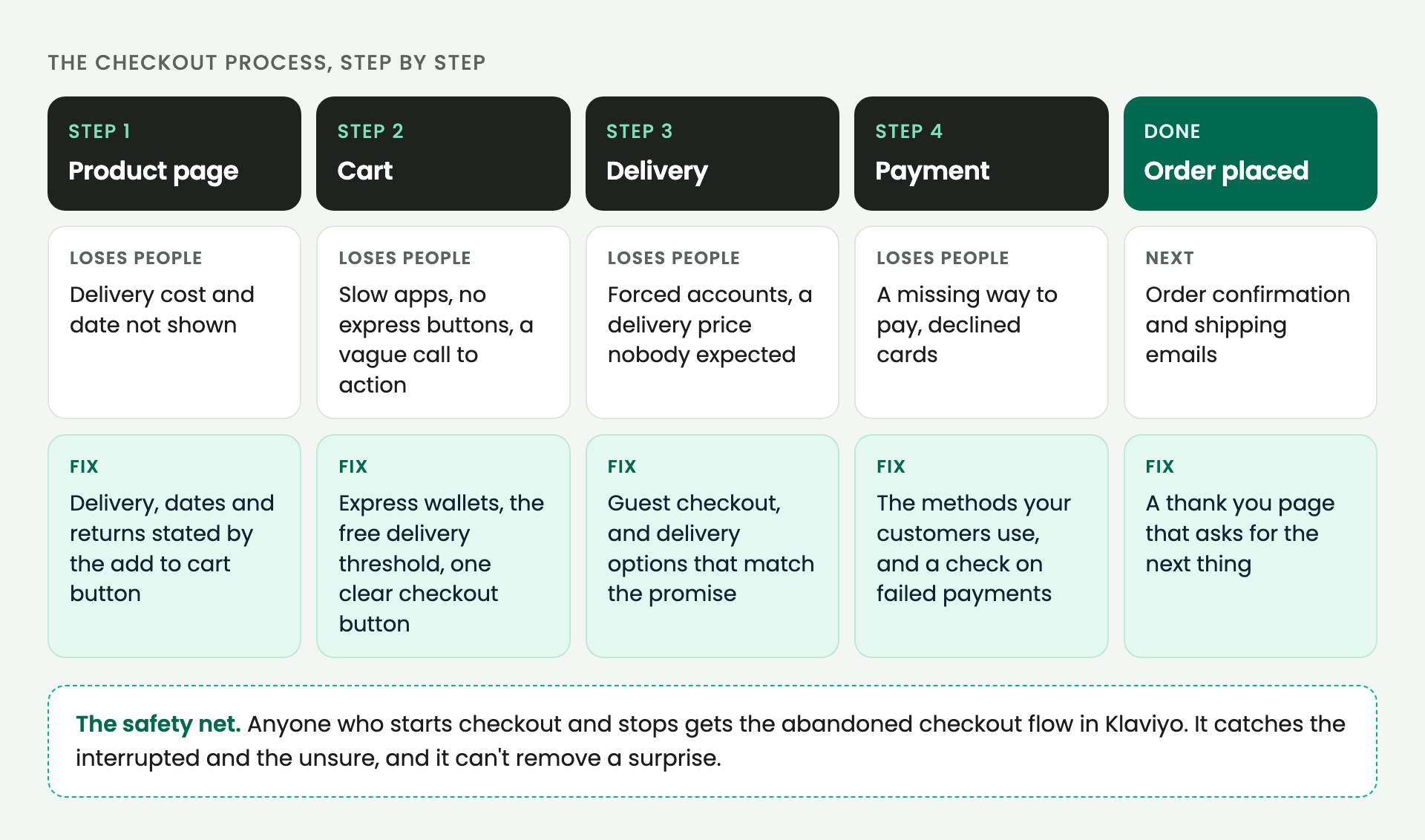
Website checkout optimisation starts on the product page for that reason. By the time the buyer reaches the payment step, most of the decisions that lose them have already been made somewhere else on the site.
People leave a checkout when it tells them something new
By the time someone reaches your checkout they've picked the product, the size and the colour. What stops them now is news. A delivery charge they hadn't seen, a delivery date further off than they assumed, an account they're suddenly asked to make.
So the cheapest checkout fix usually isn't in the checkout. It's putting delivery costs, delivery dates and the returns promise on the product page and in the cart, where the answer arrives before the question does.
Checkout delivery options deserve the same care. Show the cheapest option and the fastest one with real dates, name the courier if customers know it, and keep the options and prices exactly as the cart described them.
What to check on a Shopify checkout, in order
On Shopify you can't change much of the checkout itself, and that's mostly fine: it's quick, and Shopify keeps improving it. The cart is your own code, and Plus stores get more room inside the checkout. Work through this before anyone redesigns anything.
- Express buttons such as Shop Pay, Apple Pay and Google Pay are switched on, and show in the cart as well as the checkout
- Guests can pay without signing in, see guest checkout
- Delivery options and prices match what the product page and the cart promised
- Payment methods cover how your customers actually pay, including any pay later option they ask for
- Apps in the cart aren't slowing it down or fighting each other
Then look at failed payments, which are easy to mistake for abandonment. Your payment provider reports declined and failed card payments. If a lot of checkouts end at the payment step, ask the provider about its acceptance rate for your kind of customer, and whether extra card checks are turning away good orders.
Shopify checkout optimisation has limits, and a few stores do outgrow them. If your checkout really blocks something you need, the ecommerce platform page covers what changing platform involves.
Checkout incentives, gifts and calls to action
A checkout incentive is anything that gives the buyer a reason to finish now. Used well, it nudges people who were going to buy anyway into a slightly bigger basket. Used badly, it trains them to wait for a code.
- A free delivery threshold, shown in the cart with how much more the buyer needs to add.
- A gift with purchase above a basket value, added to the cart automatically so nobody has to hunt for it.
- A sample or a small extra on first orders, which costs you less than a discount and gets your product tried.
- A discount code box that doesn't dominate the page, so buyers don't leave to search for a code they don't have.
The call to action in the cart and checkout should say what happens next, such as checkout or pay now, and there should be one obvious button on each step. A cart with three competing buttons slows people down at the point you most want them to move. Conversion rate optimisation tests these changes properly.
Measure checkout completion by device, over whole weeks
Take completed checkouts and divide by checkouts started. Then split it by device, because phone and desktop checkouts fail for different reasons and a blended number hides both. Compare whole weeks with whole weeks, so a good Saturday doesn't pass for a fix.
That number is your checkout conversion rate, and it's the one to judge any checkout change by. Your overall conversion rate moves with traffic and offers, so it can't tell you whether the checkout got better.
If your abandoned checkout emails get clicked and the orders still don't come, look at the page before the email. We've written up how to tell when the fault sits on the other side of the click.
What the abandoned checkout flow can fix, and what it can't
The abandoned checkout flow catches people who started and stopped, and on Shopify you usually have their address by then. Its second email earns its place by answering delivery, returns and payment, the same questions the checkout should have answered.
What it can't do is rescue a checkout that surprises everyone. A discount in the third email papers over a delivery charge. It doesn't remove it.
People who leave earlier, with something in the basket and no checkout started, get the abandoned cart flow instead. And once the order is placed, the thank you page is the first chance to ask for the next one.
Related terms
FAQs
What should we fix first on our checkout?
Whatever surprises people. Show delivery costs and delivery dates on the product page and in the cart, switch on express payments, and let guests buy without an account. Then watch a few recordings of real checkouts on a phone. The fix is usually obvious once you've seen someone struggle.
Is a one-page checkout better than three pages?
Not automatically. Shopify defaults to one page and lets you switch to three, so you can test it on your own traffic. Judge it on completed orders over whole weeks, split by device. Fewer surprises beats fewer pages, and a short page full of unanswered questions still loses people.
Can email fix checkout abandonment on its own?
No. The abandoned checkout flow wins back people who were interrupted or unsure, and it's worth having. It can't remove a delivery charge, a missing payment method or a slow page. If the same objection keeps coming back in replies to the flow, fix it in the checkout and the flow gets easier too.
Is checkout optimization the same as checkout optimisation?
Yes. Optimization is the American spelling and optimisation the British one, and guides use both. Either way it means the work of getting more of the people who start a checkout to finish it, from the product page through to the order confirmation.
Do gift incentives at checkout work?
They can, when the gift is something buyers want and it's added to the cart for them. A free gift above a basket value tends to lift the size of orders from people who were already buying. It won't rescue a checkout that surprises people with delivery costs, so fix those first.
Rather we explained it on your own account?
Bring your Klaviyo account to a growth consultation. We'll walk through what this means for your numbers, in plain English, and what we'd fix first.


Half an hour with Theo, our founder.
We're all about relationships built on trust, mutual respect and a shared vision for success. If that sounds like your vibe, let's make some waves together 🌊