Klaviyo Smart Send Time is guessing: here's how to find your list's real send window
The model behind Smart Send Time learned its habits from opens Apple fired for you. Clicks and revenue know when your list really reads.


Smart Send Time optimises the hour each subscriber opens, and a growing share of those opens were fired by Apple's servers, not by people. Chart the honest curve, run a split judged on revenue per recipient, and decide how much trust the default has really earned.
The slot that won on opens wasn't where the buying happened
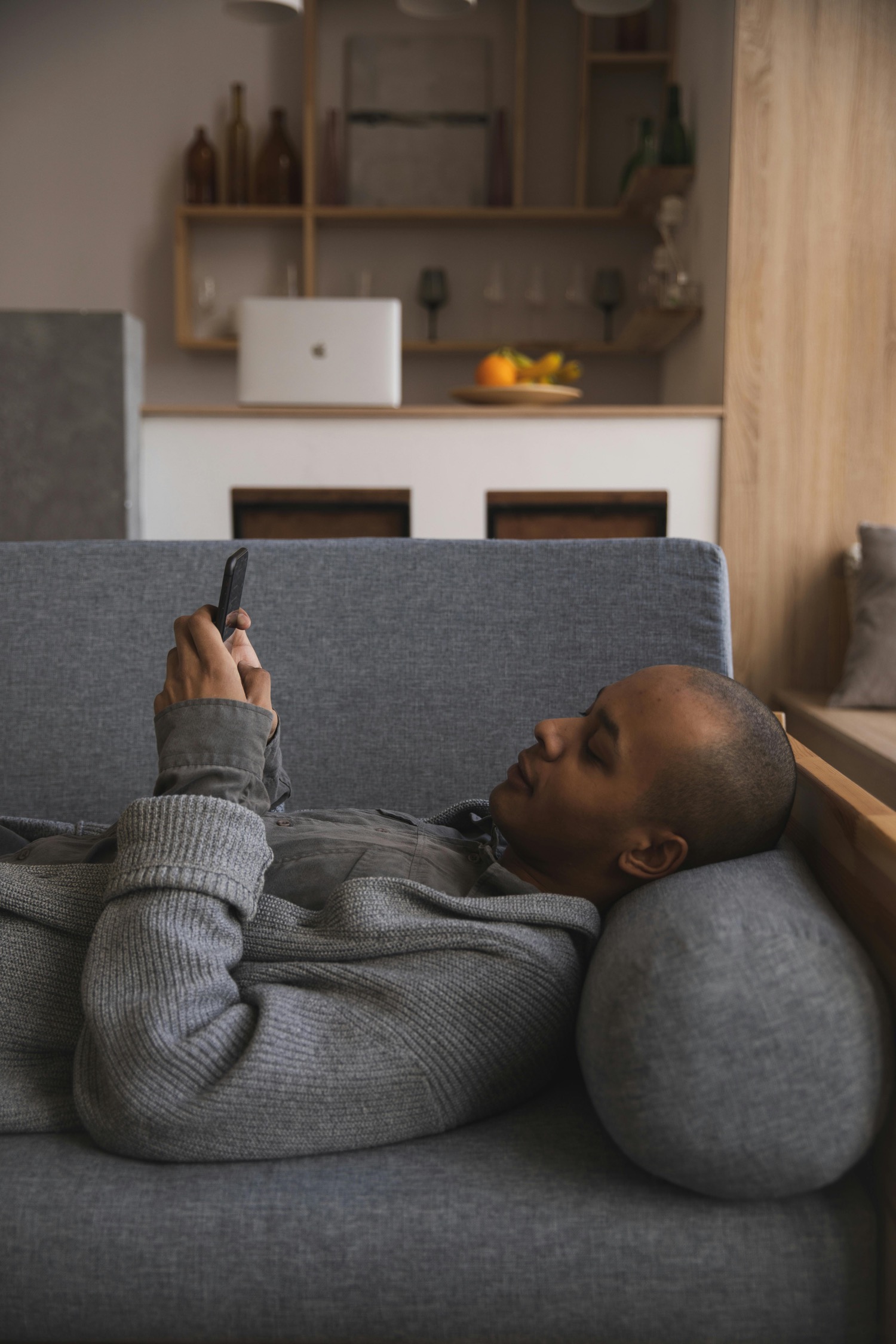
You send a campaign at 10am on a Tuesday, because that's the slot Smart Send Time picked for the segment. By 11am the open rate looks brilliant, so you file Tuesday mornings away as your list's time. A good share of that number was fired by Apple's servers before anybody looked at a phone.
Three days later the revenue report tells a different story. Most of the money arrived between 6pm and 9pm, spread across two evenings, well after the opens had flatlined. The window that won on the open dashboard isn't the window where the buying happened.
That gap isn't bad luck. The model behind the send time was trained on a signal that's been quietly corrupted for years, and it has no way of knowing. Finding where your list actually reads takes one afternoon, and the tools are already in your account.
Smart Send Time is built on open timestamps and nothing else
Smart Send Time works out, for every profile on your list, the hour that inbox has historically been most likely to register an open, then sends at that personal peak. It's a genuinely clever piece of engineering resting on a single input. Open timestamps. No clicks and no purchases anywhere in the model.
That design is sensible if opens are a clean proxy for attention, and for a long time they mostly were. An open fired when the mail client loaded the tracking pixel, which happened when a human scrolled to the email and looked at it. A burst of opens at 7.14am meant a burst of actual people reading at 7.14am.
The model hasn't changed its logic. What changed is what counts as an open in the first place, and once the event lands in the data, Klaviyo can't tell a real one from a fake one.
Apple opens your emails before your subscribers ever see them
Since Apple introduced Mail Privacy Protection, Apple Mail has routed images, tracking pixels included, through Apple's own proxy servers. The proxy fetches every image in a message, often within seconds of delivery, whether or not the person ever opens the email. Your platform logs the pixel load as an open, and it looks identical to a genuine one.
Those machine opens cluster at delivery time, not at read time, because the fetch happens the moment the email hits the server. And clustering is exactly what Smart Send Time is built to detect and act on. It isn't reading intent, it's reading server response time and calling it a habit.
This isn't a Klaviyo flaw. Every platform leaning on open data has the same blind spot. Feed a prediction engine a blend of real behaviour and server noise and it optimises the blend, and on a consumer list with a heavy Apple Mail share, the noise is loudest at the exact hours the model trusts most.
Chart clicks against opens and the real window appears
Apple's proxy will happily fetch an image on your behalf. It can't click a link for you. A click still needs a person to see the email, decide something in it is worth acting on, and tap, and there's no pre-fetch equivalent, which makes click timing the more honest window into when your list genuinely engages.
So pull up a recent campaign and chart opens by hour and clicks by hour for the same send. On a list with plenty of Apple Mail, the open curve spikes hard in the first hour and trails off, while the click curve peaks smaller, later, and often bumps again in the evening. The second curve is the one closer to the truth.
Clicks aren't perfect either. Volume is lower and the sample skews towards your keenest subscribers. They're simply not being inflated by a server saying hello to your pixel. Hours where opens run high and clicks stay proportionally thin are your best candidates for pre-fetch noise.
Run one split on a live campaign and let revenue decide
Click timing buys you a better hunch. A proper split buys you an answer. Build it inside the Klaviyo work you're already doing instead of setting up a research project on the side, because one live campaign is the whole apparatus.
- Pick a campaign you would send anyway, because a throwaway test send produces a throwaway answer
- Split the audience into two or three even randomised groups with Klaviyo's built-in campaign split, not manual segment slicing
- Give each group one send window, spread genuinely far apart, such as early morning, lunchtime and evening
- Hold everything else identical, same subject line, same content, same offer
- Leave the report alone for 48 to 72 hours, so evening opens that convert the next morning can settle
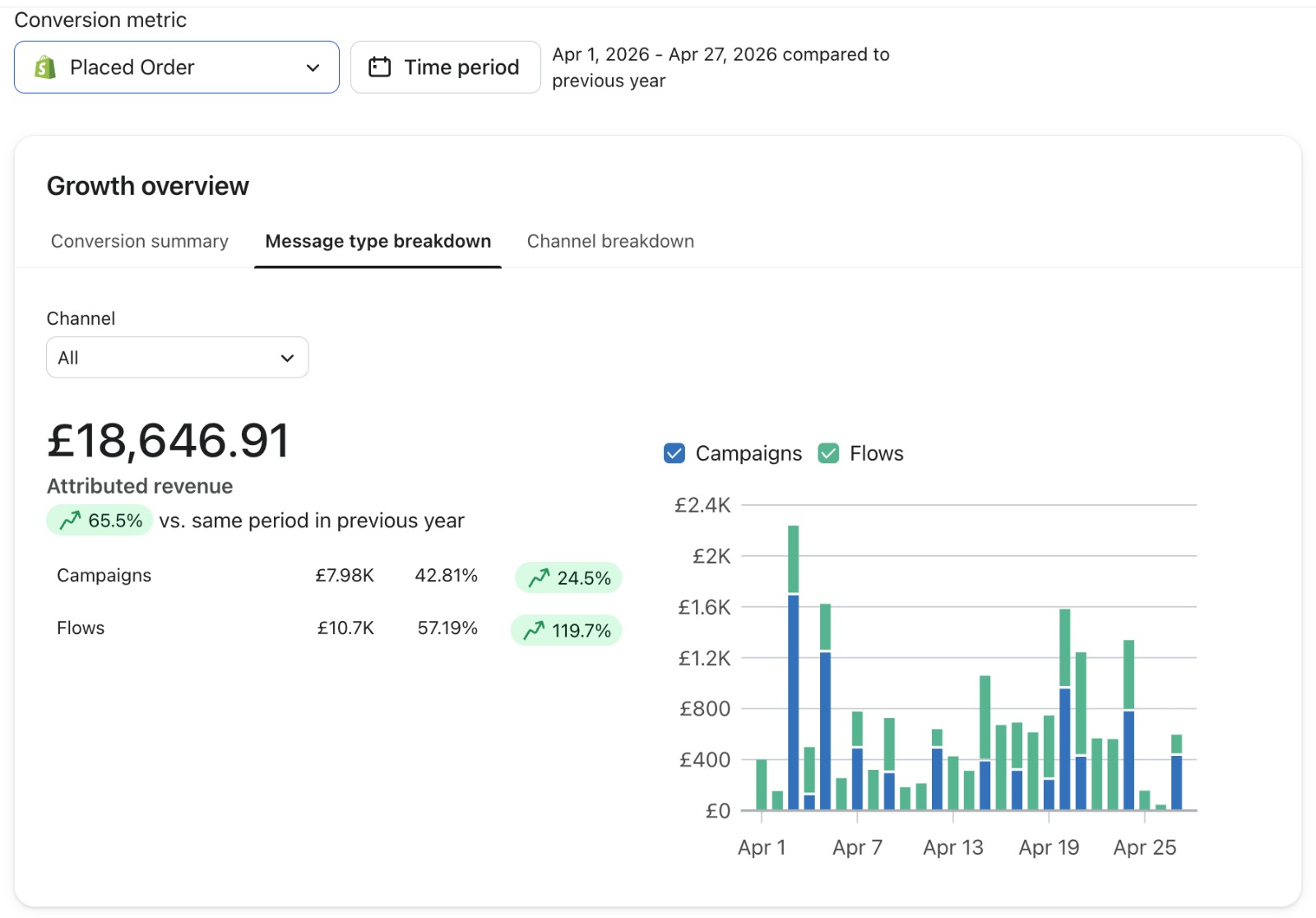
- Judge the winner on revenue per recipient, not on opens and not even on clicks
Run the same structure across two or three campaigns before you commit. One test can hand you a fluke: a quiet Tuesday, or a competitor's flash sale eating your afternoon. Three tests pointing at the same window is a pattern worth planning a calendar around.
Trust the winner only as far as the volume behind it
| Signal | What inflates it | What it's fit for |
|---|---|---|
| Opens | Apple's proxy fetching pixels at delivery | Nothing that decides money any more |
| Clicks | A small, keen slice of the list | Finding the honest reading window |
| Revenue per recipient | One fluke send or one big order | Calling the winner, across several sends |
Check the gap between your best and worst window is big enough to matter before you lock anything in. Klaviyo shows the split sizes and what each variation took on the campaign report, so you can see how many orders the verdict rests on. A win carried by a handful of orders isn't a signal yet.
Segments deserve their own answers too. Lapsed customers in the winback flow check their inboxes at different points of the day from VIP repeat buyers, and one campaign's result isn't gospel for both. Where the volume exists, repeat the test segment by segment, the way we do across the accounts we run.
None of this means abandoning Smart Send Time. Give your tested window the high-stakes sends, the flash sale and the launch, and let the model keep its per-subscriber guessing on always-on sends where noise costs little. One approach has simply earned more trust than the other.
Alex Gregoriades
Operations director at Engage Commerce, where he runs the accounts the writing comes out of.
FAQs
Is Klaviyo Smart Send Time worth using?
Yes, for low-stakes always-on sends where a wrong hour costs little. It automates a decision you'd otherwise never revisit, and on inboxes outside Apple Mail its signal is still reasonable. For flash sales, launches and anything with real money riding on the hour, a window you tested on revenue beats a model guessing from opens.
Does Apple Mail Privacy Protection affect Smart Send Time?
Directly. Mail Privacy Protection fetches tracking pixels through Apple's servers around delivery time, and those fetches get logged as opens. Smart Send Time is trained entirely on open timestamps, so on a list with a large Apple Mail share it's partly optimising for server behaviour instead of human reading habits.
What is the best time to send Klaviyo campaigns?
There's no universal best hour. Every list has its own rhythm, and published benchmarks are averages of other people's audiences. Chart clicks by hour on recent sends for a hunch, then split test two or three windows on a live campaign and let revenue per recipient pick the answer.
Can a small list beat the default send time?
Usually not honestly. A few thousand active subscribers split three ways leaves each window resting on too few orders to trust, and the gaps you see will mostly be noise. Keep the default, grow the list, and run the test once a split can carry a real verdict.
The default is fine until money is riding on the answer
A list under a few thousand active subscribers, or a brand sending twice a month, won't produce a clean enough split to beat the default, and pretending otherwise is noise with a certificate. Build the volume first and let Smart Send Time drive in the meantime. The day a send window starts deciding real revenue is the day it stops being something you let a corrupted signal guess.
Klaviyo mechanics
The settings that quietly decide what your flows do, from someone who has rebuilt a flow stack.

How to stop Klaviyo flows overlapping when cart and browse fire together
Cart and browse abandonment keep double emailing the same shopping session, and each flow reports healthy on its own. One list filter referees them.
Read it
Your Klaviyo predicted next order date already knows when they'll buy again
Klaviyo already calculates when each customer is due to buy again. Build winback and reminder triggers on that, not on an engagement window.
Read it
Your Klaviyo VIP segment is a badge while your best customers get first-timer emails
The spend report knows who your best customers are. The flow logic treats them like strangers. Closing that gap is the whole job.
Read itWould you rather this was just handled?
Bring your Klaviyo account and the thing annoying you most. We will tell you what we would fix first, before you spend anything.


Half an hour with Theo, our founder.
We're all about relationships built on trust, mutual respect and a shared vision for success. If that sounds like your vibe, let's make some waves together 🌊