Your Klaviyo VIP segment is a badge while your best customers get first-timer emails
The spend report knows who your best customers are. The flow logic treats them like strangers. Closing that gap is the whole job.


Sort your customers by lifetime spend, take the slice at the top, then check which automations they're actually sitting in. Nearly every time it's the same welcome series and the same cart nudge, written for a stranger. The badge on the loyalty page changes nothing. The triggers do.
A VIP tier that changes no email is a badge, not a programme
Pull the spend report on almost any account and it says the same thing. Sort by lifetime value, take the highest-spending slice, then look at which automations those customers are enrolled in. Nearly every time it's the same welcome series, the same abandoned cart nudge and the same post-purchase flow written for somebody who bought once and left.
That isn't a small oversight. A customer who has spent many times your average order value is being told to sign up for a newsletter they're already on. The relationship funding the business is getting the copy written for its coldest prospect.
A real VIP tier isn't a line on an account page. It's a separate set of triggers on a different cadence, in a tone that acknowledges what the customer has already proven. That's lifecycle work, not loyalty admin, and it starts with an audit instead of a design brief.
Find where the spending stops looking normal
You can't design for VIPs off a hunch. Pull twelve months of order data, sort by total spend per customer, and read down the column until the shape breaks. Every list has a point where spending stops sloping gently and falls away like a cliff edge, and the customers above that break are your tier.
Where the break sits varies from list to list, because it depends on how concentrated your revenue is. A boutique with a small band of devoted collectors cuts the tier tighter than a consumables brand with a broad base of steady reorderers. Treat the first cut as a starting line, not a rule carved in stone.
Once you know the line, the Klaviyo segment itself is easy: lifetime spend or order count above the threshold, refreshing on its own as customers cross it. That's the easy half. What matters is what crossing the line causes, and that's where most builds stop.
Check which flows your best customers are actually sitting in
Now cross-reference the tier against your live flows. If a chunk of your highest spenders are still in the welcome series, or in a win-back flow built for lapsed one-time buyers, that's the finding before a single new email gets written. Most brands agree in principle that VIPs deserve different treatment. The overlap sitting in their own account is what makes it urgent.
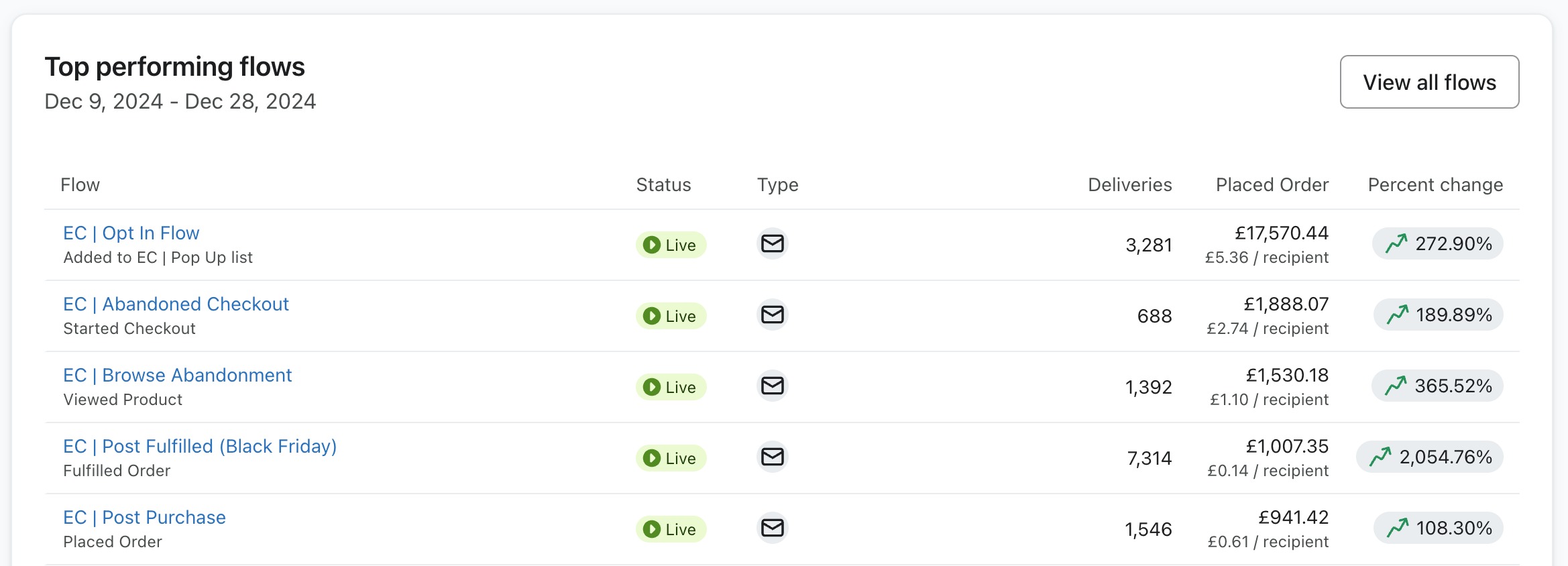
A flows report like this one shows which automations do the earning. It doesn't show who's inside them. Every flow on it can look healthy while treating a devoted customer and a first-time browser identically, so healthy reporting and flattened treatment sit side by side quietly and the dashboard never catches it.
Build the trigger, not just the segment
A segment on its own does nothing. It sits in the background as a filter until somebody remembers to use it in a campaign. What works is a live flow that fires the moment a customer crosses the threshold, the same way a cart trigger fires off a checkout event.
Crossing the line should pull that customer out of generic nurture and into the VIP track on its own. If the move depends on somebody remembering, it'll lapse inside a quarter. We wire this logic inside Klaviyo precisely so the tier maintains itself.
Loyalty bolt-ons fall short right here. They flag a customer as gold tier in a points dashboard, the email platform never gets told, and that customer still lands in the same cart sequence with the same code as a first-time browser. The tier has to talk to the flow logic directly instead of sitting in a separate app nobody is syncing.
Early access is the easiest lever and the most skipped one
If you run one VIP mechanic before anything fancier, make it early access. Not a badge: a real window where your top spenders see new stock and sale pricing before the general list does, and now and then a limited drop reserved for them entirely. It costs nothing except scheduling discipline.
Lead time is the decision. Six hours ahead of the general send is enough to make somebody feel like an insider, while a full day starts to work as genuine access instead of a gesture. What kills the mechanic is an early access subject line that reaches the whole list at the same moment with the word VIP added to it.
Customers notice, and it reads as a copywriting trick that burns trust with the exact people you need onside. Get the window right once and it becomes structural. Every launch after that carries a VIP send scheduled ahead of the main one, built into the calendar instead of remembered case by case.
Stop trying to convince people who are already convinced
Even brands that build the segment often route top spenders into their own flow and then write it in the same voice as everything else. Same exclamation marks, same urgency lines aimed at somebody who still needs persuading. A customer who's already proven their commitment wants acknowledgement, not conviction.
Drop the discount-led framing wherever you can. A customer who buys regardless of a code doesn't need one dangled every time, and dangling it anyway teaches your best customers your worst habit: waiting for the price to fall. Where a discount does earn its keep, tie it to something only the tier can reach, like a threshold reward or first claim on restocked bestsellers.
Run the audit before you build anything
- Pull the highest-spending slice by lifetime value and check which flows they're currently enrolled in
- Confirm a trigger, not a static segment, moves customers into VIP treatment on its own
- Check whether the loyalty or subscription platform actually talks to the email platform, or just sits beside it
- Take the last three launch or sale sends and confirm VIPs got real lead time, not an earlier timestamp on the same email
- Read the copy your top spenders receive and ask whether it was written for somebody committed or somebody still deciding
Most of that takes an afternoon, and it's where any serious lifecycle build begins. Fixing what it turns up takes longer, but at least you'll know exactly where the gap is instead of assuming a segment somewhere in the account has it covered. You can see where that pass leads in the client work we publish.
Theo Tziapouras
Founder and strategy at Engage Commerce, the ecommerce agency for 7 and 8 figure DTC brands.
FAQs
How do I build a VIP segment in Klaviyo?
Define it on lifetime spend or order count, using twelve months of order data to find where your spending curve breaks. Set the segment to refresh as customers cross the threshold, then attach a flow to that crossing so entry causes emails and not just membership. The segment is the easy half. The trigger is the point.
What should a VIP flow actually send?
Acknowledgement first: tell the customer they've been noticed and what the tier gives them. Then early access on launches and sales, the occasional reserved drop, and news before the general list hears it. Keep discounts rare and tied to things nobody else can get, because committed buyers shouldn't be trained to wait for codes.
Should VIP customers get bigger discounts?
Usually the opposite. A customer who buys without a code doesn't need one, and sending one anyway teaches them to wait for it. Save discounting for rewards only the tier can reach, like a threshold gift or first claim on a restock, and lead with access and acknowledgement instead.
Treated like a rounding error, they behave like one
Treat your best customers as a rounding error in a mass campaign and sooner or later they stop behaving like your best customers. Not dramatically, and never with a complaint you could catch and answer. They quietly buy a little less, open a little less, and let a competitor's early access email land in their inbox first.
Klaviyo mechanics
The settings that quietly decide what your flows do, from someone who has rebuilt a flow stack.

Your Klaviyo AB test sample size was never big enough to crown that winner
The winner banner is built from a few dozen opens in a two hour window. Here is how to run a test worth trusting.
Read it
First name tokens are not personalisation, Klaviyo custom events are
The quiz answers, repeat views and preference data in your account are already enough to personalise every flow. Almost nobody asks them anything.
Read it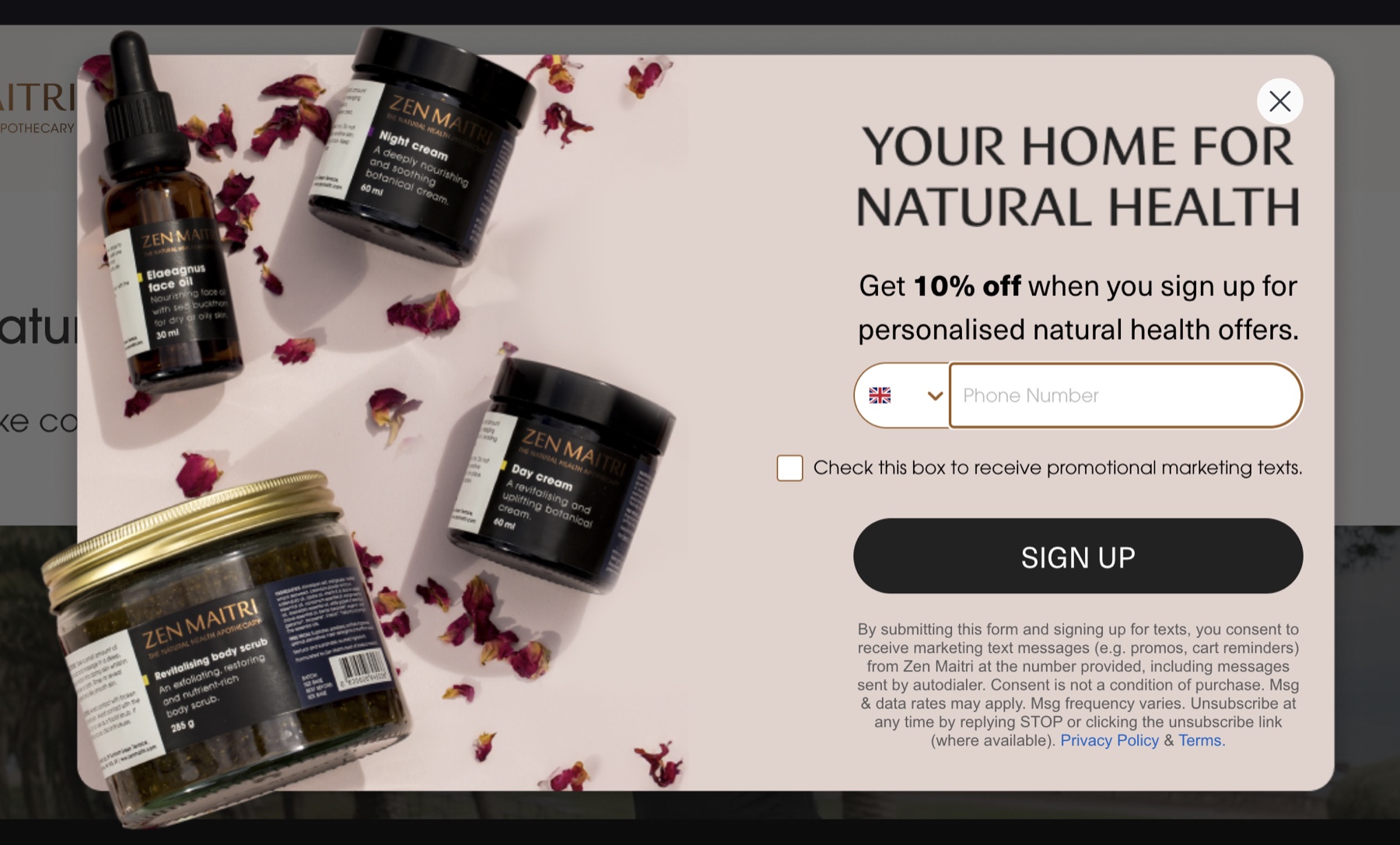
Klaviyo pop up best practices: the settings that decide whether a form works
Most forms fail on targeting and timing rather than design. The settings that decide it sit behind the editor, not inside it.
Read itWould you rather this was just handled?
Bring your Klaviyo account and the thing annoying you most. We will tell you what we would fix first, before you spend anything.

Half an hour with Theo, our founder.
We're all about relationships built on trust, mutual respect and a shared vision for success. If that sounds like your vibe, let's make some waves together 🌊