How to write an ingredient spotlight email people finish reading
One component, explained properly, is a campaign. A list of everything in the product is a specification sheet nobody asked for.

Brands that spend real money on what goes into the product usually forget to mention it anywhere a customer looks. This campaign fixes that, one component at a time, and it works in any category where somebody chose the expensive option and nobody noticed.
The expensive decision nobody knows you made
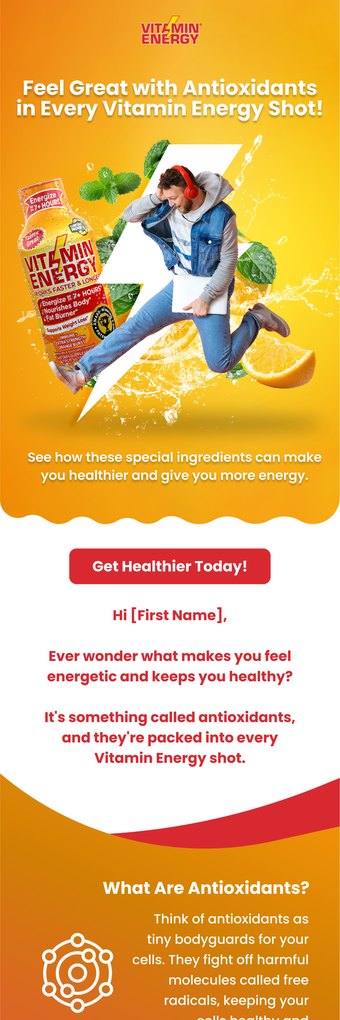
Somewhere in your product there's a component you pay more for than you have to. A cold press instead of a heat extraction. A certified supplier instead of the cheapest one. A concentration that costs three times what the industry standard costs. Almost nobody buying from you knows any of it.
That gap is your campaign. Your reader doesn't want the whole formulation. They want one decision explained by the person who made it, and a reason to believe the price difference goes somewhere real.
Pick the component that answers a question people already ask
Don't start with the ingredient you're proudest of. Start with the question your support inbox keeps answering, then work back to the component that answers it. Pride and relevance point at different ingredients more often than you'd think.
- The one that explains the price, for anybody who's compared you with a supermarket alternative
- The one that explains a limitation, like a shorter shelf life or a texture that surprises people
- The one a competitor category is currently getting hammered for leaving out
- The one that only makes sense once you know where it comes from, so the sourcing angle becomes your follow up
One ingredient a send. The urge to cover four is the same urge that produces the back of pack panel, and the back of pack panel is not a campaign.
Explain it the way you would to somebody standing in front of you
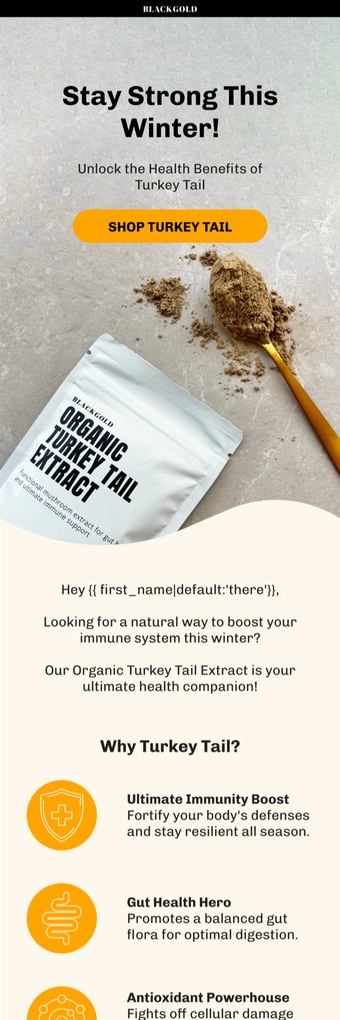
That send does the whole job with one product, one photograph of the actual material and no offer at all. The powder in the spoon persuades harder than a paragraph of claims, because it shows the thing itself instead of a rendering of the pack.
Write the body as an answer, not an announcement. What it is, what it does, what the common alternative is, why you chose this one, and what a customer would notice as a result. Five short paragraphs and you're done.
Where the legal line sits, and how to stay comfortably behind it
In supplements, food, cosmetics and anything sold on a health outcome, this is the campaign most likely to wander into a regulated claim. The safe version describes what the ingredient is and how it's produced, and lets any effect claim come from a source you can name and link.
| Instead of | Write | Why |
|---|---|---|
| A health outcome stated as fact | What the ingredient is and how it is processed | Description is not a claim |
| Our own summary of a study | A named source, linked, quoted in its own words | The reader can check it and you are not the author |
| A comparison with a category | A comparison with your own previous formulation | You hold the evidence for your own history |
None of that makes the email weaker. Specific description beats vague benefit language anyway, and it survives a regulator and a sceptical reader at the same time. The supplement programmes we run are written this way as a matter of course.
One ingredient a month is a year of campaigns
Treat the ingredient list as a publishing schedule instead of a one off. Most products have six to ten components worth explaining, so that's most of a year covered with a format your team already knows how to make.
Space them out and vary what follows. An ingredient send pairs well with a sourcing deep dive on the same component a fortnight later. It pairs badly with another ingredient send in the same week.
Read your own product page as a stranger
Open your best selling product page and count how many of those expensive decisions are mentioned above the fold. Usually none. The information is sitting in a collapsed tab under the reviews.
If the page won't say it, the email is doing work the site should share. Send the campaign, then move the best two sentences from it onto the page. That's the loop we run between email and the site, and it makes both perform better than either does alone.
Theo Tziapouras
Founder and strategy at Engage Commerce, the ecommerce agency for 7 and 8 figure DTC brands.
FAQs

What if our ingredients are not unusual?
Then the angle is the standard, not the exception. How something is grown, stored, tested or blended is unfamiliar to almost every customer, and explaining an ordinary process in detail reads as confidence, not as a boast.
Can this work for products that are not consumable?
Yes. Materials, fastenings, stitching, coatings and components all take the same treatment. The question doesn't change: which decision cost more than it needed to, and would a customer care if they knew about it.
How long should an ingredient spotlight email be?
Longer than a promotional send, shorter than an article. Five short paragraphs with one strong photograph is the shape people read all the way through, and anything past that belongs on a page you link to instead.
Should we link to a scientific source?
If you're making any claim beyond description, yes, and link to the source itself instead of somebody's summary of it. It protects you, and it gives the curious reader somewhere to go without you interpreting the evidence on their behalf.
The reason your product costs what it costs
An ingredient spotlight turns a cost into a reason. It asks nothing of the reader, it needs no code attached, and it leaves somebody who was comparing you on price with a different question in their head. Brands that run one a month stop having to defend their pricing, because the defence is already made in ordinary language, one component at a time.
Campaigns that are not discounts
One campaign type per post: what it is for, who it is sent to, and how to build it without reaching for a code.

The founder q and a email, answered in the founder's own words
Ask your list what they want to know and you get two campaigns: the questions themselves, and the answers a fortnight later.
Read it
The founder note email, and when plain text beats the designed send
A note from the person whose name is on the business earns attention no template can buy, then loses it the moment it looks designed.
Read it
The FAQ email campaign: send the answers support keeps repeating
Every question your support inbox answers twice a week is a question the silent majority had and never asked.
Read itWould you rather this was just handled?
Bring your Klaviyo account and the thing annoying you most. We will tell you what we would fix first, on the call, before you spend anything.

Book a call with our founder.
We're all about relationships built on trust, mutual respect and a shared vision for success. If that sounds like your vibe, let's make some waves together 🌊