An ecommerce email marketing calendar UK brands can actually run
Most published calendars are American. This one is built on UK dates, UK posting deadlines and the months nobody bothers to plan for.


A calendar downloaded from an American blog hands you the wrong Mother's Day, no Boxing Day and a set of bank holidays that don't exist here. The dates below are the UK ones. The half of the calendar that matters most is the half only your own shop can fill in.
Borrowed calendars are written for a different country
Here's the hard truth: nearly every seasonal calendar that goes round in January was written for America. Not for here. Mother's Day in May, Thanksgiving as a trading event, Boxing Day skipped entirely and one national set of public holidays assumed. Follow one and you'll send a Mother's Day campaign two months after the UK has been and gone.
The fix isn't a longer list of dates. It's a shorter one, checked against the country you actually ship to, with your own trading pattern written on top.
The five dates an American calendar gets wrong
| Moment | The American version | The UK version |
|---|---|---|
| Mother's Day | Second Sunday in May | Mothering Sunday, the fourth Sunday of Lent, in March |
| Thanksgiving | A trading holiday in its own right | Not a holiday here, though Black Friday arrived anyway |
| Boxing Day | An ordinary working day | A bank holiday, and a major sale day in its own right |
| Public holidays | Federal and uniform | Different in England and Wales, Scotland and Northern Ireland |
| Delivery cut-off | Carrier dependent | Royal Mail publishes recommended last posting dates each autumn |
The public holiday row catches people out most. Scotland and Northern Ireland don't share the English and Welsh list, so a bank holiday sale that assumes everybody is off work is wrong for part of your list. The dates are published on gov.uk and take a minute to check.
The dates only your shop knows
The retail calendar is the easy half and everybody has it. The half that separates a good year from an average one is the set of dates that belong to your business. Restocks, product launches, the anniversary of the shop, the week your best seller usually runs out.
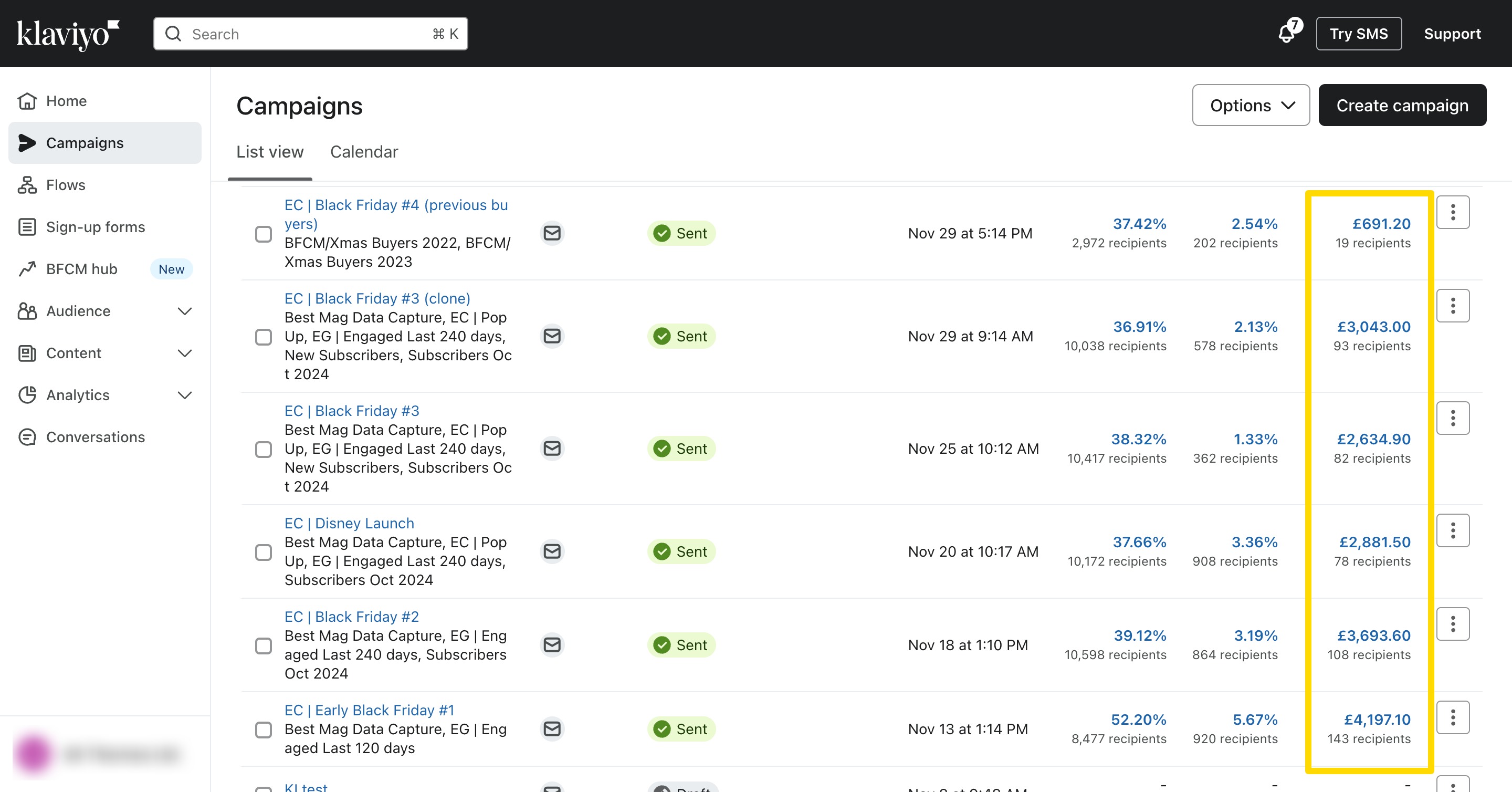
Those rows are a calendar being executed, not planned. Every send names the segments it went to, and that's the part no downloadable calendar can give you. It's also the part that decides whether the year works.
The months nobody plans, and what they are for
- January: returns, refunds and a list full of gift recipients who have never bought for themselves
- February: the first payday after Christmas beats Valentine's Day as a hook for most catalogues
- April and May: bank holidays land close together, and the weather does more to your sales than any campaign
- August: schools break up, open rates sag, and it's the best month of the year to rebuild flows
- September: the real start of the trading year, and the last sensible moment to fix anything before peak
August is the one worth defending. It's the only stretch where nothing's on fire, which makes it the right time to rewrite the welcome series and clean the list. Brands that spend August planning peak have a far better November than brands that spend October panicking.
The monthly rhythm the American version has no reason to know
Most UK salaries land in the last few working days of the month, and it shows in the accounts we run. A send on the day after payday behaves differently to the same send in the third week, and for anything above an impulse price the gap is wide enough to plan around.
So the calendar has a monthly beat under the seasonal one. The bigger ask goes out when people have been paid, and the middle of the month carries the content, the restock notices and the smaller repeat purchases. Costs nothing to arrange the year that way, and it's invisible on any American template.
Peak is a deadline, not a fortnight
The Black Friday window is decided long before it opens. List growth over the autumn, a warmed sending domain, segments that already exist and flows that already convert are what make the fortnight work. The campaigns themselves are the last and smallest part.

December then has its own hard edge. Once the last recommended posting date passes, a sale email selling next day delivery is a complaint waiting to happen, and the calendar should switch to gift cards, digital and January without anybody having to remember.
How to build a calendar you'll still be using in March
Keep it in one place, keep it short, and keep the segments beside the dates. A calendar that lists themes without saying who receives them is a wish list.
- Put the UK public holidays and the Royal Mail cut-off dates in first, because they're fixed and everything else moves around them
- Add your own restocks, launches and anniversaries next
- Mark the two or three weeks that carry the year, and protect the month before each one for preparation
- Name the audience beside every send, not the theme on its own
- Leave gaps on purpose, because a full calendar becomes a reason to email people who didn't need it
- Review it in August, when there's time to change anything
Theo Tziapouras
Founder and strategy at Engage Commerce, the ecommerce agency for 7 and 8 figure DTC brands.
FAQs

When is Mother's Day in the UK for ecommerce planning?
Mothering Sunday falls on the fourth Sunday of Lent, which puts it in March and moves with Easter. It's not the American date in May, so a borrowed calendar will be roughly two months late. Check the date each year. Don't assume last year's week.
How far ahead should a UK ecommerce brand plan its email calendar?
Plan the shape of the year once, in a quiet month, then work in quarters. Peak needs deciding by September at the latest, because list growth and deliverability work take weeks to show. Individual campaigns can be written a fortnight out without losing anything.
Do bank holidays affect email performance?
They shift when people read, not whether they buy. Long weekends move the good sending hours around, and the holidays differ between England and Wales, Scotland and Northern Ireland, so a send that assumes everybody is off work will be wrong for part of your list.
What should I send in the quiet months?
Less, to fewer people, and use the time to fix the automated half of the programme. August and early January are the two windows where nothing is urgent, which makes them the right moment to rewrite the welcome series, clean the list and test forms.
A calendar is a set of decisions made early
The point of writing the year down isn't to fill every week. It's to make the expensive decisions in a quiet month instead of a busy one, so November is execution and not invention. Brands that sell food and drink or run pet brands have sharper seasonal shapes than most, so they gain the most from it. Every catalogue has a rhythm once somebody bothers to plot it.
Programme and calendar
How often to send, what to send when, and what retention costs to run.

How to reduce subscription churn ecommerce brands accept as normal
Most cancellations are not decisions. They are failed cards, deliveries that arrive too soon, and a cancel page offering the wrong thing first.
Read it
How often should you send marketing emails, and how to find your own answer
There is no correct number. There is a curve, and your own list will tell you where it turns.
Read it
A Black Friday email marketing plan for Shopify brands, week by week
The work that decides Black Friday happens in September. What to do, in the order it has to happen.
Read itWould you rather this was just handled?
Bring your Klaviyo account and the thing annoying you most. We will tell you what we would fix first, before you spend anything.

Half an hour with Theo, our founder.
We're all about relationships built on trust, mutual respect and a shared vision for success. If that sounds like your vibe, let's make some waves together 🌊