A Black Friday email marketing plan for Shopify brands, week by week
The work that decides Black Friday happens in September. What to do, in the order it has to happen.

Everything that goes wrong in peak week was set up in the two months before it. List growth, deliverability and segments are September jobs. By the middle of November the only thing still worth changing is the calendar.
The list you send to in November is the one you build now
Every Black Friday problem is a September problem nobody solved. A list that doubles in the last fortnight is a list you can't safely email, and a pop-up switched on in the third week of November is a pop-up that has collected nothing.
- Get the sign-up form earning its place, tested on a phone, where most of the traffic is
- Run early access as its own offer, so the November list is people who asked for the sale
- Tag new subscribers as they arrive, instead of sorting them out in November
- Read the welcome sequence and check it still sounds like the brand does now
- Suppress the addresses that have ignored you all year, before they cost you placement
Early access is the highest return item on that list. It gives people a reason to join in October, it gives you a warm audience to open with in November, and it means your first sale email lands on people who volunteered for it.
Warm the domain before the volume arrives, not during it
A domain that has emailed one small engaged segment all year and then emails everybody on the Friday has announced that something changed. Filters treat sudden change as a signal, because for spammers it usually is.
So build up through October. More sends, slightly wider audiences, week by week, watching bounces and complaints as you widen. If either moves, stop widening and fix it. There is no version of peak season that survives landing in spam.
Decide who gets what before anybody writes an email
Segments decide how many emails you can send without burning anything, so they come before the creative. Four is usually enough: people who bought in the last year, people who've engaged recently, subscribers who joined for the sale, and everybody else.
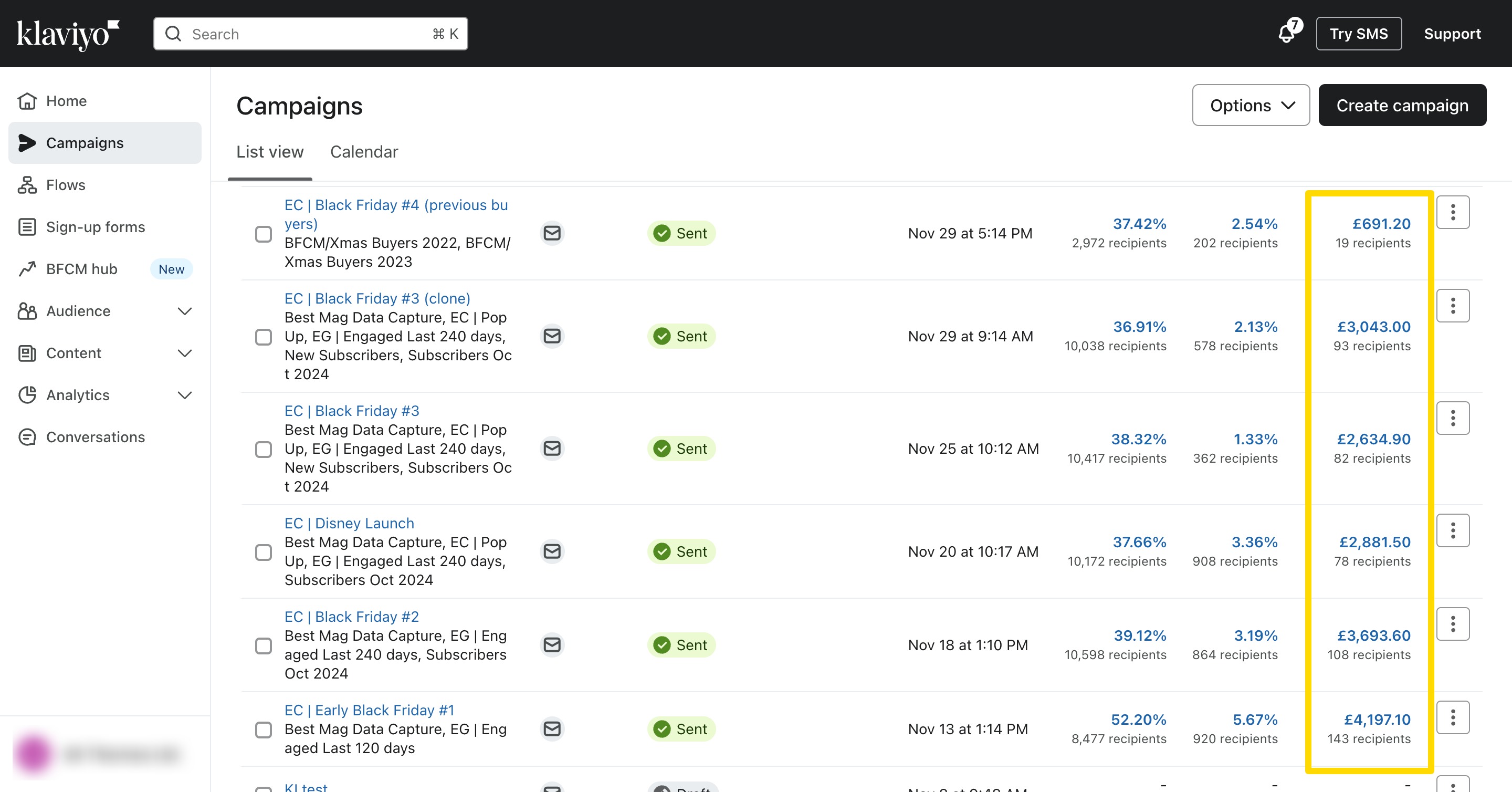
Read the segment names under each campaign in that account. The early send went to people who'd engaged in the last four months, the middle sends widened, and the final send on Black Friday itself went to previous buyers only. One list, treated as four audiences.
The send plan, and the fight it is meant to prevent
| When | What goes out | Who to |
|---|---|---|
| Early November | Early access invitation, plus one send that is about the product, not the price | People who joined for the sale, and recent buyers |
| The week before | The offer explained once, plainly, with the dates in it | Engaged in the last few months |
| Black Friday | Launch in the morning, a short reminder late in the day | The engaged list, then previous buyers only |
| The weekend | One send, ideally about something other than the discount | People who opened or clicked the launch |
| Cyber Monday | Last chance, with the deadline stated | Engaged, minus everybody who has already ordered |
| The week after | Thank you, delivery cut-offs, gift guide | New customers, in their own journey |
Write that down in September and stop negotiating it in November. The most expensive habit in peak season is adding one more send on the day because a competitor did, to an audience nobody checked first.
Peak week is when the flows earn most and nobody looks at them
Flows run without anybody in the building, which is why they're usually still set up the way they were in June. Cart, browse and post-purchase all see their heaviest traffic of the year inside the same fortnight.
- Take the evergreen welcome discount out for the sale window, or it will undercut your own offer
- Check every delivery promise in the cart and checkout series against the courier cut-off
- Point the post-purchase sequence at a second order, because most of your new customers arrive now
- Make sure somebody joining on Black Friday gets the offer and not a welcome email about your founding story
The flow library are what we set up on every account, and peak week is when the argument for them stops being theoretical. They carry the sends nobody has time to write.
The week after the sale is worth more than the week before
The week after Black Friday is where the money quietly is. It's also the week everybody is too tired to plan, so it gets a thank-you email and nothing else.
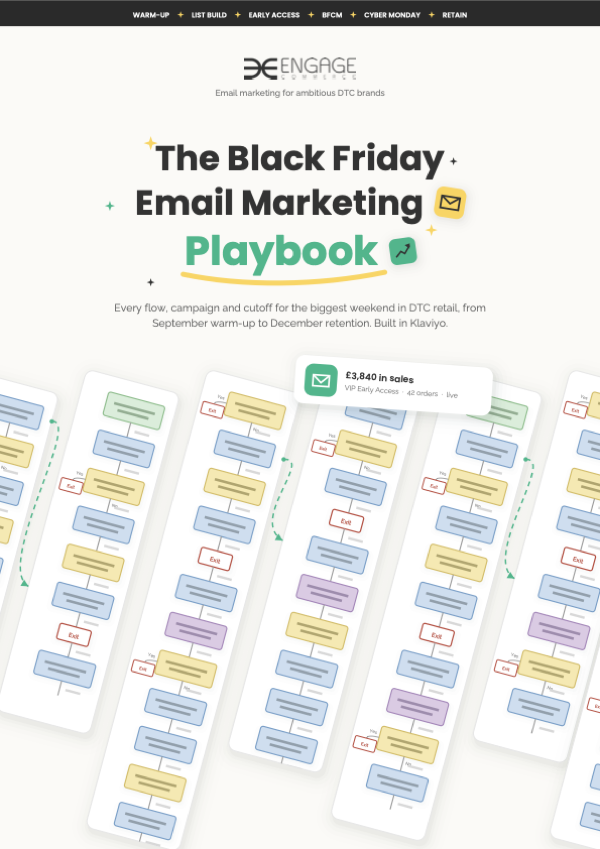
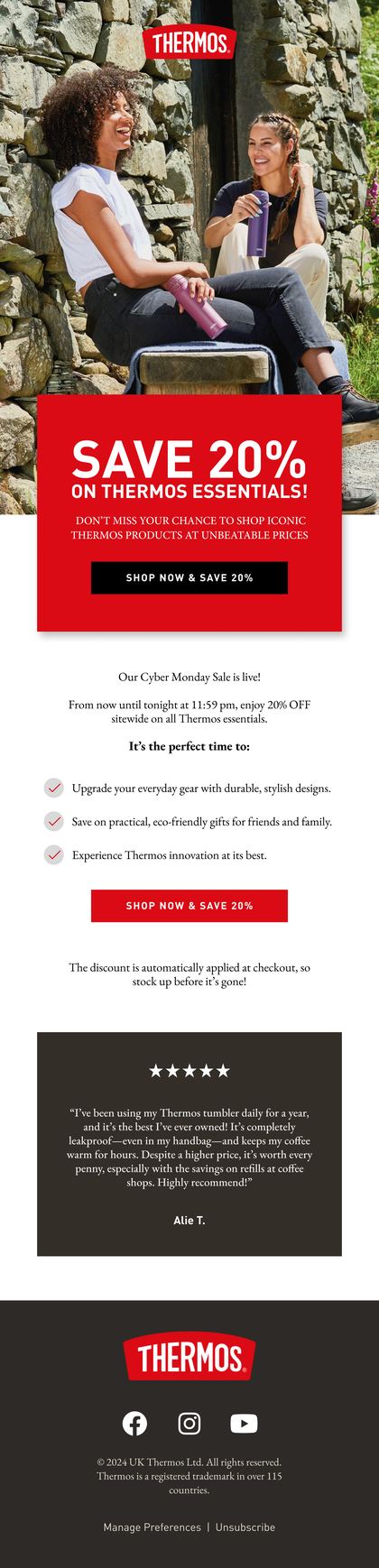
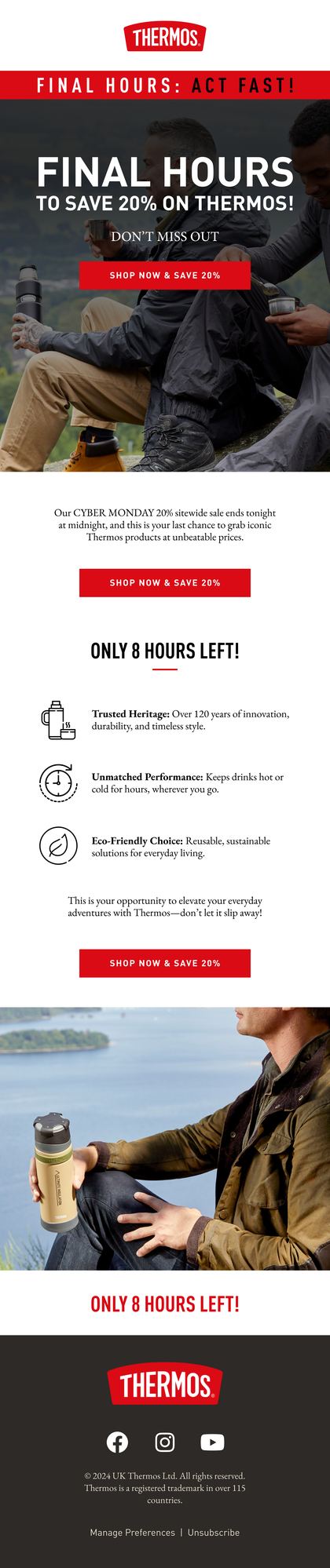
You've a crowd of new customers who have just proved they'll buy from you. And a delivery deadline that gives you a real reason to write. Two reasons to send. Plan the cut-off sends, the gift guide and the January winback in October, while you still have the attention to write them properly. The Black Friday playbook has the whole sequence, and the Thermos rebuild is what it looks like when the work has to happen in weeks.
Theo Tziapouras
Founder and strategy at Engage Commerce, the ecommerce agency for 7 and 8 figure DTC brands.
FAQs

When should I start planning Black Friday emails?
September for the list and the deliverability, October for the creative and the calendar. Black Friday 2026 falls on 27 November, so the last useful moment to start building the list is early October. Anything begun in mid November is a calendar, not a plan.
How many emails should I send over the period?
More than you're comfortable with, to fewer people than you expect. Six sends across a fortnight, split across four audiences, is normal on our accounts and rarely causes a complaint problem. Six sends to one list will. Cut the audience before you cut the calendar.
Should I discount at all?
If your customers expect it, a clear offer beats a coy one. What we'd avoid is discounting the whole range for a fortnight, because it teaches people to wait for you. A tighter offer with a real deadline holds margin better and is easier to write about more than once.
Do I email people who have never opened anything?
Not in peak season. A long dormant segment is the fastest way to damage placement in the fortnight you need it most. If you want to try them, run a winback in October at low volume, and include only the ones who answer it.
What about the sends after Cyber Monday?
They're often the most profitable of the lot. Delivery cut-offs, gift guides and a proper thank-you to new customers all have a real reason to exist, and they land in a quieter inbox. Plan them alongside the sale and not after it.
Peak season rewards the boring preparation
The brands that have a good November are the ones that did the dull work in September: a clean list, a warm domain, four segments and a calendar nobody argues with on the day. Everything that goes wrong in peak week was decided weeks earlier, and that's the good news. In September it's all still fixable.
Programme and calendar
How often to send, what to send when, and what retention costs to run.
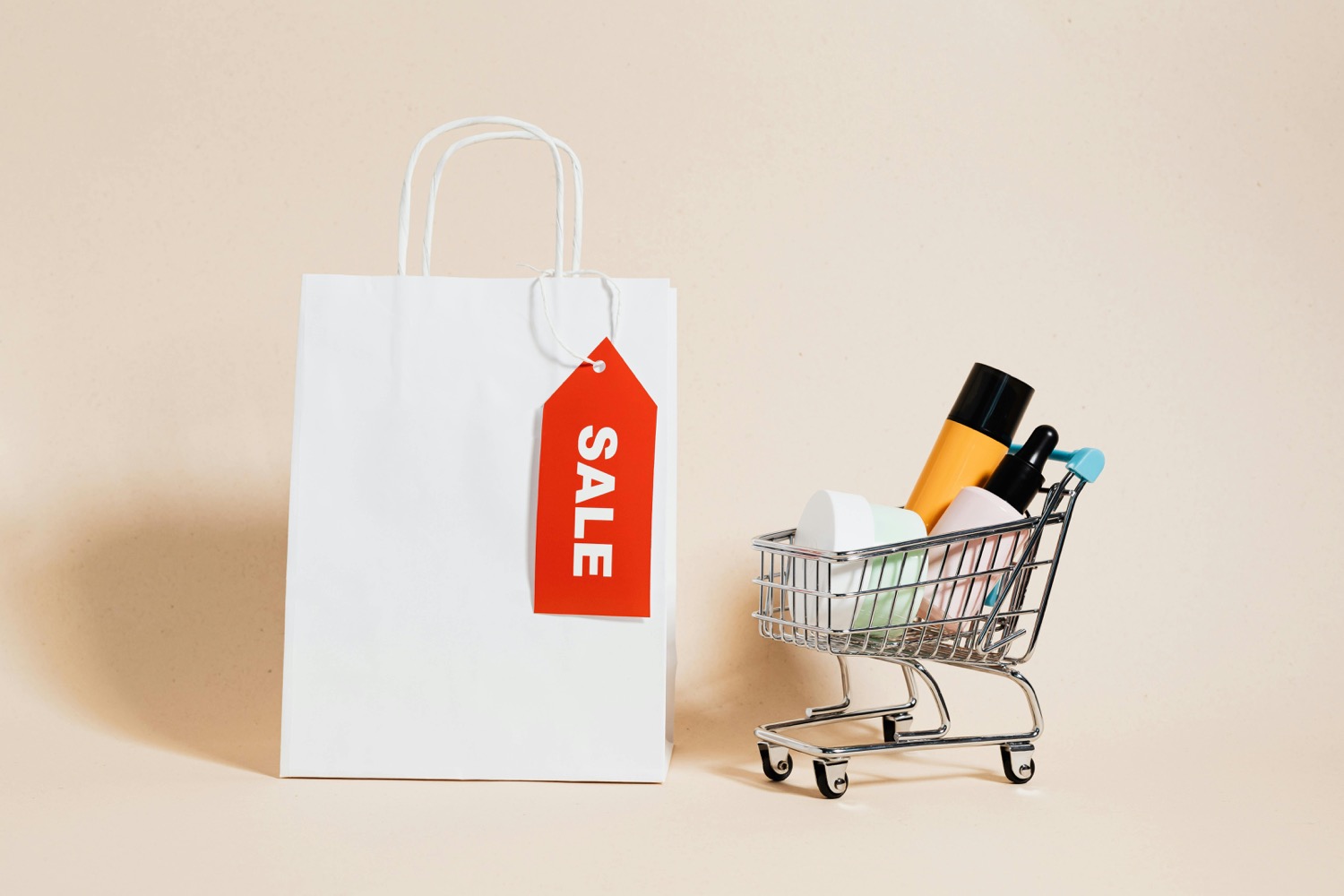
What a Black Friday countdown email is allowed to count
A countdown is a promise with a clock on it. Count down to something real, end when you said, and the urgency works.
Read it
Christmas email marketing for ecommerce starts the day Black Friday ends
Christmas isn't Black Friday with tinsel on. Different buyer, a hard delivery deadline, and a quiet week after that most brands waste.
Read it
Why is my blog traffic not converting? Because nobody asked it to
The popup fires the same offer at every reader, whatever they typed into Google. Match the capture to the query and the traffic starts paying.
Read itWould you rather this was just handled?
Bring your Klaviyo account and the thing annoying you most. We will tell you what we would fix first, before you spend anything.

Half an hour with Theo, our founder.
We're all about relationships built on trust, mutual respect and a shared vision for success. If that sounds like your vibe, let's make some waves together 🌊