Red flags when hiring an email marketing agency, and what to ask instead
Five things that should stop a conversation, and the question that turns each one into a straight answer.


Most of these aren't scams. They're habits that keep an agency comfortable and a client in the dark, and every one of them shows up before you sign if somebody asks. Only the first one is a deal breaker by itself.
The Klaviyo account is set up in their name
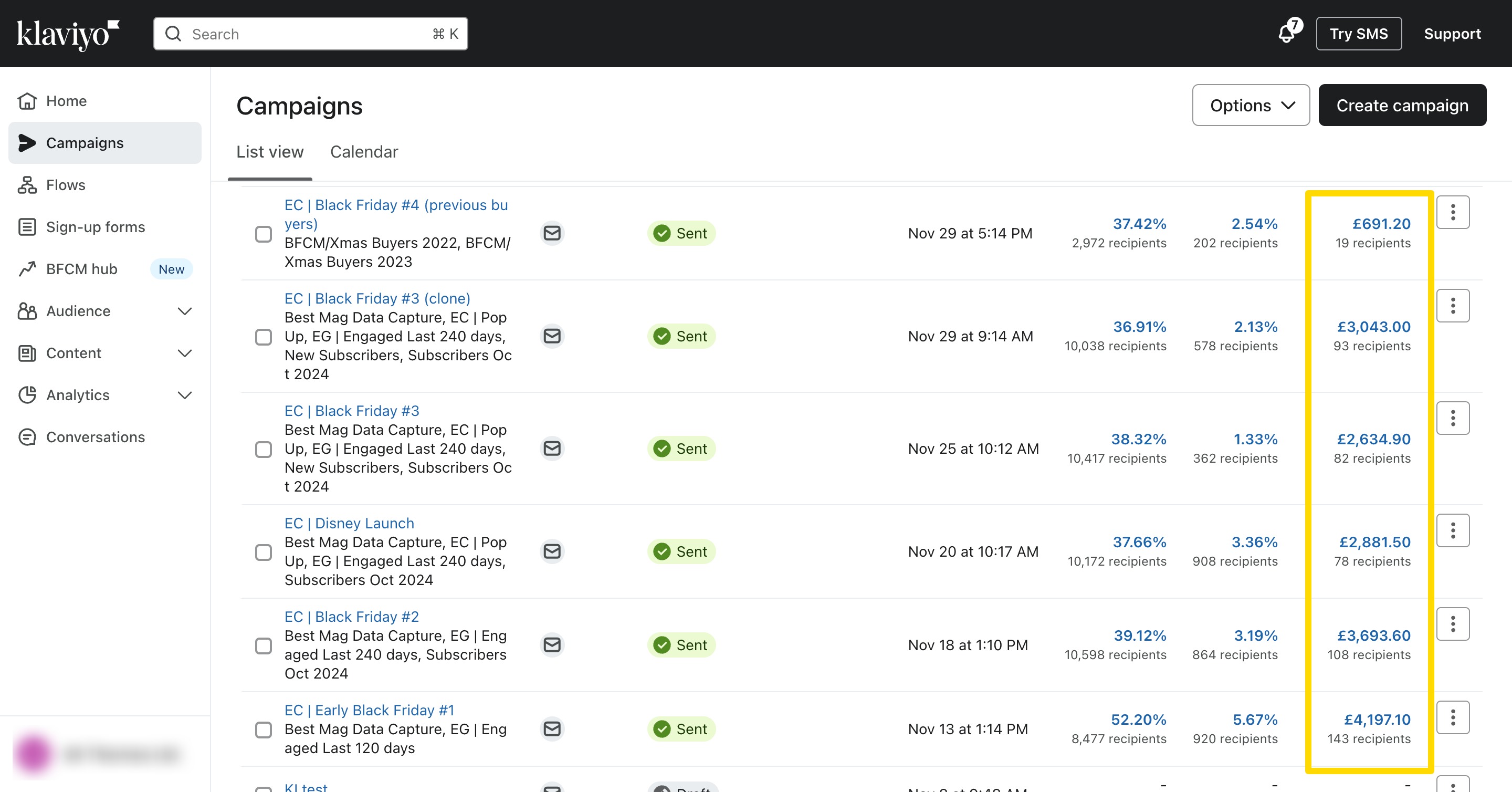
Check this one first. It's the only item here that should end a conversation on its own. If the agency creates the account, holds the billing and adds you as a user, your customer data sits inside somebody else's asset.
The account should be in your company's name, billed to your card, with the agency added as users you can remove. Every good agency agrees with that, so the answer takes ten seconds and tells you most of what you need to know about how they work.
A number gets promised before anybody has logged in
- A revenue promise made before anyone has seen the account
- A case study with no client name, no period and nothing to click through to
- A named client who turns out to be a partner's client, not theirs
- A guarantee that rests on a figure they will be reporting themselves
- Nobody in the meeting will be doing any of the work
The last one is the most common and the least discussed. Ask who writes the emails, who builds the flows and who reads the deliverability reports, then ask to speak to them before you sign, not after.
Ask for a client you can actually email as well. Not a logo, not a testimonial: a name and an address. Then ask that person what the first two months felt like, not what the results were. Agencies with happy clients find this request easy.
The numbers only exist inside their slide deck
Look, a monthly report built in a design tool isn't evidence. It's a description of evidence, written by the party being paid. The same numbers are sitting in Klaviyo, where you can see them yourself and so can anybody you ask for a second opinion.
Two questions sort this out. What attribution window are you reporting on, and can we see the same view in the platform? An agency that moves the window between reports isn't lying exactly, but it's grading its own homework with a movable ruler. The Shadow Foam figures we publish are the platform's own, quarter by quarter, in the Shadow Foam case study.
Everything goes to everybody, every week
Sending the whole file every time is the fastest way to make a quarter look busy. It's also how a domain reputation gets spent, and the bill turns up later, in the spam folder, long after the campaign that caused it.
Watch for list growth quoted as a result on its own, for imported files nobody can explain, and for an agency that's never mentioned suppression. A list that only ever grows is a list nobody is cleaning.

The counter-question is easy. What would you stop sending to in the first month? Somebody who's done this before names unengaged subscribers, hard bounces and the competition list without pausing, and warns you the list is about to look smaller.
The term, the notice and the day you leave
| The clause | What it often says | What to ask for |
|---|---|---|
| Term | Twelve months, then rolling | A short initial term, or a break clause after the build |
| Notice | Three months, from the end of a term | Notice that starts the day you give it |
| Ownership | Silent on the account and the templates | Yours, named in the contract, on the day you leave |
| Exit | Nothing about handover | An export, a walkthrough and access kept for a fortnight |
A long term isn't automatically a red flag. Retention work takes months to show, and an agency that's rebuilt a flow stack has a fair claim on seeing it through. A long term with a buried notice period and no ownership clause is a different thing.
Read the exit clause twice. It's the part of the agreement that only matters on the worst day of the relationship, which is exactly why nobody reads it on the best one.
Five questions that get straight answers
Ask these on the first call. The answers come quickly from people who've thought about them, and slowly from people who haven't.
- Whose name is on the Klaviyo account, and who owns it if we part company?
- Who exactly will write and build, and can they join this call?
- What attribution window do you report on, and does it stay fixed?
- What would you suppress on our list in the first month?
- What does the notice period say, and when does it start?
We answer all five the same way every time, which is the point of publishing them. If you want ours out loud, that's what a growth consultation is for, and the other reading worth doing first is how to choose an email marketing agency.
Theo Tziapouras
Founder and strategy at Engage Commerce, the ecommerce agency for 7 and 8 figure DTC brands.
FAQs

Who should own the Klaviyo account, the brand or the agency?
The brand, without exception. Your customer data, templates and flows live in it, and an agency that holds the account holds your ability to leave. A good agency will be added as users on your account and will expect to be removed the day the work ends.
Is a twelve month contract a red flag?
Not on its own. Retention work takes months to show, and an agency that's rebuilt a flow stack has a fair claim on seeing the results. What matters is the notice period inside the term, whether it starts when you give it, and what the contract says about ownership on the way out.
How do I check an agency's case studies are real?
Look for the client name, the period the figures cover and a link to something you can read in full. Then ask which platform the numbers came from and what attribution window was used. Anything that can't survive those two questions was written for the pitch.
What if the agency will not let me speak to the person doing the work?
Treat it as a staffing answer, not a policy. Agencies sell with senior people and deliver with junior ones more often than anybody admits, which is fine when it's disclosed and supervised. It isn't fine when it's hidden, and asking is how you find out which you're getting.
Most of this is answered in one meeting
None of these questions need a technical background and none of them are rude. They're what somebody asks when they've been through this before, and the answers separate an agency that's thought about how it works from one that's only thought about how it sells. If a question makes the room uncomfortable, that's the answer.
Hiring an agency
What the money buys, what to ask before you sign, and what to walk away from.

How much do email marketing agencies charge, and what the money buys
Nobody publishes a price, so here is the shape of the deal: what is billed once, what is billed monthly, and what is extra.
Read it
Email marketing agency vs in-house: what each one is better at
Both work. They fail in different ways, and the failure modes are the useful half of the comparison.
Read it
What does an email marketing agency do, month by month
The first quarter is catch-up work. The order it happens in, and the month where you find out what you actually bought.
Read itWould you rather this was just handled?
Bring your Klaviyo account and the thing annoying you most. We will tell you what we would fix first, before you spend anything.

Half an hour with Theo, our founder.
We're all about relationships built on trust, mutual respect and a shared vision for success. If that sounds like your vibe, let's make some waves together 🌊