How to run a Klaviyo account audit before you hire anyone
The order we open an account in, the five screens that tell you most, and the list to write while you are in there.


An audit isn't a feeling about your emails. It's half an hour, five screens and a list of what's missing, and you can do it before anybody sells you a rebuild. Doing it first is also what makes talking to an agency worth the time.
An audit is a list of what's missing, not a score
Most audits people get sold are a screenshot of the flow list and an offer. A real one produces a list of things that aren't there, in the order they'd earn something, and anybody with login access can produce it.
Give it half an hour and resist opening the email designer. How the emails look is the last question, not the first. It's the one everybody starts with, because it's the one you can see.
- What is running right now without anybody touching it
- Where new subscribers come from, and how many arrive
- Which conversion metric and window the revenue figures use
- Who has access, and what else sends as your domain
- What is missing that an account this size should have
Screen one: the growth overview, and the settings above it
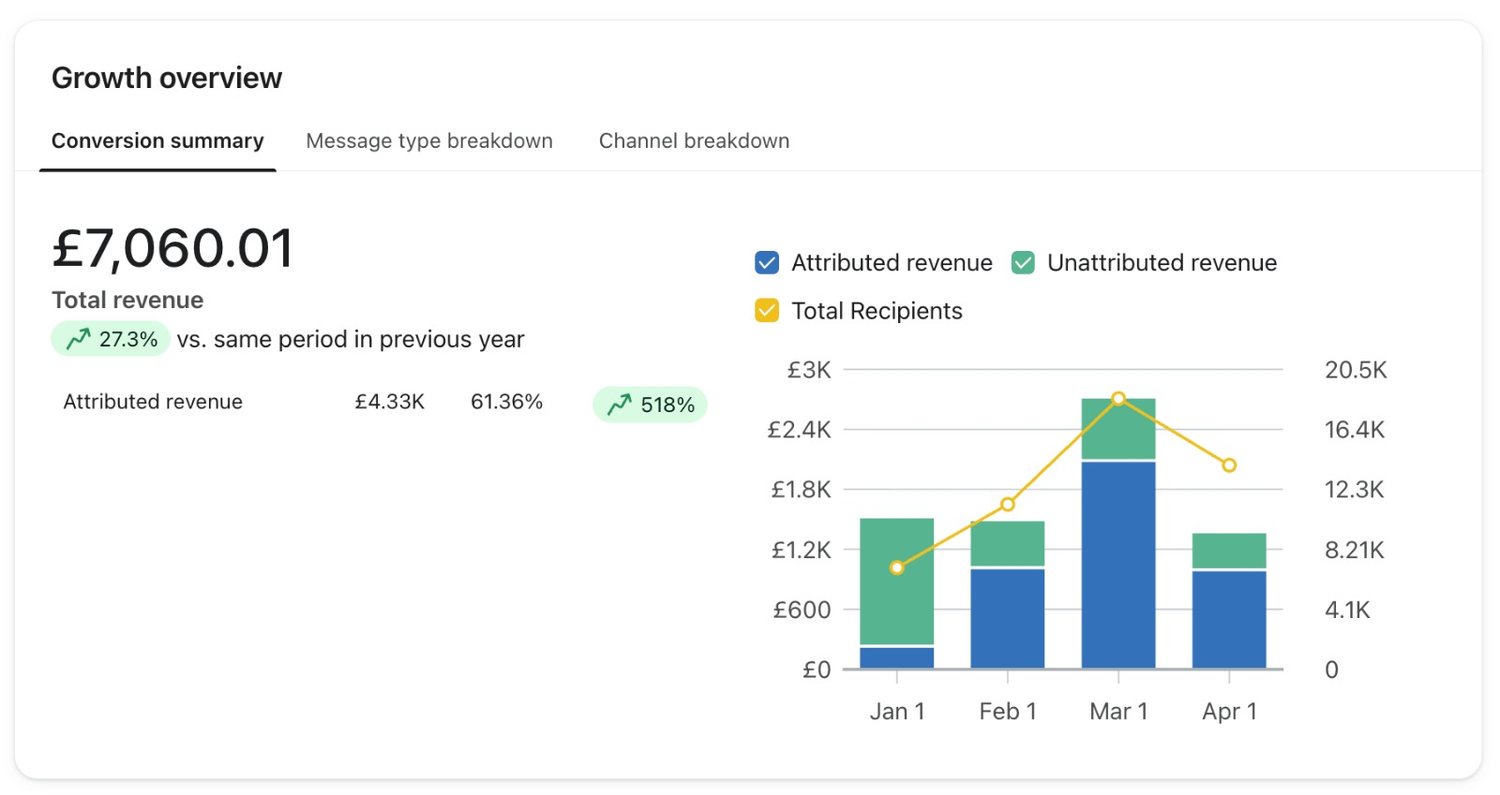
Start here, and read the controls before the numbers. The conversion metric and the time period sit above everything, and every figure underneath them moves when either one does. Write both down at the top of your page.
Then read the split between attributed and unattributed revenue instead of the attributed total on its own. A big attributed number in a shop that sells plenty without email is one situation. The same number in a shop that sells almost nothing without it is the opposite one, and the two need opposite work next.
Screen two: the flow list, read by trigger and not by name
Open the flows and sort by status. Names are decoration: a flow called Welcome can be triggered by anything, and in inherited accounts it often is. The trigger is the part that decides who gets the email.
- Which flows are live, which are in draft, and which are set to manual, because manual holds messages instead of sending them
- The trigger on each one, and whether it matches what the name promises
- Any flow with no message in it, which is commoner than it sounds after somebody has cleared a draft
- Anything nobody has edited since the platform was set up
- What is missing entirely, against the flow library worth having
The gaps matter more than the wording of what's already there. An account with a beautiful welcome series and no browse or checkout abandonment is leaving the two easiest sources of revenue on the table, and no amount of rewriting the welcome series will find them.
Screen three: where the subscribers actually come from
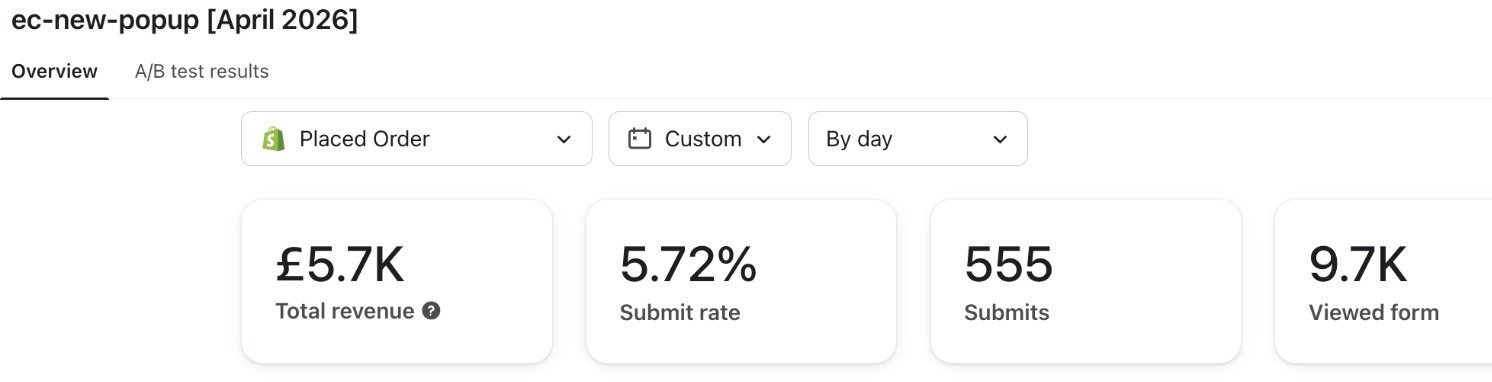
Open the sign-up forms and compare views with submits on each one. Then look for the two usual problems: one form doing all the work while three others sit at nothing, and a form somebody switched off during a sale and never switched back on.
Then read list growth against unsubscribes and bounces over the same months. A list that grows and churns at the same rate isn't growing, whatever the subscriber count on the front page says. A list that only grows during sales is a list that only buys during sales.
Screen four: who can get in, and what sends as you
Here's the screen nobody opens, and it's the one that costs the most when it's wrong. Four minutes. Same check whether you're auditing your own account or one you've just inherited from an agency.
| Check | Where it lives | What wrong looks like |
|---|---|---|
| Who owns the account | Account settings, billing | The billing sits with an agency or a former employee |
| Who has access | Account settings, users | Old agencies, old staff and a shared login nobody admits to |
| The sending domain | Account settings, domains and hosting | Sending on a shared domain, or authentication never finished |
| What is connected | Integrations and API keys | Keys for tools you stopped paying for, still able to send |
If the account itself turns out to be in somebody else's name, stop the audit and sort that out first. It's the one asset in this list you can't rebuild, and what we do inside Klaviyo starts by making sure it's yours.
Screen five is a blank page: write the missing list
The last screen is your own notes. Order them by what they'd earn and not by how annoying they are, and the order is usually the same: deliverability, then the flows nobody built, then the list, then the calendar, then the design.
Now the list is worth something on a call. You can ask an agency what it would do about item one, instead of sitting through a capabilities deck. Inside a minute you'll know whether the person on the other end has opened an account like yours before.
If you'd rather work from a structured version, the Flow Audit Scorecard is the same exercise as twenty-five yes or no checks across five sections. It's the document we score accounts with.
Theo Tziapouras
Founder and strategy at Engage Commerce, the ecommerce agency for 7 and 8 figure DTC brands.
FAQs

What should a Klaviyo audit actually cover?
Deliverability and sending setup, the flow stack read by trigger, list growth and where subscribers come from, campaign history and who each send went to, reporting settings, and account access. Design and copy come last, because a beautiful email sent to the wrong people at the wrong time is still the wrong email.
How long does an account audit take?
Half an hour to see the shape of it, a day to do it properly, including the parts that need checking outside the platform such as authentication records. The half hour version is enough to tell you whether you've got a build problem, a deliverability problem or a capacity problem.
Should I pay for a Klaviyo audit?
Not before you've done the free version yourself. A paid audit is worth it when you want somebody who has seen hundreds of accounts to tell you what's unusual about yours, and you'll get far more out of that conversation if you already know what's missing.
What is the first thing to fix after an audit?
Whatever is stopping mail arriving, every time. Authentication and list hygiene decide whether any of the rest is worth building, and there's no point constructing a flow stack that lands in a promotions tab nobody opens. Build second, and build the gaps, not the rewrites.
The audit is the cheapest thing you will do this quarter
Half an hour of looking properly at an account usually finds more than a month of rewriting subject lines, because the expensive problems are structural and structural problems are quiet. Run it before you hire anybody, run it again when somebody hands the account back, and keep the list. The list is the brief.
Hiring an agency
What the money buys, what to ask before you sign, and what to walk away from.

The questions to ask an email marketing agency before you sign
What to ask, what a good answer sounds like, and what to have in writing before the contract rather than after it.
Read it
When to hire an email marketing agency, and when not to yet
Three situations where waiting is the right call, two that mean you are already late, and what a retainer cannot fix.
Read it
Red flags when hiring an email marketing agency, and what to ask instead
Five things that should stop a conversation, and the question that turns each one into a straight answer.
Read itWould you rather this was just handled?
Bring your Klaviyo account and the thing annoying you most. We will tell you what we would fix first, before you spend anything.

Half an hour with Theo, our founder.
We're all about relationships built on trust, mutual respect and a shared vision for success. If that sounds like your vibe, let's make some waves together 🌊