How much do email marketing agencies charge, and what the money buys
Nobody publishes a price, so here is the shape of the deal: what is billed once, what is billed monthly, and what is extra.

Two agencies can quote for what looks like the same thing and mean completely different work. The number isn't the useful part of a quote. What's in it, what isn't, and how easily you can leave: those are the parts that decide whether it turned out expensive.

Why nobody publishes a price, including us
You came here for a number. Email work is priced on the account, not off a menu. A shop with nine live flows, a clean list and a designer in the building is a different job from a shop with one welcome email and a spreadsheet of addresses. Any agency that quotes before it has seen the account is quoting for the average, and you're not the average.
So the useful question isn't what it costs. It's what's being bought, over what period, and what happens to the work if you stop paying for it.
The build and the running are separate jobs
Nearly every deal splits in two. There's the build, which has a finish line: the audit, deliverability, consent, the flows, the templates, the sign-up form. Then there's the running, which never ends: campaigns, tests, segments, reporting and the things that break.
| The build | The running | |
|---|---|---|
| What it is | A fixed piece of work with an end | A monthly commitment with no end |
| Billed | Once, often in two or three stages | Monthly, usually in advance |
| Finished when | The flows are live and behaving | You give notice |
| Where it goes wrong | Scope grows quietly | It becomes a standing order nobody reads |
Some agencies fold the build into the first months of a retainer, and that's fine on one condition. The contract has to say what happens if you leave before the build is finished, because otherwise you've paid for half a system.
The line items that turn up later
Extras are where two quotes stop being comparable. None of them are dishonest on their own. They become a problem when one side assumed them and the other didn't.
- Email design beyond the templates in the build, which peak season eats quickly
- SMS and WhatsApp, separate channels with their own consent rules and their own bills
- A migration from another platform, including the historical data nobody wants to touch
- Integrations with a subscription app, a loyalty app or a helpdesk
- Landing pages, copy and anything else that touches the website itself
- The Klaviyo bill, which is yours and grows with the size of the list
Ask about all six in writing before you sign. Not because somebody's hiding them, but because the answers tell you how the agency organises its work. Ours are set out in how we work, month by month.
What actually changes the number
Two quotes for the same shop can differ a lot and both be fair. List size changes the platform bill and the deliverability work. The number of flows changes the build.
The quiet one is approvals. One person signing off a campaign on the day it's written costs less to run than three people commenting on it over a week. The second account also sends fewer emails for the same money.
Data is the other one. A tidy Shopify store with clean product data and one source of truth is quick to work in. Three years of imports, duplicate profiles and a competition list are a project before anybody writes an email.
What a monthly fee should be buying
A retainer buys attention, and attention should leave a trace. If nobody can tell you what last month went on, you're paying a subscription, not buying a service.
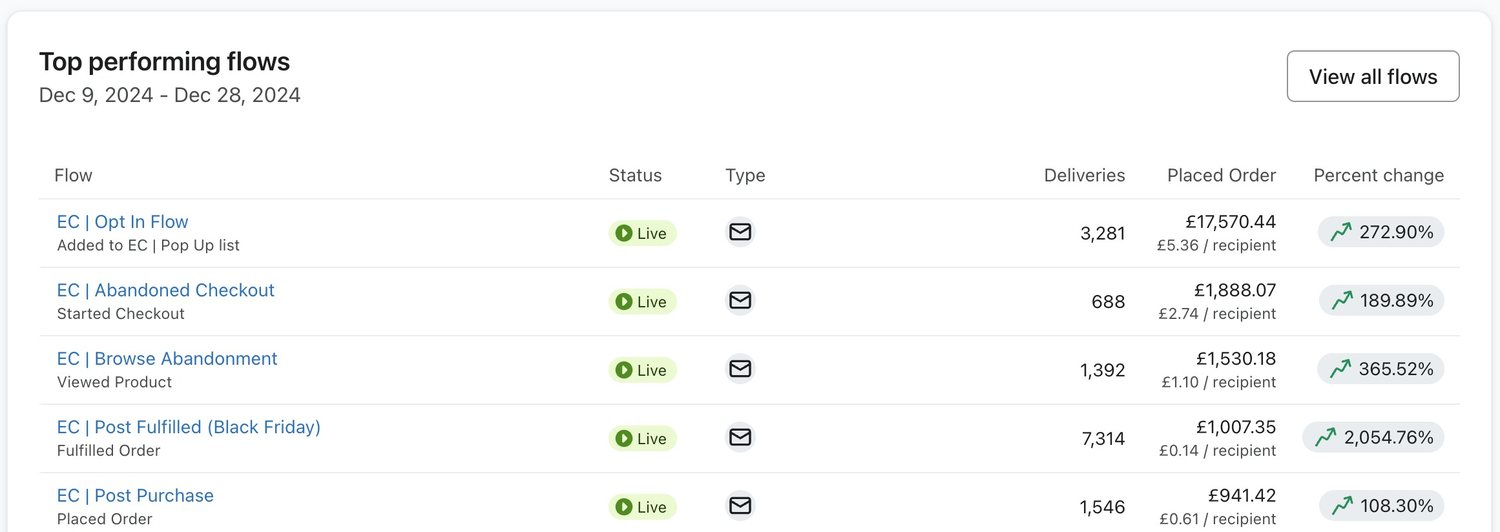
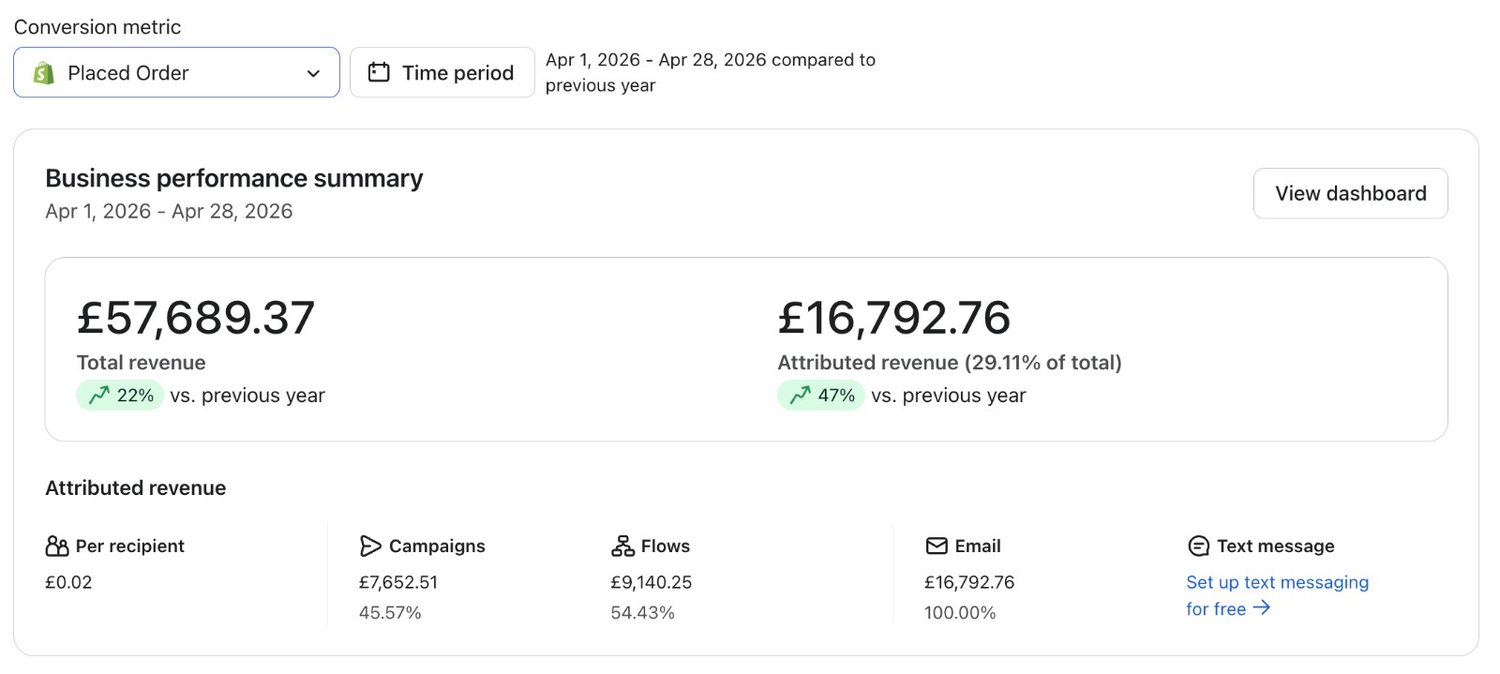
Flows are the half that keeps earning while nobody touches them, so a productive month can look quiet from the outside. Campaigns are the visible half. The flow library are the half that pays the retainer back.
A fair monthly scope names the number of campaigns, who writes them, who designs them, what gets tested and when the flows are reviewed. If it says ongoing optimisation and stops there, ask what that meant last month on somebody else's account.
How to read two quotes side by side
Put them next to each other and ignore the totals until the end.
- Split each one into the build and the running, even if the agency didn't
- Write down what's missing: design, SMS, migration, integrations
- Find the notice period, and whether it starts when you ask or at the end of a term
- Ask who owns the Klaviyo account, the templates and the data on the day you leave
- Ask what they will report on, and over what attribution window
- Only then compare the numbers, knowing they cover the same job
The cheapest quote is usually the one that left the most out. That isn't always a trick. Sometimes it's an agency that understood less about the account, and a growth consultation is where you find out which of the two it was.
Theo Tziapouras
Founder and strategy at Engage Commerce, the ecommerce agency for 7 and 8 figure DTC brands.
FAQs

Do email marketing agencies charge a retainer or a project fee?
Most charge both. The build is a project with an end, and the running is a monthly retainer. Some fold the build into the first months of the retainer, which is fine as long as the contract says what happens if you leave before the build is finished.
Should an agency take a share of email revenue instead of a fee?
It sounds fair and it rarely is. Email revenue is attributed revenue, so the fee then depends on a setting inside the reporting tool the agency controls. If you do it anyway, agree the attribution window in writing first, and expect the arrangement to get uncomfortable in a strong quarter.
How long before an email programme pays for itself?
Flows are the fast part, because they send to people who are already on the site, usually within weeks of going live. The campaign side takes longer, since it depends on the list growing and on deliverability being repaired first. Judge it over a quarter, not a fortnight.
Is an agency worth it for a small shop?
Not always. If the list is small and nobody has built a welcome flow yet, the first version is a weekend of work and the free playbooks on this site will get you most of the way. Hire when the account earns enough that your own time on it costs more than the fee.
What should a quote include as standard?
The audit, the flows named one by one, the templates, the sign-up form, the deliverability work and the reporting. Anything named as a phase instead of a deliverable is worth a question, because a phase can mean whatever the person writing the invoice needs it to mean.
Price is the last question, not the first
A number only means something once you know what the work is, and nobody knows that until they've been inside the account. Ask for the shape of the deal first: what's built once, what's run monthly, what sits outside both, and what happens on the day you leave. With those four answers the price is easy to judge. Without them it's meaningless, however small it looks.
Hiring an agency
What the money buys, what to ask before you sign, and what to walk away from.

Email marketing agency vs in-house: what each one is better at
Both work. They fail in different ways, and the failure modes are the useful half of the comparison.
Read it
What does an email marketing agency do, month by month
The first quarter is catch-up work. The order it happens in, and the month where you find out what you actually bought.
Read it
Email marketing retainer vs project: how to buy the work you need
A project ships a thing. A retainer keeps a thing working. Most brands buy the wrong one first, and it costs them the build.
Read itWould you rather this was just handled?
Bring your Klaviyo account and the thing annoying you most. We will tell you what we would fix first, before you spend anything.

Half an hour with Theo, our founder.
We're all about relationships built on trust, mutual respect and a shared vision for success. If that sounds like your vibe, let's make some waves together 🌊