Loyalty programme emails do the retention work your points widget can't
Sign-ups climb and the dashboard looks busy, but behaviour never changes. The emails around the programme do the work the widget cannot.


A points balance sitting silently in an account changes nothing. The customer earns it, forgets it, and either comes back or doesn't. The retention work happens in the emails wrapped around the programme: the threshold nudge, the expiry sequence, the reorder-timed push. Build those before you touch the earn rate.

A points balance changes no behaviour until somebody mentions it
A loyalty widget sitting on your checkout page does nothing on its own. A customer earns points, a number ticks up in a popup, and then nothing happens until they either remember to come back or they don't. Most brands never notice, because sign-ups climb and the dashboard looks busy.
We see the same scene at nearly every DTC brand we take on. Marketing installs a points programme, maps a tier structure over a couple of afternoons, picks some rewards and moves on to the next project. Months later somebody pulls the numbers and the repeat purchase rate hasn't moved, because nobody ever told the customer what their balance meant or what to do with it.
A loyalty programme isn't a mechanism until you email around it. Village Wax Melts had a widget doing exactly this kind of nothing, and the points structure wasn't what changed. The lifecycle layer wrapped around it was, and the Village Wax Melts case study shows where that work landed.
Email the tier threshold instead of waiting for them to find it
Tiers only move behaviour when the customer knows where the line is and how close they are to it. Most programmes never say so anywhere except a static account page nobody visits after week one. If somebody's a handful of points off the next tier, that gap is worth an email. Not a line sitting unread behind a login.
The mechanism is plain. Segment by points balance against the next tier threshold, and trigger a message when crossing it feels within reach. Skip the vague nudge to check your points: be specific about the balance, the threshold, what changes on the other side and the fastest order that closes the gap. Pair it with a product priced right at the spend needed, and an abstract number turns into a concrete next action.
The version that fails is the monthly tier status broadcast sent to the whole list regardless of where anybody sits. That's not a nudge, it's a newsletter, and it converts like one. Build the trigger around proximity to the threshold, not around a date in the calendar.
Send the redemption push before the points expire, not after
Expiry is where most programmes quietly bleed value, and the wound is self-inflicted. A customer earns points, forgets them, the date passes. You've spent margin on an incentive that produced no second order, and earned a flash of resentment when the customer eventually notices the balance has gone.
The fix is two touches, not one. An early reminder goes out with weeks of runway, then a sharper one lands near the deadline with the exact date and what the balance takes off the next order. Specific with a deadline converts. A cheery reminder not to forget your rewards asks the reader to do the maths, and nobody does the maths.
Point the push at something buyable right now, not a generic shop now button. If you know the customer's category history, surface the products their points would actually cover, ideally close to a natural reorder. It reads less like a blast that way. More like the system doing its job.
Time the push to land when they would reorder anyway
Every category has a rough reorder window. Wax melts, skincare, supplements, coffee: customers run out and come back on a fairly predictable cycle. Know that cycle and you can time the points reminder to land just before it, arriving as the intent forms instead of arguing with it later.
Cross-reference the balance against each customer's typical time between orders. The wrong moments are straight after they last bought, when there's no need yet, and long after, when they've restocked from a competitor or stopped thinking about the category. The email that lands inside the window barely has to persuade. It just reminds them the points make the decision easier.
This is also where the programme stops competing with the rest of your lifecycle calendar and starts backing it up. A winback flow catches people after they lapse. A properly run loyalty and subscriptions layer catches them before they do. Run both and you reach the same customer earlier.
The three loyalty programme emails almost nobody sends
Most brands that email around their programme at all send one message, a generic enrolment welcome, then silence. A real programme layer is three triggered flows, each fired by the customer's own behaviour instead of the calendar.
- The threshold nudge, triggered by proximity to the next tier, showing the exact gap and what closes it
- The expiry sequence, two touches minimum, each naming the date and pointing at something buyable
- The reorder-timed redemption push, triggered by where the customer sits in their usual repurchase cycle
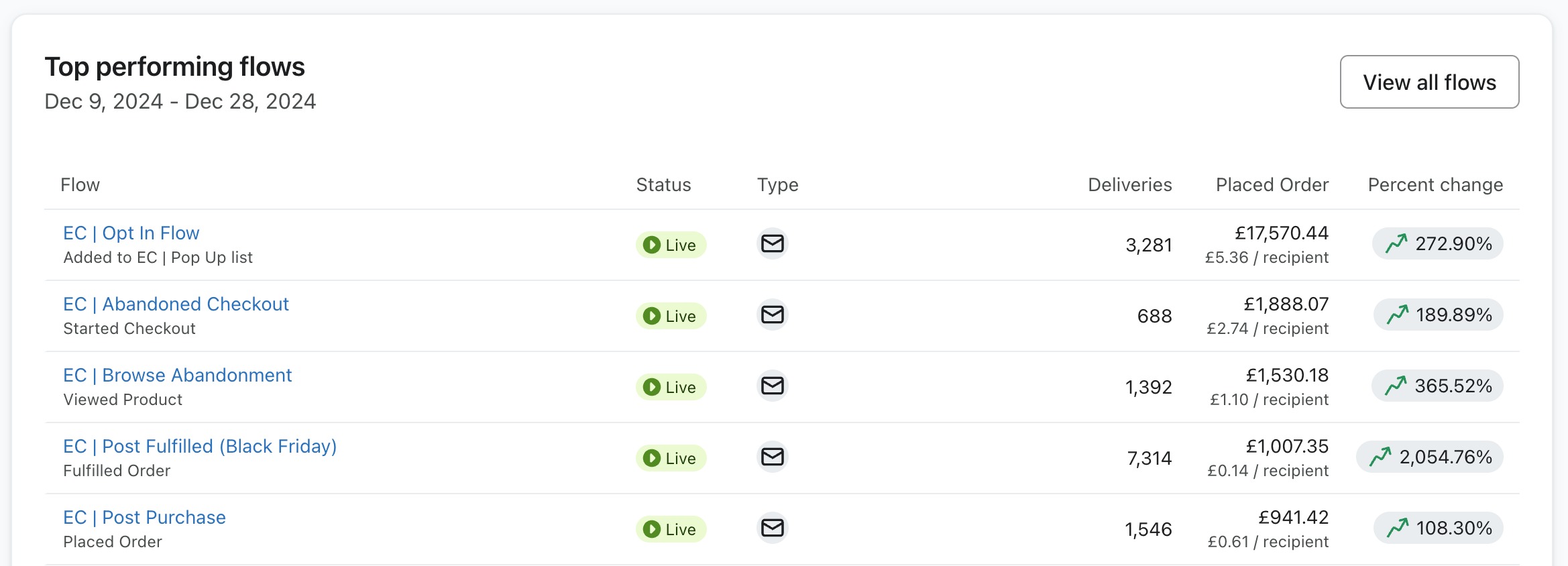
None of the three is hard to build once the segmentation logic exists. Go and check your own account before you touch anything else. No live flow behind each of the three? You've already found the problem.
Fix the silence before you touch the structure
When a programme underperforms, the instinct is to rebuild the structure. Change the earn rate, add a tier, swap the rewards, redesign the widget. It's usually the wrong first fix, and an expensive one to test, because structural changes take months to read. Before any of it, check whether the programme is being emailed around at all.
Structure does matter eventually. A system whose rewards sit too far out of reach, or whose earn rate is too slow to feel real, will cap whatever the lifecycle layer can do. It's just rarely the first fault, and checking costs you nothing.
The first fault is almost always silence. A balance nobody has been told about, an expiry date nobody flagged. If the email system around your store never mentions the programme, the programme doesn't exist in your customer's head. Fix the silence first. The structure was probably fine.
Theo Tziapouras
Founder and strategy at Engage Commerce, the ecommerce agency for 7 and 8 figure DTC brands.
FAQs

Do loyalty programme emails need their own flows in Klaviyo?
Yes. Sync the points balance, tier and expiry date into customer properties, then trigger flows off changes to them. Campaigns can't do this work, because they fire on the calendar, and the whole value of the layer is that each message fires on one customer's own position in the programme.
How many loyalty emails are too many?
Fewer than you'd think, because triggered messages limit themselves. A customer only gets the threshold nudge when they're close to a tier, the expiry sequence when points are about to lapse, and the redemption push inside their own reorder window. What fatigues a list is the untargeted monthly points blast, not the triggers.
Should points expire at all?
Expiry creates a deadline, and deadlines move people, so it's worth keeping. It only works when the customer gets warned with enough runway to act, twice, with the date spelled out. Silent expiry is worse than no expiry, because they find out after the fact and they remember who took it.
What should the first email after enrolment say?
What the points are worth, how they're earned, and the single next action that starts the balance moving. Most enrolment welcomes recite the rules instead. Your customer doesn't need the full terms. They need to see the programme will pay attention to them, which the triggered emails then prove.
The database becomes a channel the day you email it
A points balance moves nobody on its own. It's a number sitting in a table. What turns that table into retention is the message that says exactly what the points are worth, exactly when they expire and exactly what to buy with them right now. That work belongs to the emails, not the widget.
Programme and calendar
How often to send, what to send when, and what retention costs to run.

Your Meta ads landing page shouldn't be the homepage
Every click you buy is a promise made mid-scroll. One landing page per ad angle is how the promise gets kept.
Read it
The email preview text length that survives an iPhone is shorter than you think
Two people on the same model of iPhone can read two different sentences from one campaign, and one of them stops mid-word.
Read it
How often should you send marketing texts? Let the first 30 days tell you
There is no ignore button on a text, only unsubscribe. The ceiling comes from your own opt-out curve, read send by send.
Read itWould you rather this was just handled?
Bring your Klaviyo account and the thing annoying you most. We will tell you what we would fix first, before you spend anything.

Half an hour with Theo, our founder.
We're all about relationships built on trust, mutual respect and a shared vision for success. If that sounds like your vibe, let's make some waves together 🌊