What does an email marketing agency do, month by month
The first quarter is catch-up work. The order it happens in, and the month where you find out what you actually bought.


Most of it isn't campaigns. An account nobody has cleaned takes a month before anything new is worth sending, and the work that pays is dull: access, authentication, segments, then a flow stack somebody has to keep alive. The order matters more than the list.
The job is a system, not a send calendar
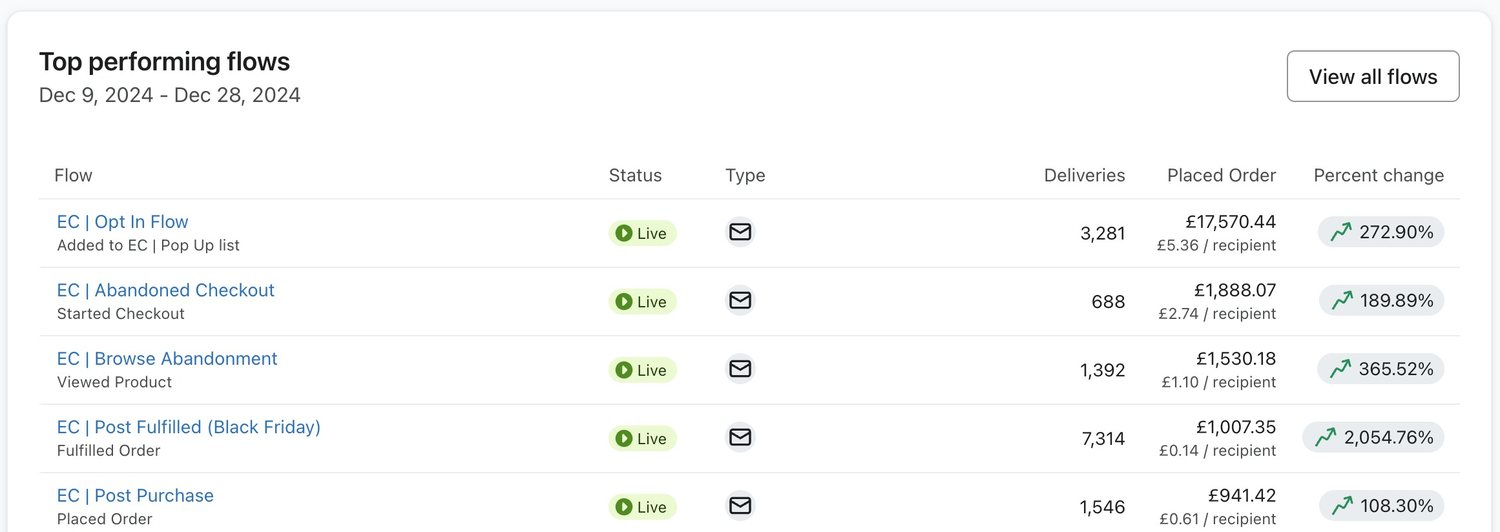
An email marketing agency is hired to own one channel end to end: who's on the list, whether the message arrives, what it says, when it goes and what it earned. Sending is the visible tenth of that. The rest decides whether the sending works at all.
So the first month of a good engagement can look like nothing's happening. Access requests, DNS records and a list nobody wants to open. It's also the month that decides the next six.
Our own order runs from the growth consultation to about month six, and our process page sets it out with dates against it. Use it on whatever proposal you're holding. If the plan opens at the design stage, ask what it intends to send to.
The first meeting is mostly them asking you awkward questions
Nothing worth having gets built off a form. The first meeting should be a look inside the account with somebody who's opened a few hundred of them, and it should end with two or three faults named out loud.
- Where the list came from, and how much of it still opens anything
- Whether the sending domain is authenticated, and who actually holds the DNS
- Which flows exist, which are live, and which are live but empty
- What the store turned over in the same period as any figure being quoted at you
- Whether the brand has enough to say to fill the calendar somebody is proposing
You should get those answers whether or not you hire anybody. An agency that won't say what's broken until the contract is signed is selling access to an opinion, and the opinion is usually that you need a rebuild.
Access, authentication and the list nobody wants to open
Month one is the unglamorous one. Access to the platform, the store and the domain records. Authentication checked on a real send, not a preview tool. Then the list, looked at honestly.
The argument that always comes up here is suppression. Cutting a list feels like burning something you already paid for. Here's the hard truth: addresses that never open anything are quietly telling the mailbox providers not to bother delivering to the people who do.
Anybody working properly wants this settled before a template is opened. If deliverability hasn't come up unprompted by the end of the first month, that's the tell, and it's the one thing on this list that gets more expensive the longer it waits.
Months two and three, where a fixed list of flows is a warning sign
This is the part people think they're buying: copy, design, templates and the automated flows, built inside your own account so they stay there if you leave. It's the most visible month and the least surprising one.
- The reorder window your product actually has, not a flat thirty day guess
- Where the discount sits in the sequence, or whether it's there at all
- Which flows exclude recent buyers, and for how long
- What happens to somebody who qualifies for two flows in the same hour
A proposal that names the same the flow library with the same number of emails for every client was written before anybody opened the account. The flow library is a starting point, not a price list, and the logic inside each one moves with your margin and your reorder cycle.
Campaigns, tests and the reporting call
From month three the work splits in two: the calendar of campaigns going out, and the maintenance of everything already running. The second half is the one that gets quietly dropped.
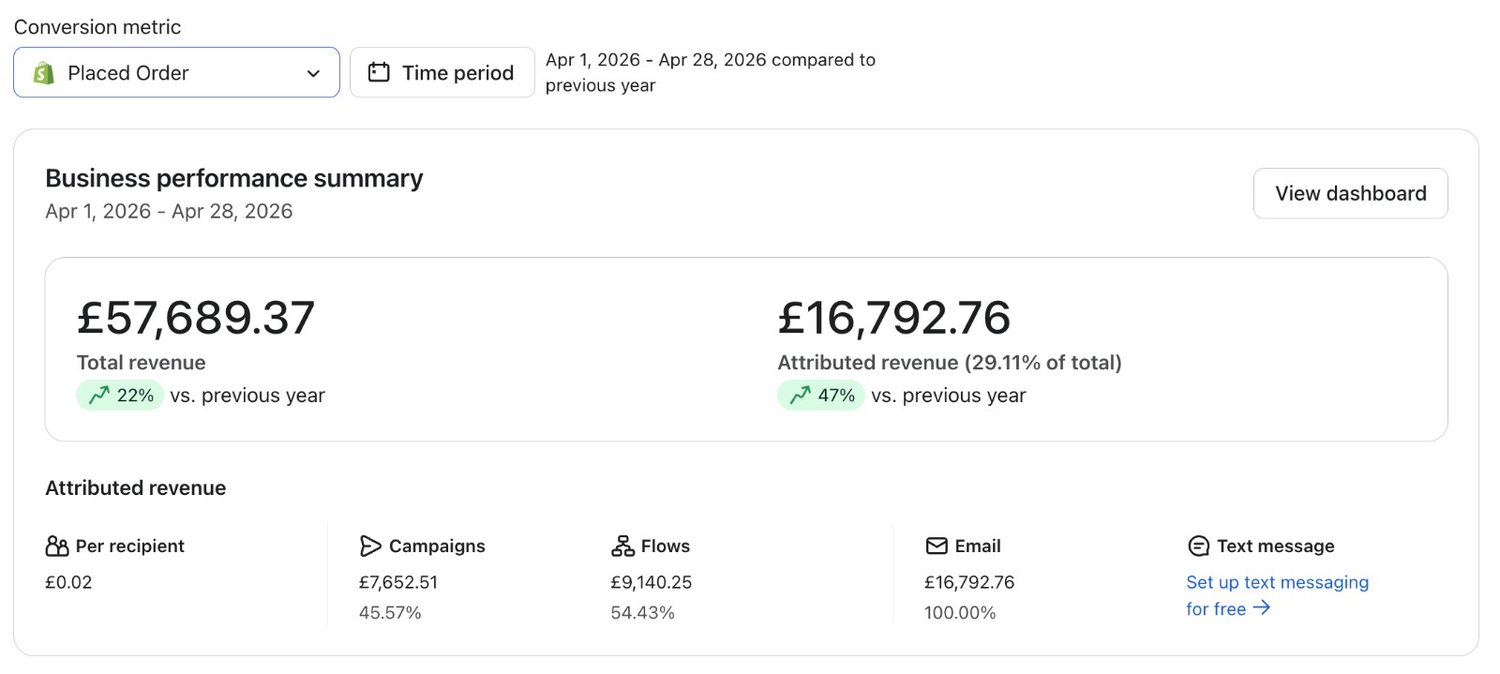
A reporting call should open on a screen like that one, with the window and the dates on it, and it should close with the next three moves named. If the monthly report is a slide of open rates, you're being managed, not served.
What you're paying for once the backlog is gone
By month six the catch-up is finished, and this is where a retainer earns itself or doesn't. What you're buying now is judgement applied to a system that already exists, plus the tests that keep it moving as the products and the offers change.
| When | What happens | What you should be handed |
|---|---|---|
| Month zero | Growth consultation and an audit of the live account | The faults named out loud, before you sign anything |
| Month one | Access, authentication, list hygiene and suppression | A deliverability report and a written suppression rule |
| Months two and three | Copy, design, templates and the flow build | Flows live in your own account, with the logic explained |
| Month three | The campaign calendar and the first tests | A calendar for the quarter and a running test log |
| Month six | Maintenance, rewrites and the reporting call | A report with the window on it and the next three moves |
None of that is a secret and none of it is clever. What varies from one agency to the next is which half they still do once the visible part is finished. That's why how we build email systems is written as a programme, not a build.
Theo Tziapouras
Founder and strategy at Engage Commerce, the ecommerce agency for 7 and 8 figure DTC brands.
FAQs

What does an email marketing agency do in the first month?
Almost none of it is sending. The first month is access to the platform, the store and the domain records, authentication checked on a real send, then the list itself: where it came from, who still opens anything, and what gets suppressed. Campaigns sent before that lands are going into a reputation nobody has looked at.
Do they write and design the emails as well?
Most do, and it's worth confirming in writing instead of assuming. Copy, design, build, deliverability and reporting are five different skills, so ask which of them sit inside the retainer and which are quoted separately. The answer also tells you how many people are really on your account.
How much of our time does it take?
Less than a new hire, more than nothing. Expect a kickoff, then about half an hour a month on the reporting call, plus approvals inside a working week and early sight of promotion dates and stock. Brands that go quiet for a month tend to get a quiet month back.
What if our flows are already built?
Then the first job is reading them, not replacing them. A flow that's been live for two years is usually still sending the offer, the product and the delivery promise that were true when somebody switched it on. Auditing what exists is cheaper than a rebuild and it finds the money faster.
The dull months are the ones that compound
Every part of this job that looks like nothing is the part that decides whether the visible part works. Deliverability, suppression rules, flow logic and the reporting window: nobody puts those on a homepage, and they're what a good month six is built on. If you want the version with our dates against it, it's on our process page, and the growth consultation hands you the audit whether or not you hire us.
Hiring an agency
What the money buys, what to ask before you sign, and what to walk away from.

Email marketing retainer vs project: how to buy the work you need
A project ships a thing. A retainer keeps a thing working. Most brands buy the wrong one first, and it costs them the build.
Read it
How to run a Klaviyo account audit before you hire anyone
The order we open an account in, the five screens that tell you most, and the list to write while you are in there.
Read it
The questions to ask an email marketing agency before you sign
What to ask, what a good answer sounds like, and what to have in writing before the contract rather than after it.
Read itWould you rather this was just handled?
Bring your Klaviyo account and the thing annoying you most. We will tell you what we would fix first, before you spend anything.

Half an hour with Theo, our founder.
We're all about relationships built on trust, mutual respect and a shared vision for success. If that sounds like your vibe, let's make some waves together 🌊