The Klaviyo attribution window, and what it is actually counting
What the window credits, where it is set, why Klaviyo and Shopify never agree, and what an honest report has to say out loud.


Two agencies can report different revenue from the same account, in the same month, and neither of them is lying. The difference is usually one dropdown. It sits above the numbers, where nobody ever looks.
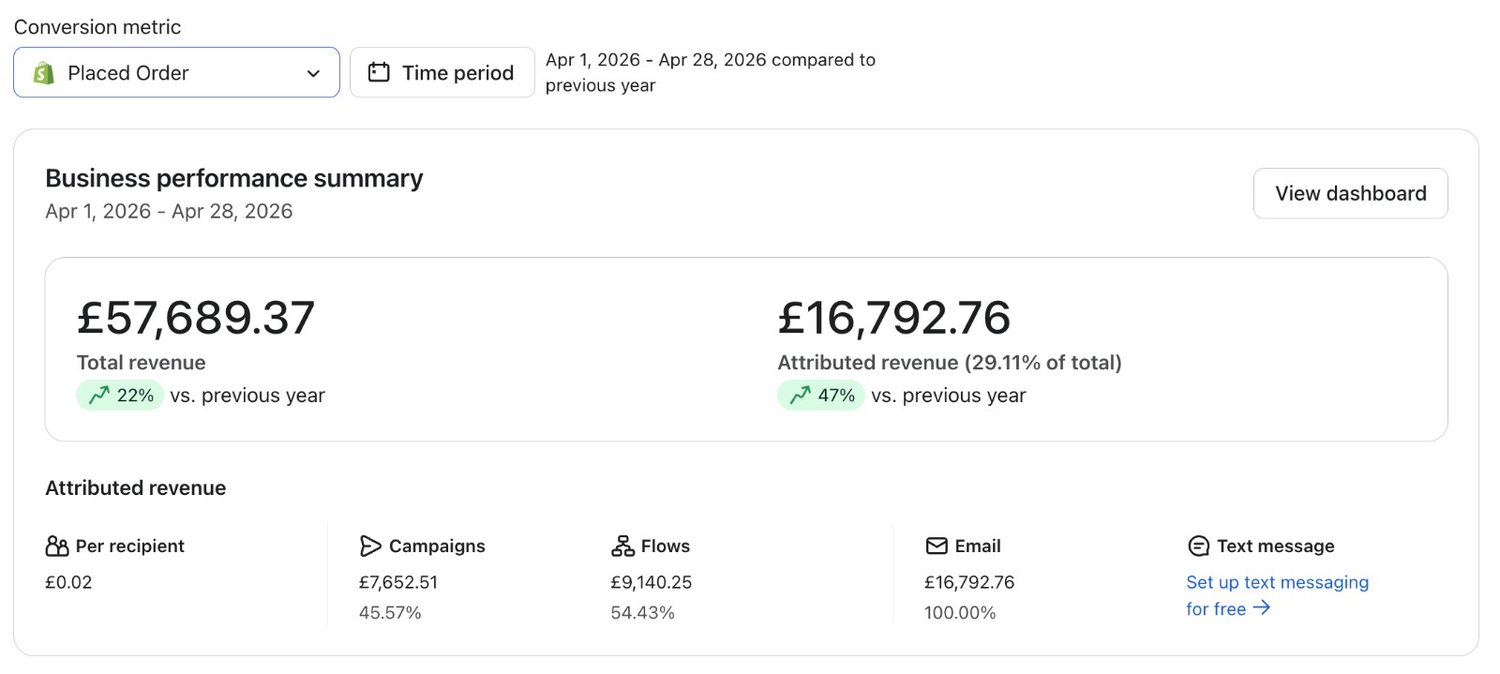
The window is a rule about credit
An attribution window is how long a message keeps the credit. Somebody opens or clicks, and any order they place inside that window counts as that message's work. Outside it, the same sale belongs to nobody in particular.
That's a rule about credit, not a discovery about what caused the sale. Klaviyo publishes its defaults and how to change them in its help centre, and the default is shorter for text messages than for email because the two behave differently.
One screen decides every number in the account
Those controls sit above the figures and govern all of them. Change one and every number underneath moves. Including the ones already sitting in a slide somebody sent you last quarter.
- The conversion metric, which decides what counts as a sale at all
- The window itself, set per channel, so email and text messages can differ
- Whether the change re-reads history, because most reporting recalculates the past instead of starting fresh
- The period on the report, which isn't the window and gets confused with it constantly
None of it is buried. Those dropdowns sit on the screen every report is run from, which is what makes asking an agency which window it used such a fair question. And such a telling pause.
The conversion metric matters as much as the window
Every account picks an event that counts as the sale. On a Shopify shop that's normally the placed order. It doesn't have to be, and an account measuring started checkouts will report numbers that look wonderful and mean something else entirely.
Four settings, and any one of them will make two honest reports disagree. None of them is hidden. None of them is a trick.
| Setting | The question it answers | The mistake it causes |
|---|---|---|
| Conversion metric | Which event counts as a sale | Reading a checkout number as if it were an order number |
| Attribution window | How long a message keeps the credit for one | Comparing two agencies as though their windows matched |
| Channel | Whether email, text and push are counted together | Adding the channels up and getting more than the shop took |
| Time period | Which dates the report covers | A best month presented as a normal one |
Why Klaviyo and Shopify never agree, and never will
Klaviyo credits a sale to a message somebody engaged with. Shopify and most analytics tools credit the last click before the order. Two different questions, so two different answers, and no amount of matching settings will make those lines meet.
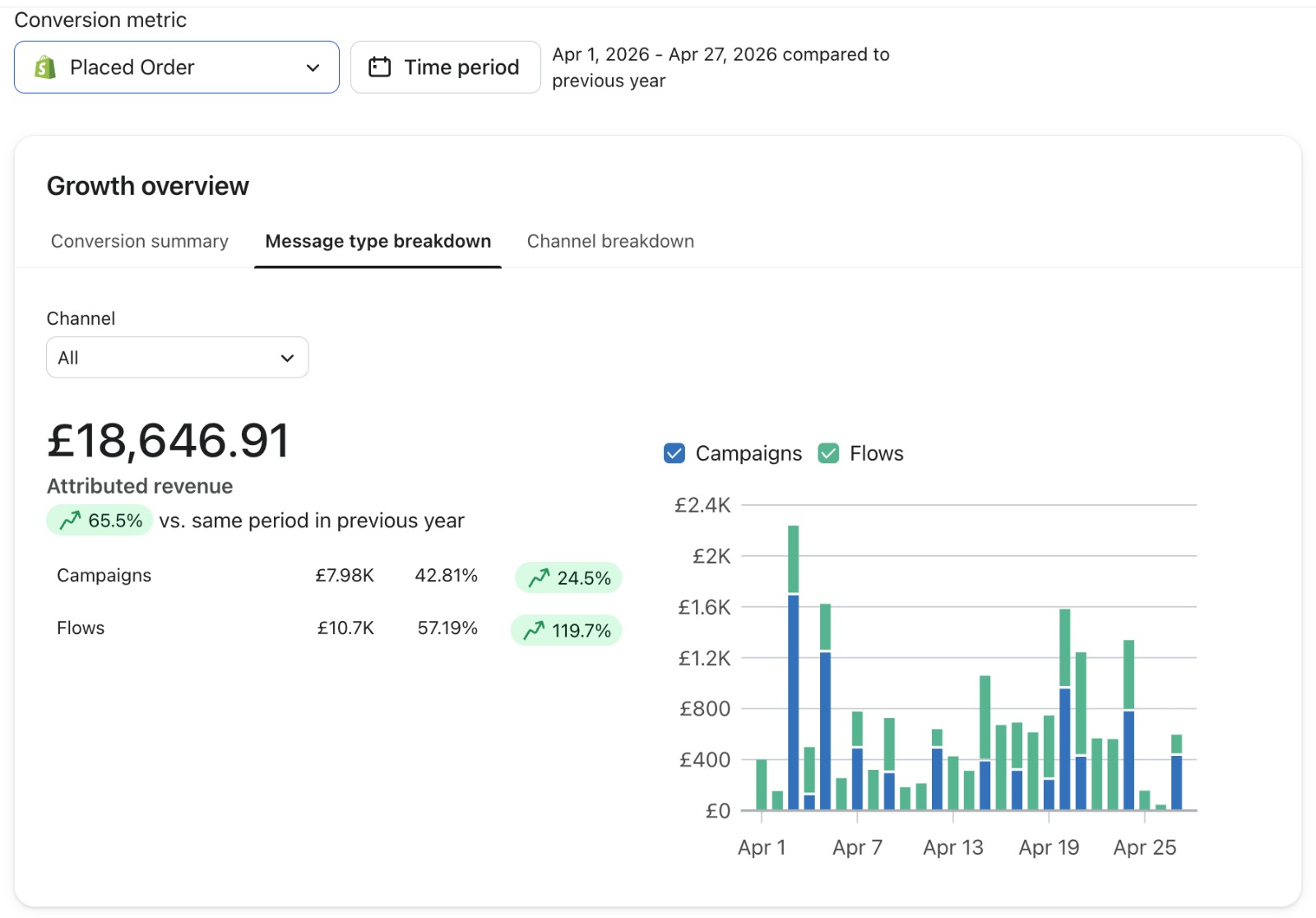
So pick one as the number you run the business on and keep the other as a cross-check. We use the shop's own total as the denominator for exactly this reason: whatever a platform credits itself, the share of real revenue is a figure both tools can be held to.
What a report has to say before the number means anything
A revenue figure on its own is a screenshot. Put the settings and the store total beside it and you've got a report. One extra line.
- The window and the conversion metric the report was run on
- The exact dates, not a month name
- What the shop turned over in the same period
- Which channels are inside the total
- What else changed in the period that wasn't email
Write those five lines once and they turn into a habit. The first month it feels pedantic. The month somebody asks why a number moved, it's the reason you can answer in a sentence instead of a week.
How to compare two sets of numbers honestly
A longer window isn't cheating, as long as you say so. It's a fair choice for a considered purchase where people take a week to make their mind up. Changing it halfway through an engagement and then reporting growth is a different matter, and it's the one thing here worth being annoyed about.
So when two agencies put numbers in front of you, ask both for the window, the metric and the dates, then read the shares instead of the totals. Ours are on the Shadow Foam case study with the period printed beside them, and the terms are settled on the glossary if any of this is new.
One last habit worth building. When the attributed figure jumps and nothing else in the account changed, check the settings before you celebrate. Somebody widening a window is a far commoner explanation than a sudden improvement in the emails.
Theo Tziapouras
Founder and strategy at Engage Commerce, the ecommerce agency for 7 and 8 figure DTC brands.
FAQs

What is the Klaviyo attribution window?
It's the period after somebody opens or clicks a message during which an order is still credited to that message. Klaviyo sets a default per channel, with a shorter one for text messages than for email, and you change it for the whole account, not message by message.
Why does Klaviyo show more revenue than Shopify?
Because they're answering different questions. Klaviyo credits a sale to a message the customer engaged with inside the window. Shopify and most analytics tools credit the last click before checkout. Both can be right at once, and that's why the store total is the only figure worth using as a denominator.
Should I change the attribution window?
Only with a reason you'd say out loud, and never in the middle of measuring something. A longer window suits a considered purchase where people take days to decide. If you do change it, note the date and expect your historical reporting to move with it, because most of it recalculates.
Can email and text message both claim the same order?
Yes, if the customer engaged with both inside their windows. That's why adding the channels together can produce more revenue than the shop actually took. Read each channel against the store total separately, and be suspicious of any report that sums them.
What attribution window do most ecommerce brands use?
Most run on whatever the platform set on the day the account was created, which is a decision by default. That's fine, as long as it's written on the report, so anybody reading it later knows what they're looking at.
The number isn't a lie, it's an answer to a different question
Attribution windows exist because somebody has to decide how long a message keeps the credit for a sale, and any answer to that is a convention, not a fact. Pick one. Write it on every report, read it against what the shop actually took, and never change it quietly. That's the whole discipline, and it takes one line.
Klaviyo mechanics
The settings that quietly decide what your flows do, from someone who has rebuilt a flow stack.

Klaviyo smart sending and quiet hours: the settings that mute your flows
What smart sending actually does to a message, how a muted flow looks in the reporting, and the four settings people blame instead.
Read it
Klaviyo flow filters vs trigger filters: which one decides who gets the email
One is checked once, at the door. The other is checked again before every email, and that is where the money leaks.
Read it
Klaviyo segments vs lists: which to use, and what breaks when you pick wrong
A list is a room people get put in. A segment is a question the database answers again every time you ask it.
Read itWould you rather this was just handled?
Bring your Klaviyo account and the thing annoying you most. We will tell you what we would fix first, before you spend anything.

Half an hour with Theo, our founder.
We're all about relationships built on trust, mutual respect and a shared vision for success. If that sounds like your vibe, let's make some waves together 🌊