The July sale nobody needed, and the alternatives to discounting that beat it
A discount solves the dashboard problem for one month, then spends the rest of the year training your list to wait for the next one.


Sales are flat, let's run the July promo we ran last year. That brief lands in inboxes every summer, usually from a founder staring at a dipped dashboard, and it's almost always the wrong move. Diagnose the dip first. Then run access, bundles and perks instead of the markdown.

A quiet July is an attention problem, not a price problem
The brief lands in the second week of July, usually from a founder staring at a dashboard that's dipped under forecast. Sales are flat, so run the promo that ran last year. It's a completely understandable instinct, and it's usually the wrong one.
A July dip is almost never a price problem. People are on holiday, checking their phones less and spending on flights instead of on what you sell, and a sitewide code does nothing at all for somebody who never opened the email. It just tells the people who were going to buy eventually to buy now, at a lower margin.
You haven't solved the attention problem, you've paid to move July's revenue forward. Everyone watching learns that waiting produces a code, and that lesson compounds. Every summer you repeat it, a full-price July gets harder to sell.
Diagnose the dip before you reach for the code
The bigger cost arrives in November. A July sale and a Black Friday sale in the same year build two discount seasons, and a trained shopper waits for whichever comes next. So work out what's actually causing the slump before anyone drafts an offer.
Pull three reads, week on week against June: sessions, conversion and average order value. Nothing fancier. Diagnosing the dip properly is a conversion question long before it's a discount decision.
| What moved | What it usually means | The first fix |
|---|---|---|
| Sessions down, conversion holding | An attention problem: people are away and not showing up | A reason to open the email, not a cheaper basket |
| Sessions steady, conversion down | A relevance problem: the site is not matching what visitors came for | Merchandising and landing pages before any code |
| Order value down, the rest normal | People are buying, just less per order | Bundles and cross-merchandising, not a markdown |
Most July dips are the first or third row, and neither one needs a discount. They need a reason to open the email and a reason to put one more thing in the basket, and access and bundles both supply that without repricing anything.
Sell access before you sell a markdown
The swap we run instead of a sitewide code is early access. If an autumn drop, a restock or a smaller seasonal edit is coming in September, July is the month to let your list in first. It costs nothing in margin and gives your best subscribers something a code never can, which is status.
Segment by engagement, and by tier if a loyalty or subscription programme is running. Your most engaged customers get first look a full week before everyone else, framed as a preview and not as a sale. Everybody else follows a few days later, still ahead of the public.
The copy does the work. Instead of a sitewide offer with a deadline, the email says you're seeing this first because you're one of our best customers. That's a sentence a discount-trained subscriber has never read from your brand, and it earns a screenshot, not a hunt for a matching code.
A bundle gives a reason to buy without repricing the catalogue
When early access doesn't fit the catalogue, bundling is the other lever that creates a reason to act without touching per-unit price. A sitewide code cuts margin on everything, including the units that would have sold anyway. A bundle only changes the economics of the one combination you build, chosen to protect the products that matter.
Run a three-for-two on a pairing of slower July stock and a hero product instead of a blanket markdown. The hero still sells at full contribution. The slow stock clears. The customer still feels they've won. If a loyalty programme exists, make the bundle exclusive to members, or let it earn double points instead of cutting price.
The wrong version is an everything-must-go send to the whole list. That includes the people who bought a fortnight ago at full price and now feel daft for not waiting. The right version names the pairing and goes to people who've shown interest in that category. The welcome flow runs the same argument in miniature, where a standing code is rarely earning its keep.
Your loyalty programme may already be sitting on the fix
If a loyalty or subscription programme is live, audit it before anyone drafts a single email. The answer to we need a promo is very often we built the mechanism months ago and nobody has touched it since. Run this list against your own account before the brief goes out.
- Points expiring soon for a meaningful chunk of the list, which is an honest reason to email that drives action with no discount figure anywhere in the copy
- A tier threshold a decent segment is close to, because a nearly-at-Gold nudge does the job of a code at no cost to margin
- An underused subscriber perk nobody has mentioned in a campaign this quarter, because reintroducing an existing benefit reads as generous and inventing a new discount reads as desperate
- The split of July revenue between repeat and new customers, because a repeat-heavy month responds to access and recognition, not to an acquisition-style code
Any one of those is a legitimate campaign that costs nothing in margin and adds no second discount season to your list's memory. It's the quiet work our subscriptions and loyalty engagements are built around, because a perk only pays when somebody actually emails about it.
Count the codes you sent last July
Open your Klaviyo campaign history and count how many discount codes went out last July, and the July before. More than one? That's the actual problem, not this month's dashboard dip, and it's worth fixing before you plan a single send.
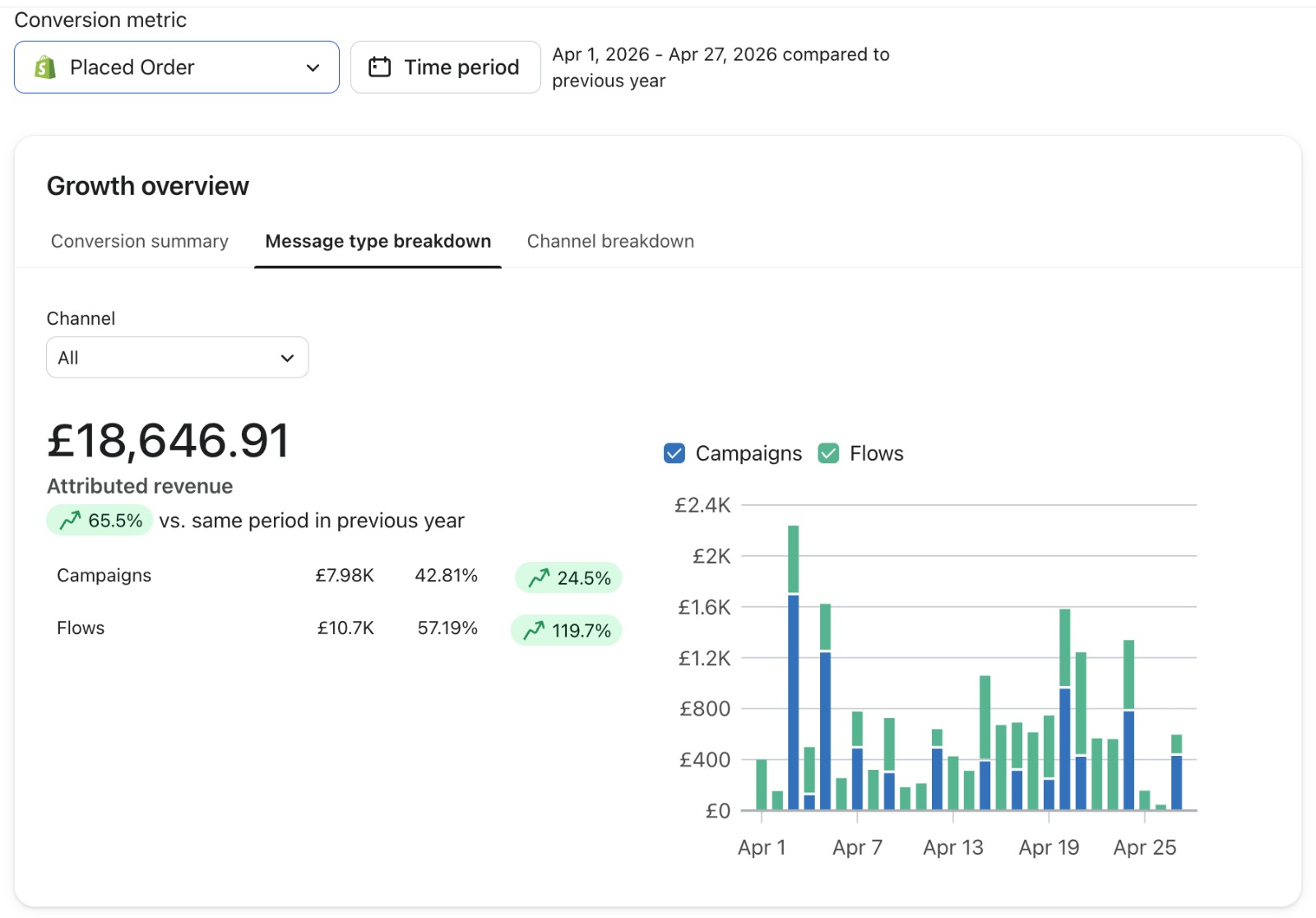
The message type breakdown shows how much of the month leaned on campaign pushes against the standing flows. Then check the last time you emailed about a perk that wasn't money off. Longer ago than a quarter, and that's the campaign to build this week. The quiet months on the accounts we run are won with access and recognition, and the code stays in the drawer until November.
Theo Tziapouras
Founder and strategy at Engage Commerce, the ecommerce agency for 7 and 8 figure DTC brands.
FAQs

Should I ever run a discount in a quiet month?
Only when the diagnosis points at price, which is rarer than it feels. If sessions are steady but conversion has dropped, a short, targeted offer to a warm segment can make sense, though fixing the merchandising usually works better. If sessions are down, a code does nothing, because the people it's meant to move aren't looking.
How do I tell if my list is discount conditioned?
Look at when your revenue arrives. If sales cluster tightly around code launches and go quiet between them, and engagement only lifts when the subject line hints at an offer, the list has learned the calendar. The fix is a stretch of value-led sends that prove your emails are worth opening at full price.
Do bundles hurt margin the way discounts do?
No, because a bundle only changes the economics of the specific combination you build, while a sitewide code cuts margin on every unit, including the ones that would have sold anyway. Pair a slower mover with a hero product and the hero still sells at full contribution while the slow stock clears.
The discount was never the strategy
A quiet month is the cheapest place to find out whether your brand can create demand without paying for it. Early access, bundles and perks all give the list a reason to act while leaving your pricing credibility intact for the season that matters. We won't pretend it's the easier option. It's the one that arrives at Black Friday with a list that never learned to wait.
Programme and calendar
How often to send, what to send when, and what retention costs to run.

Your ecommerce thank you page is the best segmentation moment you're ignoring
The seconds after order confirmation are the highest attention a brand ever gets, and most stores spend them on a receipt.
Read it
Why is my unsubscribe rate going up? Because you lost those subscribers three emails ago
An unsubscribe is the final step of a decay that gave weeks of warning. How to catch the fade while there is still signal.
Read it
Stop asking for birthday and phone number at signup, that's what progressive profiling is for
The popup earns an email address and nothing else. Birthday, phone number and product interest get asked later, at moments of proven investment.
Read itWould you rather this was just handled?
Bring your Klaviyo account and the thing annoying you most. We will tell you what we would fix first, before you spend anything.

Half an hour with Theo, our founder.
We're all about relationships built on trust, mutual respect and a shared vision for success. If that sounds like your vibe, let's make some waves together 🌊