How to build a testimonial email a sceptical reader believes
Star ratings persuade nobody. One customer, quoted at length, answering the objection that was already stopping the sale, is a different email.

Most testimonial sends are a wall of five star ratings with no names on them. Reads as marketing, gets treated as marketing. The version that sells picks one objection, finds a customer who had it, and lets them talk for longer than feels comfortable.
A testimonial email has one job, and it isn't credibility
Build trust. That's how the brief usually arrives, and it's far too vague to write against. Trust isn't something a reader hands over because you asked for it. It's what's left once the specific worry that was stopping them has been dealt with by somebody who isn't you.
So the useful question isn't which reviews are our best. It's what stops people buying this, and who's already said out loud that it turned out fine. Your support inbox knows. So does whoever handles the returns.
Pick one objection per send. Price, fit, whether it works on a difficult surface, whether the dog will actually eat it. One email that settles one doubt beats a montage of praise that settles nothing.
Where the quotes come from, and which ones to leave out
Review platform exports are the obvious source and the weakest one, because the good lines are buried under hundreds of variations on love it. Search your own reviews for the words that describe the worry instead of the product, and the usable quotes surface fast.
- Reviews that mention what nearly stopped them, usually opening I was worried that or I almost didn't
- Replies to your own flow emails, which run longer and more candid than a review form ever gets
- Support tickets that ended well, where the customer wrote back to say how it turned out
- Anything sent with a photograph attached, because the picture is half the campaign and the permission conversation is already easier
Leave out anything you'd have to edit into a sentence. Tidying a customer's grammar removes the one quality that makes it read as a customer, and a slightly clumsy quote beats a polished one every time.
What actually goes in the send
The structure is short. Name the doubt in the subject line and the first sentence, hand over to the customer for the middle, then give one route to the product they're talking about. No second offer, no secondary banner, no code.
- One line from you naming the worry, in the reader's words and not in yours
- The quote, run long, with the customer's first name and something that places them, like the town or how long they've had it
- Their photograph if you've got one, at the size a photograph deserves and not as a thumbnail
- The product they bought, linked once, with nothing else competing beside it
- A line inviting a reply, which is how you source the next one
Design it as an email, not as a review widget. The second it looks like the star block on a product page it reads as furniture, and the eye skips straight over it.
Send it to the people who are still deciding
A testimonial send is wasted on your customers, and it's wasted on people who've never heard of you. Its audience is the middle: subscribers who've browsed, opened, sat in a cart or come through a signup form and then gone quiet.
| Segment | Why this send suits them | What to pair it with |
|---|---|---|
| Engaged, never bought | The doubt is live and unanswered | The product page, nothing else |
| Browsed a category, no order | The objection is usually specific to that category | A quote from a buyer in that same category |
| Lapsed after one order | Their worry is about the second product, not the first | A quote about the range, not the hero item |
That's the same segmentation logic the browse abandonment flow runs on its own, borrowed for a campaign. If those segments don't exist in your account yet, that's the first job. Not the email.
What it looks like when the reviews carry the email
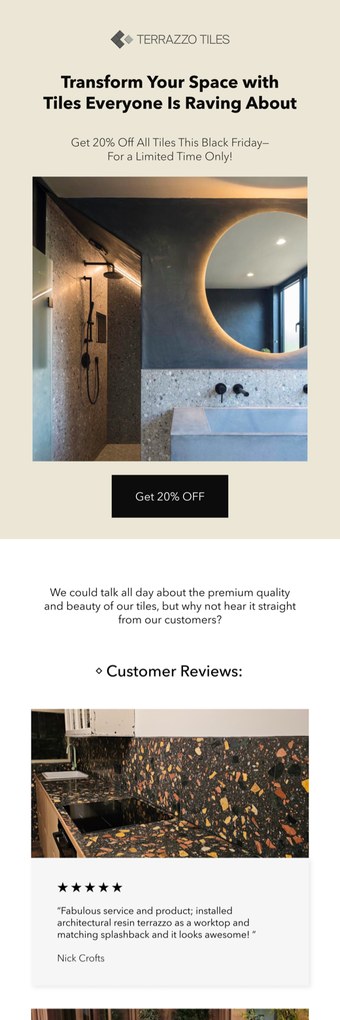
That send works because tiling is a decision people are frightened of getting wrong. The reviews are named, they're about the job and not about the delivery, and the room photography lets the reader picture the outcome before they've read a word.
Compare it with what most brands send: four identical rating blocks under a banner. The difference isn't design budget. Somebody chose those quotes for what they answer instead of for how flattering they were, and every account we run treats that choice as the campaign itself.
Open your reviews and search for one phrase
Search your review export for I was worried and read whatever comes back. More than a handful? Then this quarter's testimonial campaigns are already written and you're sitting on them.

Then check when you last actually read them. Most brands collect reviews through an automated request and never open the replies. Reading them is the unglamorous half of running an email programme, and it's where the next six campaigns come from.
Theo Tziapouras
Founder and strategy at Engage Commerce, the ecommerce agency for 7 and 8 figure DTC brands.
FAQs

How many testimonials should one email carry?
One, if you've got a strong quote that answers a specific objection. Three at most, and only where each one answers a different worry about the same product. A grid of six is a review widget instead of a campaign, and it leaves the reader nothing to hold on to.
Do I need permission to use a customer review in an email?
If it was left publicly on a review platform or your product page, using it with the first name shown is normal practice. Anything from a private reply, a support ticket or a direct message needs an explicit yes, and photographs always do. Ask in the same thread and most people are pleased to say yes.
Should the testimonial email include an offer?
No. The whole point is that somebody else is doing the persuading, and a code changes the subject to price at the exact moment the reader has stopped worrying about the product. Keep the send clean and let the next campaign handle any promotion.
How often can we send testimonial campaigns?
Roughly monthly is comfortable for most lists, as long as each one takes a different objection and quotes a different customer. It stops working the moment subscribers recognise the format before they've read it, which happens faster than most calendars assume.
One customer, allowed to finish a sentence
The testimonial email is the cheapest campaign in this whole set to produce, because somebody else did the writing and handed it to you for free. What it costs is the attention to pick the right quote for the right doubt, and the nerve to run it long instead of chopping it into a rating block. Do that and it stops being a trust exercise. It starts closing a sale that was already nearly made.
Campaigns that are not discounts
One campaign type per post: what it is for, who it is sent to, and how to build it without reaching for a code.
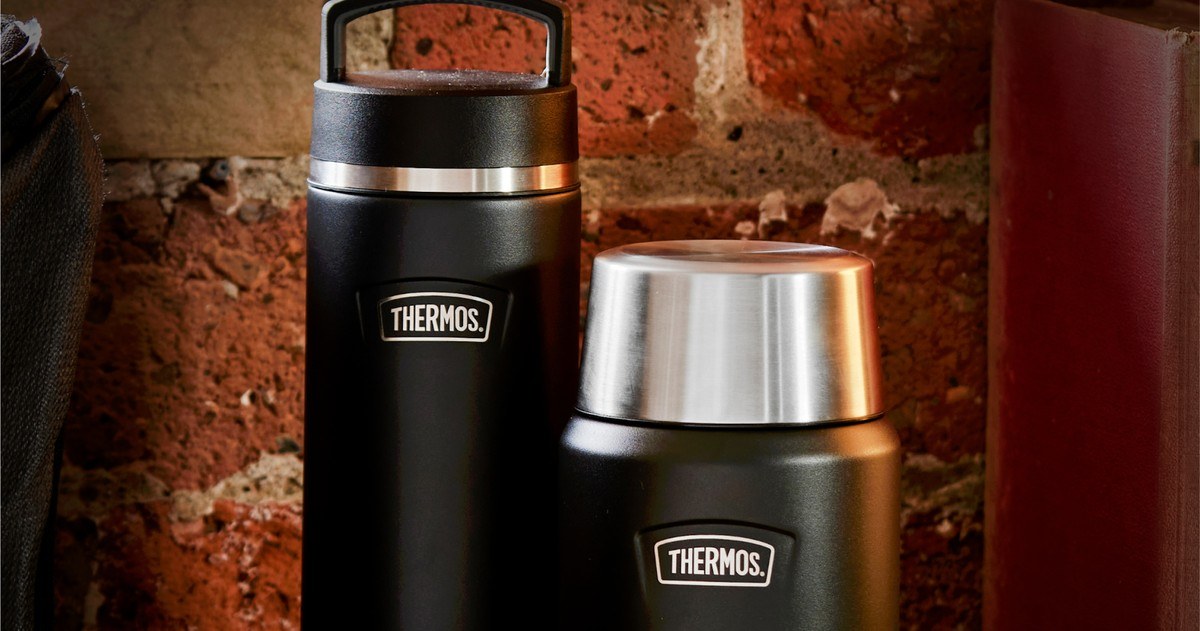
The style guide email for anything bought on how it looks
Customers hesitate because they cannot picture the thing in their own life. A styling email answers that better than any specification.
Read it
The staff picks email, when the shop floor knows the range best
A curated edit chosen by marketing is a promotion. The same edit chosen by the people who handle the returns is something else.
Read it
The spot the difference email that gets people looking at the product
A game is a poor reason to send one of these. Making somebody study your product closely for thirty seconds is an excellent one.
Read itWould you rather this was just handled?
Bring your Klaviyo account and the thing annoying you most. We will tell you what we would fix first, on the call, before you spend anything.

Book a call with our founder.
We're all about relationships built on trust, mutual respect and a shared vision for success. If that sounds like your vibe, let's make some waves together 🌊